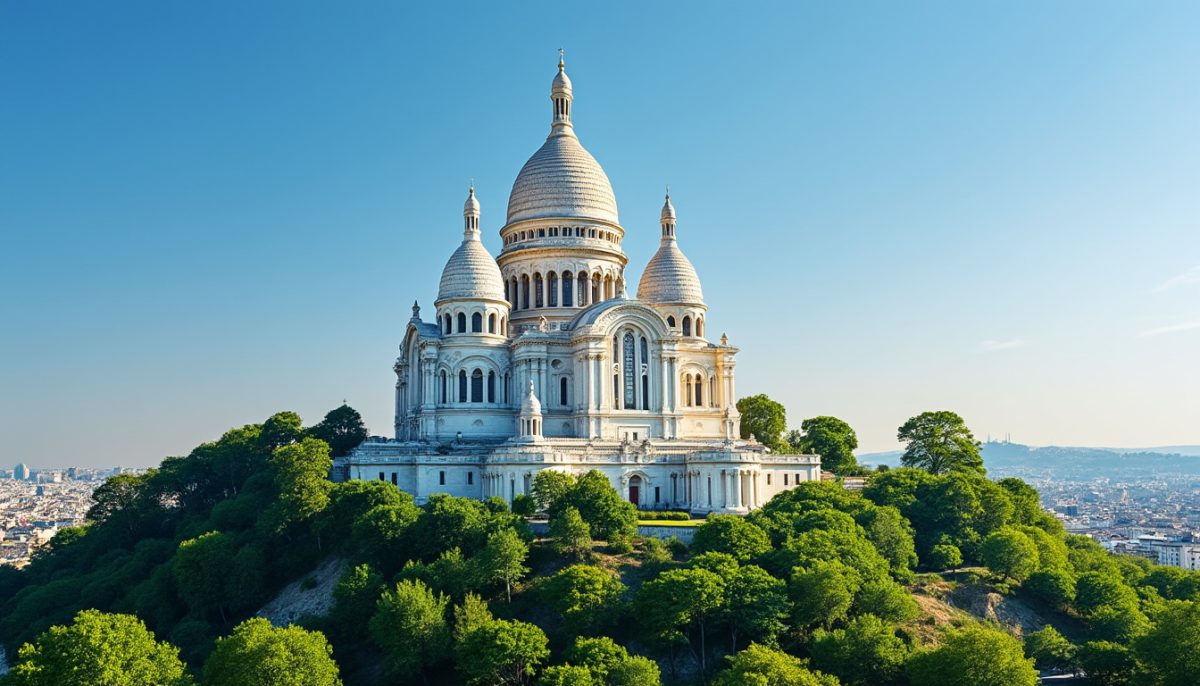
Perched majestically atop Montmartre, the Basilica of Sacré-Cœur stands as a beacon of faith and artistry, captivating visitors with its striking silhouette against the Parisian skyline. Designed in a unique Byzantine style, the basilica’s gleaming white travertine façade is not merely a testament to architectural ambition but a symbol of hope, redemption, and a complex historical narrative that dates back to the aftermath of France’s tumultuous political upheavals in the late 19th century. Completed in 1914, this religious structure embodies both a prayer and a monument, earning its place as one of Paris’s most cherished landmarks. However, cradled within its relatively short history are layers of controversy, cultural significance, and a reflection of the city’s evolving heart. Each year, millions of travelers flock to this iconic hilltop sanctuary to not only admire its architecture but also to soak in the breathtaking views of the sprawling metropolis below.
A Historical Overview of Sacré-Cœur Basilica
The genesis of the Basilica of Sacré-Cœur can be traced back to the years following the Franco-Prussian War, a period marked by profound national trauma and collective introspection. The French National Assembly commissioned its construction in 1873 as an act of atonement for the calamities France had endured. The war had revealed vulnerabilities in the nation’s identity, and the Paris Commune that followed further exacerbated the social rifts in the country. Thus, in selecting the highest point in the city—Montmartre—the Assembly sought not only to build a church but to create a space of spiritual solace and national healing.
The architectural design was entrusted to Paul Abadie, who envisioned a basilica that would harmonize with the surroundings while standing out in its grandeur. Construction commenced in 1875 but faced numerous delays due to ongoing political debates about its purpose and funding. This controversy exposed divisions within French society; royalists and devout Catholics were pitted against socialists and rationalists, each group projecting its ideals onto the structure that slowly took shape. By the time Sacré-Cœur was finally completed in the early 20th century, it had become a monument imbued with layers of meaning—sacred, controversial, and emblematic of a tumultuous chapter in French history.
The Architectural Significance
The Basilica’s design is a masterful embodiment of the Romanesque-Byzantine architectural style, distinguishing it from many other ecclesiastical structures in Paris that favor Gothic elements. This unique architectural choice was both a reflection of a cultural movement and a statement of resilience. The building features a massive dome that rises 83 meters into the sky, making it one of the highest points in the city. Its exterior is crafted from a nearly luminous white travertine stone that has an intriguing self-cleaning property: when rain falls, the stone releases a chalky substance that keeps the basilica looking pristine.
Inside, the basilica is adorned with intricate mosaics, the most famous of which depicts Christ in Majesty, surrounded by angels—a stunning focal point that draws the eye upward, symbolizing the aspiration towards the divine. The interior marble finishes, along with the graceful arches, create a serene atmosphere, inviting contemplation and prayer. Visitors moving through its nave are enveloped by a sense of peace that starkly contrasts with the bustling activities outside.
The dome itself offers a mesmerizing 360-degree panoramic view of the Paris skyline, with the Seine River curling through the heart of the city, other iconic landmarks, and the sprawling urban landscape stretching to the horizon. Each step of the climb up the 237 steps to reach the dome rewards visitors with a physical connection to the basilica’s soaring ambition. The experience underscores the blend of spirituality and athleticism that characterizes a visit to Sacré-Cœur.
Controversies and Cultural Reflections
Despite its status as a beloved landmark, the Basilica of Sacré-Cœur has not been without its critics. From its inception, Sacré-Cœur was embroiled in controversies that highlighted the ideological divides within French society. Detractors have often labelled it a “white elephant,” viewing its construction as a provocative act of royalist sentiment in a country that coveted republicanism. The fact that the land was seized from property owners to build the church only intensified the animosity toward it.
Even as Sacré-Cœur became a cherished site of pilgrimage and tourism, heated debates about its aesthetic value continued. Some Parisians see the basilica as an intrusive blotch on the city’s skyline, while others appreciate its distinctiveness. This schism speaks volumes about Parisian identity, where layers of history inform perceptions of architecture and place. As time has worn on, the basilica has become an integral part of what defines Montmartre itself—a reflection of the layers of artistic evolution, social change, and even resistance.
Modern-Day Significance
In contemporary Paris, Sacré-Cœur stands as more than just a religious institution; it symbolizes resilience, unity, and the diverse narratives of a city in constant evolution. The basilica attracts millions of visitors each year, eager to explore not just its architectural beauty but also its cultural significance. The surrounding Montmartre neighborhood pulsates with life—artists, cafés, and street performers embodying the bohemian spirit that once captivated iconic figures such as Picasso and Van Gogh.
The basilica also plays a crucial role in the lives of local residents and tourists alike, hosting continuous Eucharistic adoration and providing a sacred space for reflection amid the urban bustle. The juxtaposition of the sacred and the secular within Montmartre continues to intrigue visitors, offering a kaleidoscope of experiences, from visiting artists’ studios to indulging in classic French cuisine.
Visiting the Basilica of Sacré-Cœur
Exploring the Basilica of Sacré-Cœur is a must for anyone wandering through Paris. The experience not only entails visiting one of the most recognizable landmarks but also provides an opportunity to participate in the rich tapestry of Parisian life. The entrance to the basilica is free, although there is a nominal fee to ascend the dome. Guests are encouraged to dress appropriately, respecting the sacred nature of the site.
Beyond worship, visitors can engage in various activities around Montmartre. This vibrant area boasts colorful markets, quaint shops, and the famous Place du Tertre, where artists display their work, mirroring the charm that once enchanted the likes of Dali and Toulouse-Lautrec. A stroll through these streets allows guests to savor the true essence of Parisian life.
For a more enriched experience, guided tours are available that delve into the history and architecture of the basilica, as well as its significance in contemporary society. Whether you are drawn by the allure of the architecture or the spiritual ambiance, Sacré-Cœur offers something for everyone, inviting reflection, admiration, and connection.
| Feature | Details |
|---|---|
| Location | Montmartre, Paris |
| Construction Period | 1875 – 1914 |
| Architectural Style | Romanesque-Byzantine |
| Height of Dome | 83 meters |
| Key Design Element | Self-cleaning travertine stone |
The Basilica of Sacré-Cœur is not merely an architectural marvel; it’s a vibrant, living entity that encapsulates the spirit of Paris. As you ascend the hill to admire its beauty, reflect on the narratives that shape this extraordinary landmark and perhaps find your perspective changed, just like the city itself.