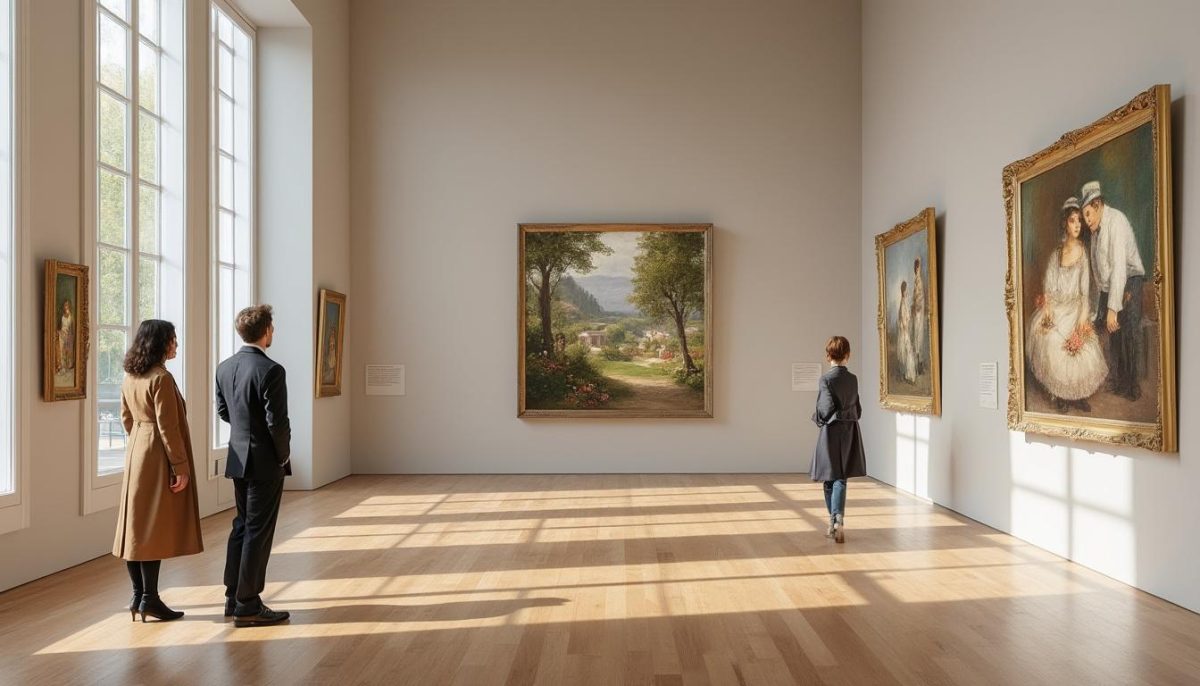
In the heart of Paris, the Musée d’Orsay stands as a beacon of artistic brilliance, housing an impressive collection of French Impressionism. Among its most celebrated artists is Berthe Morisot, a trailblazer in the male-dominated realm of the 19th century art scene. As a key figure in the Impressionist Movement, her works are characterized by their delicate brushwork and intimate portrayal of the bourgeoisie’s private life. Morisot’s ability to capture the essence of modern life through everyday moments makes her a significant, albeit often overlooked, contributor to the art world. The five masterpieces featured in the museum not only showcase her unique perspective but also provide insights into the evolving role of women artists during this era. Visitors to the museum in 2026 will have the opportunity to delve into Morisot’s profound understanding of both form and sentiment, shedding light on her contributions to 19th century art.
The First Masterpiece: Le Berceau (The Cradle) – 1872
One of Berthe Morisot‘s most iconic works, Le Berceau portrays her sister, Edma, gazing affectionately at her child, Blanche, who is peacefully asleep in a cradle. This painting represents the essence of motherhood, a theme that continuously recurs throughout Morisot’s oeuvre. When first exhibited in the inaugural Impressionist Exhibition of 1874, critics lauded its grace and emotional depth. However, despite the acclaim, the painting did not find a buyer and remained in Morisot’s private collection for decades.
The composition is ingeniously crafted, relying on two contrasting visual triangles. A dark triangle, formed by Edma’s figure, juxtaposes a lighter triangle created by the draped veil. This interplay emphasizes not only the tender bond between mother and child but also the nurturing aspect of motherhood that Morisot often depicted. As Edma gently pulls the gauzy curtain around the cradle, she creates a protective barrier, inviting viewers to share in this intimate moment while simultaneously signifying the private nature of maternal love.
The Context of Mothers in Art
The representation of motherhood in art has historically oscillated between idealization and reality. Morisot’s approach, however, strikes a balance. By portraying the complexity of maternal affection without veering into sentimentality, she showcases her unique understanding of women’s experiences. The intimate nature of this painting not only speaks to the private lives of women in the 19th century but also echoes broader societal themes of love and caregiving that continue to resonate today.
The Second Masterpiece: Jeune Femme en Toilette de Bal – 1879
Jeune Femme en Toilette de Bal is another exemplary work that showcases Morisot’s deft handling of color and form. The portrait features a young woman preparing for an evening ball, surrounded by a lush floral backdrop. Critics have noted how the background serves as a protective barrier, enveloping the subject in a world of youth and beauty, insulated from external influences. Unlike the rigid portraits commonly produced by male contemporaries, Morisot’s painting vibrates with life and spontaneity, capturing a fleeting moment in time.
The freedom in Morisot’s brushwork conveys a sense of immediacy and intimacy that sets her work apart. This painting stands in stark contrast to typical salon portraits, reflecting a dynamism that was reminiscent of both French Impressionism and the burgeoning influence of her brother-in-law, Édouard Manet. Just as Manet sought to break free from traditional constraints, Morisot carved her own path, demonstrating a distinctively feminine lens through which to view social gatherings.
The Role of Women in Society
In examining this painting, one cannot overlook the societal roles imposed on women during the 19th century. The balls, fashionable gatherings, and social events depicted in Morisot’s work were arenas where women navigated their identities, often constrained by societal expectations. Through this lens, Morisot’s artistic choices reflect not only her own experiences but also those of countless women who sought to assert their individuality within a structured society.
The Third Masterpiece: Dans les Blé – 1875
Dans les Blé, set in the suburb of Gennevilliers, portrays a picturesque landscape, with a young boy standing amidst swaying wheat fields. The interplay of color and the loose brushwork create an ethereal quality, particularly in the depiction of the wheat, which appears almost as if it’s dancing in the wind. This painting contrasts the idyllic landscape with the structures of industrialization that loom in the background, suggesting a silent commentary on the changing nature of rural life and the encroaching march of modernity.
Critics have suggested that Morisot’s representation of the young boy, burdened yet hopeful, symbolizes a retreat from the harsh realities of industrial life. By capturing this moment, she subtly protests against the rapid transformation of society, in stark contrast to the more traditional approaches of her fellow Impressionists. This duality of subject matter invites viewers to reflect on the intersection between nature and the inevitable disruption caused by progress.
The Impact of Urbanization
The societal shift toward urbanization during Morisot’s life not only influenced her subject matter but also reflected broader cultural anxieties. As new technologies and industries emerged, artists were prompted to rethink their portrayal of rural versus urban landscapes. Morisot’s focus on these themes allows contemporary audiences to engage with questions about identity, tradition, and the changing fabric of society, making her work remarkably relevant.
The Fourth Masterpiece: Sur un Banc a Bois de Boulogne – 1894
Sur un Banc a Bois de Boulogne is a serene portrayal of two young girls nestled on a bench within the expansive greenery of the Bois de Boulogne park. This painting exudes a sense of tranquility and innocence, inviting viewers to reflect on the simplicity of childhood. The portrait has traveled extensively through various exhibitions, marking its significance in the art world.
Morisot captured the essence of youth, conveyed through the delicate interactions between the girls and their surrounding environment. By situating the figures in a natural setting, she emphasizes the harmony between nature and human experience, showcasing her ability to evoke intimate and relatable moments. Such representations constitute a meaningful commentary on leisure and recreation within a rapidly industrializing society.
Children in Impressionist Art
In this work, the representation of children is presented not just as a subject but as a window into the very nature of childhood itself. While other artists may have shied away from exploring this theme, Morisot embraced the complexity and beauty of youthful moments, celebrating their fleeting nature. The serene atmosphere of this painting stands as a testament to her mastery in encapsulating the essence of life, bridging the past with the present.
The Fifth Masterpiece: Chasse aux Papillons – 1874
Chasse aux Papillons, or Butterfly Chase, captures a whimsical scene that epitomizes the leisurely pursuits of the bourgeois class in the 19th century. The act of chasing butterflies becomes a metaphor for innocence and the fleeting nature of joy, emphasizing the lighter side of life amidst the societal constraints of the period. This painting showcases Morisot’s ability to blend her artistic vision with a narrative that speaks volumes about the lives of her subjects.
Exhibited alongside notable works from Monet and Renoir, Morisot’s charm and brilliance are palpable in this composition. The warm hues and ethereal quality of the scene create a dream-like atmosphere that draws viewers into a world of carefree joy. This piece not only highlights Morisot’s unique artistic voice but also enriches our understanding of leisure activities among the bourgeoisie during her time.
The Appeal of Whimsy in Art
By integrating playful elements into her works, Morisot counters the often somber themes prevalent in much of the contemporary art scene. The juxtaposition of innocence against the backdrop of societal expectations offers a refreshing perspective on the role of women and children in the evolving social landscape of the time. Her focus on moments of joy challenges viewers to reconsider the intricate balance of happiness and hardship in life.
| Painting Title | Year | Location | Theme |
|---|---|---|---|
| Le Berceau | 1872 | Musée d’Orsay | Motherhood and intimacy |
| Jeune Femme en Toilette de Bal | 1879 | Musée d’Orsay | Feminine beauty and social gatherings |
| Dans les Blé | 1875 | Musée d’Orsay | Rural life vs industrialization |
| Sur un Banc a Bois de Boulogne | 1894 | Musée d’Orsay | Childhood and leisure |
| Chasse aux Papillons | 1874 | Musée d’Orsay | Innocence and joy |
In summation, Berthe Morisot‘s contributions to the Impressionist Movement are as profound as they are significant. Through her five masterpieces at the Musée d’Orsay, visitors gain insight into the life and times of this groundbreaking woman artist. Her portrayal of the bourgeoisie, themes of motherhood, and the balance between nature and society encapsulate a transformative period in 19th century art, inviting contemplation of the complexities of modern life. Each brushstroke tells a story, and as audiences engage with her work, they navigate an emotional landscape that transcends generations and celebrates the artist’s enduring legacy.
For those keen to explore more about the artist and her contributions, a visit to Paris Hotels Tours offers a deeper dive into Morisot’s influences and the rich tapestry of women artists shaping the narrative of art history today.