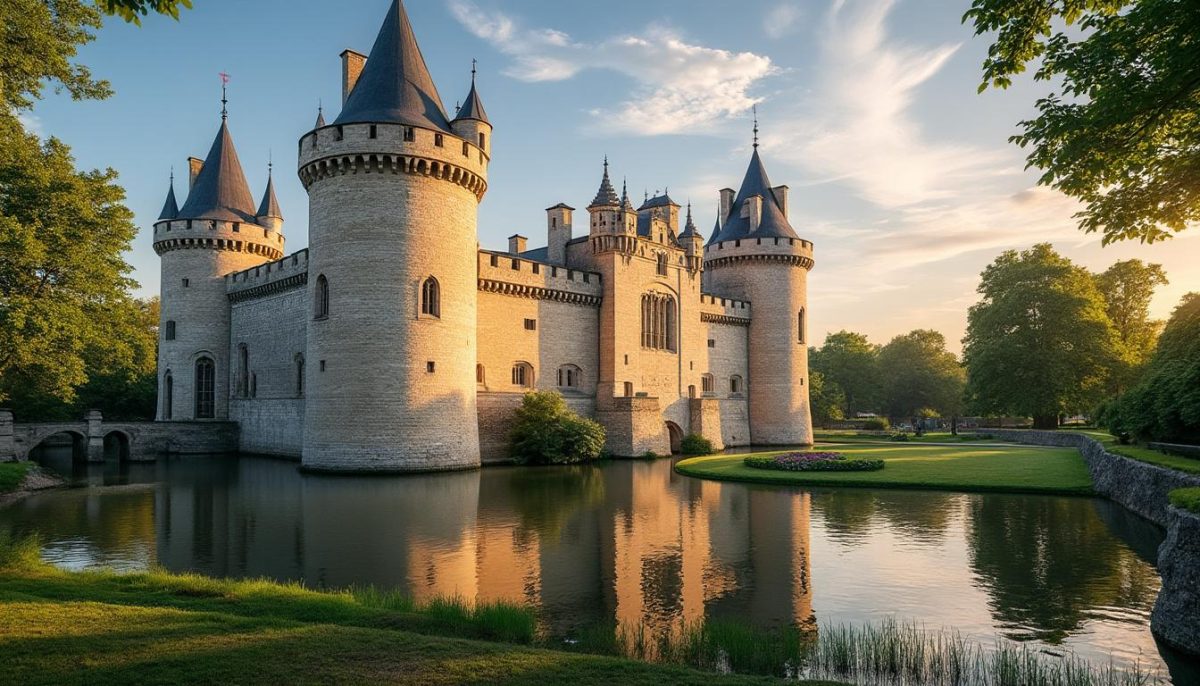
Situated on the eastern edge of Paris, the Chateau de Vincennes stands as a testament to centuries of French history and architectural brilliance. Known as a former royal residence and a mighty historical fortress, it beckons visitors to explore its intricate past and the stories embedded within its walls. This majestic medieval castle originated in the 12th century, evolving from a simple hunting lodge into a formidable stronghold during the reign of Charles V in the 14th century. The towering keep, completed in 1369, remains one of the tallest such structures in Europe, symbolizing the strategic importance of both the chateau and its geographical location. The enchanting fortification invites art and history enthusiasts alike to step into a world where past and present intertwine.
The journey through the Chateau de Vincennes is not merely a stroll through French history but an adventure filled with tales of kings, battles, and artistic heritage. It is much like the history of Versailles, with parallels that evoke the grandeur of royal lifestyles mixed with the imminent dangers of medieval politics. The chateau has stood witness to significant events, including royal treaties and revolutionary tumult, while also serving as a prison for notable historical figures. As you wander its hallowed halls, explore architectural marvels like La Sainte-Chapelle, each corner revealing pieces of a captivating puzzle that is the living history of France.
The History of Chateau de Vincennes Paris
The origins of the Chateau de Vincennes can be traced back to the 12th century when it was established as a modest hunting lodge. This serene forest setting provided an ideal locale for hunting trips by the French monarchy. However, as political tensions escalated during the 14th century, especially amidst the backdrop of the Hundred Years’ War, the necessity for fortified structures became paramount. Under Charles V, the modest lodge transformed into a substantial fortified castle, enhancing its defensive capabilities.
The most striking feature of this transformation is the formidable keep, completed in 1369. Standing at 52 meters tall, it serves as both a fortress and a royal residence, strategically guarding the eastern approaches to Paris. The architectural prowess illustrated in its construction demonstrates the blend of functionality and aesthetic appeal needed during that tumultuous era of French history.
Throughout its extensive history, the Chateau has witnessed critical moments, from royal signings of treaties to turbulent battles fought in its shadow. In the 17th century, the chateau took on a new life as a state prison, housing influential figures like the Marquis de Sade and Mirabeau, thereby etching their stories into its storied existence. The adaptability of this structure signifies its unyielding relevance across different eras of French history, highlighting the unique ability of the Chateau de Vincennes to mirror the evolving political landscape of the country.
Today, this historic fortress stands proudly as a cultural landmark, inviting historians, tourists, and families to delve into the multifaceted tales of its past. Each stone resonates with the stories of those who wandered its halls, making it an essential location for understanding the complexities of France’s royal lineage and societal shifts through the ages. As visitors marvel at its design, they come to appreciate the layers of history encapsulated within its walls.
Architectural Marvels of the Chateau
The architectural design of the Chateau de Vincennes presents a stunning showcase of medieval artistry and engineering proficiency. Among its many marvels, the keep or donjon serves as a majestic centerpiece of the fortress. The keep, rising high into the sky, marks its territory against any invaders, while the surrounding moat further reinforces its defensive prowess. The interior reveals a spiral staircase, royal apartments, and even an exquisite chapel. This dual purpose of the keep is essential in illustrating the merging of military architecture with regal living spaces, characteristic of medieval structures.
Adjacent to the keep lies La Sainte-Chapelle, a captivating example of Gothic architecture. Often compared to its more famous counterpart on Île de la Cité, it features magnificent stained glass windows that breathe life into the chapel, casting colorful shadows on the walls. Although smaller in size, this chapel’s design has a charm and depth that captivates all who enter. Each window narrates biblical stories and moments significant to the Christian faith, making it not only an architectural highlight but also a spiritual haven.
The broader fortifications of the chateau further exemplify the planning and execution of a military stronghold. Encircled by thick walls that extend over a kilometer and punctuated by nine defensive towers, the fortifications reveal the kings’ desires to affirm Vincennes as a primary seat of power in the region. The breadth of these walls signifies more than just defensive capability; they embody a legacy of strength, stability, and endurance against adversity.
Additionally, exploring areas such as the dungeon, where prisoners were once held, unveils a darker but equally poignant side of the chateau’s architectural story. During World War II, the fortress turned into a site of agony, as mutineers and prisoners of war were confined in grim conditions. This shifting role of the chateau speaks to its multifaceted nature, reflecting both high status and profound despair throughout its long existence.
Famous Figures Associated with Chateau de Vincennes
The illustrious history of the Chateau de Vincennes includes a roster of intriguing figures who have lived or been imprisoned within its walls. Among them is King Louis IX, revered as Saint Louis, who frequently sought refuge in these serene grounds for reflection and governance. His connection to the chateau ties it closely to the themes of spirituality and rulership that defined much of French monarchy.
Notably, Charles V turned Vincennes into a fortified stronghold, shaping its architectural identity as both a fortress and palace. His contributions cemented its significance, making Vincennes not only a military bastion but also a reflection of royal aspirations.
The 18th century brought notorious prisoners to its dungeons, including the infamous Marquis de Sade. His controversial writings, penned during his incarceration, add a layer of intrigue to the already rich narrative fabric of the chateau. Simultaneously, figures like Mirabeau, an essential player in the early stages of the French Revolution, found themselves confined here, transforming their personal stories into a collective history that underscores the intersection of literature and politics.
Through their shared experiences, these figures breathe life into the stone walls, each leaving behind echoes of their journeys that transcend time. The legion of stories attached to the Chateau de Vincennes illustrates the complex tapestry of French history, wherein individuals have maneuvered through the spaces of power, confinement, and the expression of thought. Each of these personalities contributes to the chateau’s enduring symbol as a nexus of sociopolitical change.
A Day at Chateau de Vincennes Paris
One cannot miss La Sainte-Chapelle, where light filters through colorful stained glass, creating an ethereal atmosphere that captivates the senses. It is not only an architectural feat but also an artwork, evoking deep emotions as one gazes upon the centuries-old narratives depicted in glass. After your journey through history, taking a moment to wander the surrounding Bois de Vincennes offers a delightful contrast. The lush green park, sprawling with peaceful trails, provides a serene environment worthy of a leisurely stroll or a picnic, allowing visitors to rest and reflect on their experiences within the castle walls. Moreover, for those wishing to extend their exploration, combining a trip to the chateau with a visit to the nearby Parc Zoologique de Paris is an ideal plan. This zoo recently underwent a multi-million euro renovation, emerging as one of Europe’s premier zoological parks. The close proximity—briefly connected by public transport or a picturesque walk—makes it easy for visitors to enjoy both natural wonders and historical marvels in one day. The chateau welcomes guests throughout the year, though operating hours may vary by season. Generally, entry is permitted from 10:00 AM to 5:00 PM during winter months, with extended hours in the summer. Tickets can be conveniently purchased online or at the gate, offering discounts for students and larger groups, maximizing the experience for a diverse audience. Each visit to the Chateau de Vincennes is a journey that intertwines the threads of history, architecture, and culture, showcasing the enduring legacy of this vibrant heritage site. Whether exploring the grand keep or simply enjoying the breathtaking views of its lush surroundings, visitors are bound to leave with a deeper understanding and appreciation of French history. A visit to this remarkable chateau is indeed an opportunity to step back in time and connect with the stories that have shaped not just Paris, but the essence of French identity. Embrace the ambiance, and allow it to weave into your understanding of a rich heritage that endures through the ages.Planning a Visit to Chateau de Vincennes Paris
Attraction
Description
Location
Chateau de Vincennes
Historic fortress and former royal residence
Avenue de Paris, 94300 Vincennes
La Sainte-Chapelle
Gothic chapel featuring intricate stained glass windows
Adjacent to the keep, Chateau de Vincennes
Parc Zoologique de Paris
Modern zoo showcasing diverse wildlife
Nearby, accessible from Chateau de Vincennes