Paris, a city that beautifully marries history with modernity, is often seen as a timeless guardian of cultural heritage. One of the most captivating aspects of this capital city is its collection of historic clocks. Each of these timepieces not only tells the time but also narrates a story rich in tradition, architecture, and the passing of eras. The clocks of Paris serve as landmarks that connect us with the past, glorifying the architectural marvels that have stood the test of time. As we wander through the charming streets, lifting our gazes above the bustling cafés and boulevards, we can marvel at these iconic structures that remind us of the city’s profound history. In this exploration, we will delve into some of the most significant timekeeping traditions found within the city of light, where every clock resonates with a story, revealing the character and heartbeat of Paris.
Tour de l’Horloge: The Heartbeat of the Conciergerie
The Tour de l’Horloge, located on the Île de la Cité, is one of the oldest public clocks in Paris, dating back to the 14th century. Installed under the reign of King Charles V, this remarkable clock has played a pivotal role in the daily lives of Parisians. The clock’s initial purpose was to provide a reliable time source for the citizens at a time when public clocks were rare. At that time, the concept of time was often dictated by the bells of the churches, but King Charles V wanted to usher in a new era of timekeeping.
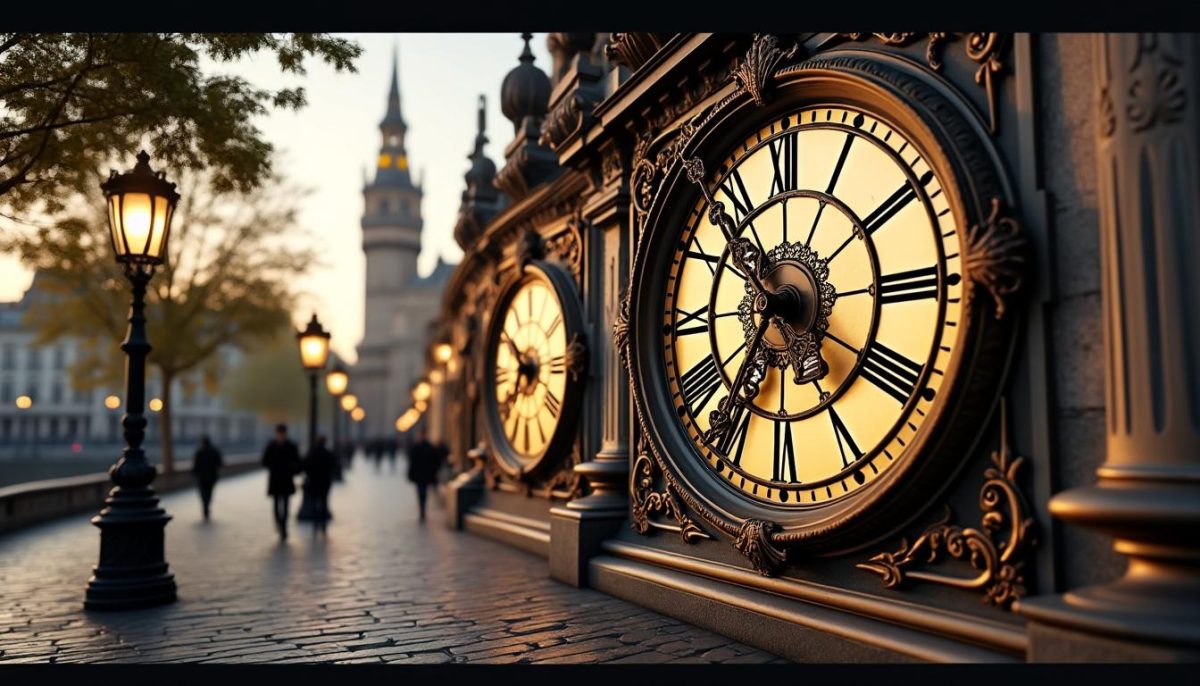
Crafted by Henri de Vic, a clockmaker from Lorraine, the clock is located on the second floor, making it unique among many of its contemporaries, which are often perched much higher. Over the centuries, it has undergone several renovations and embellishments, including the addition of a bell in 1371 and intricate designs that enhance its historical significance. The ornate clock face features a Latin inscription that can be loosely translated to reflect the value of justice and the law, showcasing the clock’s integral role in civic life.
Notably, the restoration in 2012 returned the clock to its original grandeur, harking back to its 17th-century appearance. Visitors can admire its new vibrant colors and elaborate details, making it a stunning focal point on the façade of the Conciergerie. As one of Paris’s iconic historical clocks, the Tour de l’Horloge symbolizes a bridge between the ancient and modern—a testament to the passage of time and the enduring nature of the city’s heritage.
Architectural Resilience and Cultural Significance
The Tour de l’Horloge stands as a monument not just of architectural prowess but also of resilience. Its survival through the tumultuous periods of French history, including revolutions and wars, speaks volumes about the craftsmanship involved in its creation. For centuries, it has served as a meeting point for locals, tourists, and historians alike, reminding them of the rich tapestry of events that have unfolded on the Île de la Cité.
Moreover, this clock has inspired countless artists and writers whose works reflect the passage of time and the fleeting nature of existence. Parisian poets have written verses that capture the essence of its ticking, infusing a sense of nostalgia and urgency. Such is the power of this timepiece—it transcends mere functionality, becoming a symbol of Paris itself, a city that never fails to enchant and captivate.
Les Horloges Magnifiques du Musée d’Orsay
The Musée d’Orsay is another celebrated landmark in Paris, famous not only for its vast collection of impressionist art but also for its stunning clocks. Originally built as a train station for the 1900 Paris Exposition Universelle, the structure boasts two prominent clocks that grant it an iconic silhouette against the Paris skyline. These clocks are unique remnants from a time when trains were the primary mode of long-distance transportation.
As you approach the museum, you will notice how the facade is adorned with these majestic timepieces, drawing the attention of visitors from afar. The enormous clock on the rear side of the Musée provides a striking contrast to the richly decorated interior, acting as a conduit between the past and present. It’s fascinating to consider that the museum, which now showcases masterpieces of art, once served as a bustling terminus of train journeys, connecting countless lives with its functionality.
Inside, the experience is further enhanced by the clock that hangs over the main gallery—yet another powerful reminder of the building’s history. This clock not only keeps time but also serves as an artistic centerpiece, inviting visitors to reflect on the stories woven into the fabric of this remarkable structure. Each tick of the clock echoes the passions and ambitions of the artists whose works light up the galleries.
A Journey Through Time
The clocks of the Musée d’Orsay serve as witnesses to the evolution of timekeeping technology over the years. Whereas the Conciergerie clock speaks to a history rooted in civic duty and justice, the clocks at the Musée embody the intersection of art and transportation, showcasing how functional elements can inspire aesthetic appreciation. Visitors often find themselves drawn to these clocks, capturing the perfect photograph not just for the artistry but for what they represent in the grand narrative of Paris’s heritage.
Moreover, the simplistic elegance of these clocks serves as a reminder of the times when life was dictated by the rhythm of the clock rather than the frenetic pace of modern technology. The allure of the Musée d’Orsay’s clocks lies in their ability to transport us to another time, stirring feelings of nostalgia and admiration for the cultural significance they embody. As we gaze upon them, we are reminded that time is both a fleeting and precious entity, deserving of reflection and reverence.
Gare de Lyon: A Mark of Architectural Grandeur
Situated in the 12th arrondissement, Gare de Lyon is heralded for its monumental clock tower that captures the grandeur of Parisian architecture. The station has been serving travelers since 1847, evolving from a modest wooden structure to the sprawling station we see today, which opened in anticipation of the 1900 Exposition Universelle. The clock, which graces the tower, is a symbol of progress and a nod to the architectural aesthetics of the late 19th century.
Visitors often marvel at the clock’s grandeur, which is reminiscent of London’s Big Ben, with its four-sided design and ornate detailing. What makes it truly special is the hand-painted Roman numerals that adorn the clock face, crafted with meticulous care. This striking timepiece is not only an essential tool for commuters but also a visually stunning element that enhances the station’s overall design.
As the day unfolds, travelers bustle under the watchful gaze of the clock, often pausing to admire its beauty while they await their journeys. The clock serves as a reminder of human stories interwoven with time—the stories of those who have passed through, each journey marked by the ticking of the hands against the backdrop of the station’s vibrant energy.
Modern Connections to Historical Contexts
The clock at Gare de Lyon connects the present to the rich history of rail travel in France. It stands as a monument that celebrates the intersections between transportation, time, and human experience. For many, it marks the beginning of adventures or the return from journeys, encapsulating the essence of travel that defines Paris. With every passing second, it encapsulates fleeting moments, memories etched into the fabric of Parisian life.
The station itself has become a cultural landmark, blending the functionality of a transit hub with the grace of historical elegance. It is fascinating to consider that as people hurry to their destinations, they stand in the very spot where history was once made, where the stories of families and explorers have intersected throughout the years. The clock, in its majestic presence, continues to uphold its duty of reminding us to appreciate the beauty of each moment.
Gare Saint-Lazare: Where Time Takes on Artistic Forms
Another essential stop on the tour of Paris’s clocks is Gare Saint-Lazare, known not only for its historical significance but also for its captivating artistic expressions. As the oldest train station in France, opening its doors in 1837, it has evolved dramatically through the years. Central to its identity are the clocks, which have transformed from simple timekeeping to artistic installations.
The iconic façade showcases a classic clock, designed by Alfred Armand, a prominent architect of the time. This clock has been a focal point for many an artist, capturing the imaginations of creatives like Manet and Monet, who found striking views of the station inspiring. Visitors to the station often find themselves ensnared by the intricate designs that complement the architectural elegance of the building.
In 1985, a unique installation titled L’Heure de Tous was introduced, featuring stacked clocks at the forecourt—a playful representation of time. The sculpture humorously showcases various times, symbolizing how quickly time passes, while simultaneously paying homage to the station’s long-standing legacy. This blend of creativity and functionality establishes Gare Saint-Lazare as a multifaceted landmark where artistic expression intertwines with daily life.
The Dual Nature of Timekeeping
The presence of traditional and contemporary clocks at Gare Saint-Lazare exemplifies a duality in timekeeping. On one hand, the historic clock represents reliability and continuity in a rapidly changing world. On the other, the modern artistic installation encourages reflection on the ephemeral nature of time. Together, they create a dialogue that resonates deeply with Parisians and visitors alike.
Recognizing this connection can lead to a greater appreciation for the subtle beauty of travel and the significance of every hour spent in the city. The clocks at Gare Saint-Lazare serve as reminders that while time is constant, our experiences are fleeting. This serves to enrich our underlying connection to these monumental structures, which encapsulate both the historical and the contemporary dynamics of Parisian life.
Église Saint Paul Saint Louis: The Clock in Cultural Study
Finally, we arrive at Église Saint Paul Saint Louis, where time is not only marked but is celebrated through its stunning clock. Originally situated at a different church, this captivating timepiece was installed here in 1806, showcasing the artistry of master watchmaker Joseph Lory. The clock’s aesthetic charm is significant, adorned with a striking blue and gold exterior that captures attention from passersby.
The journey of the clock from one church to another reflects the very essence of cultural evolution in Paris. From its roots as a timekeeper in a historical church to its placement in a vibrant urban environment, the clock continues to resonate with the community today. The restoration work conducted in recent years safeguarded its beauty, ensuring that the cultural testimony it provides remains intact.
The clock stands as a reminder of the historical narratives that encapsulate Parisian life, exhibiting the evolution of faith, time, and artistry through the ages. It draws visitors not just for its beauty but for the stories it carries within its graceful structure.
A Reflection on Heritage and Time
Through the lens of Église Saint Paul Saint Louis, we gain insight into the important role clocks play as cultural markers. They are not simply objects that tell us when to be somewhere but rather are storybooks that narrate the evolution of societies, values, and the architectural beauty of the city. Each clock in Paris is a guardian, upholding tales that span centuries of urban history, from royal influence to modern artistry.
The clocks of Paris, from the Conciergerie to the churches and train stations, encapsulate the essence of the city—a harmonious blend of history, culture, and artistry. They remind us that time is a treasure, that each moment is a part of the larger narrative that weaves through the heart of this magnificent city.
| Clock | Location | Historical Significance |
|---|---|---|
| Tour de l’Horloge | Conciergerie, Île de la Cité | First public clock in Paris, dating back to 1370 |
| Musée d’Orsay Clock | Musée d’Orsay | Formerly a train station, dates back to 1900 |
| Gare de Lyon Clock | Gare de Lyon | Symbol of architectural grandeur since 1900 |
| Gare Saint-Lazare Clock | Gare Saint-Lazare | Oldest train station in France, opened in 1837 |
| Église Saint Paul Saint Louis | 4th Arrondissement | Beautiful blue and gold clock, originally from 1627 |