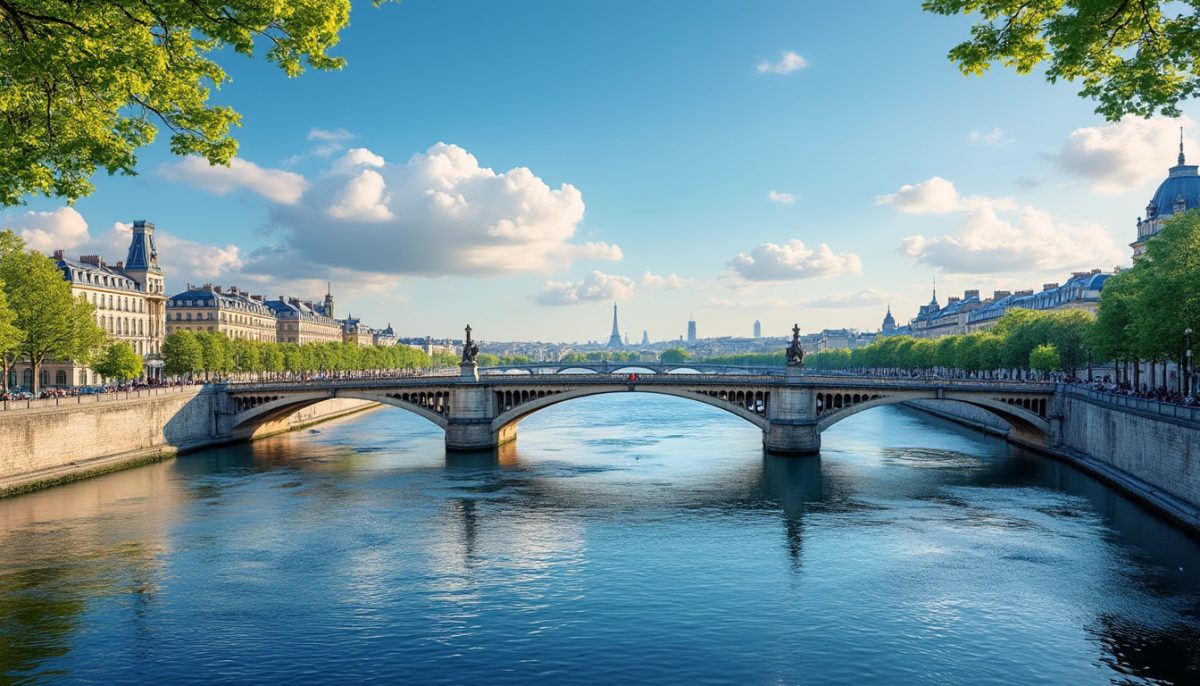
The Seine River serves as a vital artery through the heart of Paris, flanked by the time-honored Left Bank and the bustling Right Bank. This city, defined by its profound history, vibrant culture, and stunning architecture, boasts an impressive array of bridges that serve not only as functional crossings but as iconic representations of its rich past. With 37 bridges threading through various neighborhoods, each structure tells a unique story and connects distinct facets of Parisian life. From the grand ornamentation of historic bridges to modern architectural marvels, these crossings shape how we experience the city, offering scenic views and moments of reflection along the banks of the Seine. Whether you’re seeking a romantic stroll, a vibrant nightlife, or a glimpse into Parisian art and history, these bridges beckon as gateways to exploration. Let’s embark on a journey across eight of the most famous and evocative bridges that link the Left Bank and Right Bank of Paris.
Pont Neuf: The Oldest Bridge of Paris
Pont Neuf, which translates to “New Bridge,” ironically holds the title of the oldest standing bridge over the Seine. Completed in 1606, it marks a significant milestone in Parisian history and architecture. Commissioned by King Henry III and later completed by King Henry IV, this landmark is often regarded as one of the most important architectural pieces in Paris. As the first stone bridge in the city, it distinguished itself by not featuring houses on its structure, which was a common practice at the time.
This bridge is adorned with 384 macarons on its cornices and is home to a striking equestrian statue of Henri IV at its center, making it a favorite among tourists and locals alike. Its continuous arches, designed for both pedestrians and vehicular traffic, provide a perfect vantage point to admire the surrounding cityscape. In 1985, Pont Neuf garnered international attention when it was wrapped in fabric by the artist Christo, further cementing its status as a cultural icon.
The bridge also serves as an excellent launch point for various sightseeing tours, including those offering traditional dinner cruises along the Seine. Visitors can witness the illuminated beauty of Parisian landmarks, such as the Eiffel Tower and Notre-Dame, while enjoying refined French cuisine. Therefore, Pont Neuf offers more than just a passage; it unlocks a world of delightful experiences that redefine how we perceive this magnificent city.
Pont Alexandre III: A Testament to Belle Époque Splendor
Bridging the Grand Palais and Les Invalides, Pont Alexandre III is often heralded as the most beautiful bridge in Paris. Constructed for the 1900 Exposition Universelle, its intricate design features ornate sculptures and gilded details symbolizing the Franco-Russian alliance at the time. The bridge’s architectural elegance is complemented by its stunning candelabras and golden statues, offering a feast for the eyes against the backdrop of the Seine.
The bridge has long captivated artists and filmmakers, becoming an iconic backdrop for numerous films, including Woody Allen’s Midnight in Paris. Visitors often find themselves mesmerized by the view from the bridge, where the expanse of the Seine River merges beautifully with the city’s skyline. In 2007, extensive restoration work ensured that its grandeur remains intact, allowing future generations to appreciate its historical significance and aesthetic allure.
Pont Alexandre III exemplifies the rich cultural life that flourished during the Belle Époque, making it not just a bridge but a true representation of Parisian identity. Its stunning aesthetic invites countless visitors, contributing to the city’s tourism and cultural heritage. In this way, the bridge symbolizes both a romantic notion and Paris’s thriving nature.
Pont Bir-Hakeim: The Cinematic Favorite
Pont Bir-Hakeim, known for its striking view of the Eiffel Tower, offers not only a practical crossing but also an inspiring aesthetic. Completed in 1903, this bridge holds a dual purpose, accommodating vehicles on the lower level and the Métro on the upper deck. The unique layout is particularly appealing to photographers and filmmakers, making it a popular location for iconic cinematic moments such as those in Inception and Last Tango in Paris.
Its two-story structure allows pedestrians to stroll gracefully while observing artistic ironwork and beautiful views of the Eiffel Tower, further enhancing the allure of the site. The bridge also features a lovely pedestrian walkway adorned with street lamps and tree-lined paths, creating an inviting atmosphere for leisurely walks. A visit to Pont Bir-Hakeim blends practicality with artistry, as it transports visitors not only across the Seine but also through layers of cinematic history.
In 2026, it promises to remain a vital artery for both transportation and tourism, continually drawing people from around the globe who are captivated by its charm. The bridge has witnessed countless love stories unfold as couples find unique moments to cherish while taking in the scenic beauty of Paris.
Passerelle Simone-de-Beauvoir: A Modern Marvel
As the youngest bridge on this list, the Passerelle Simone-de-Beauvoir was inaugurated in 2006 and stands as a symbol of modernity within the historical landscape of Paris. This pedestrian bridge elegantly connects the François Mitterrand Library to the Parc de Bercy, employing advanced engineering techniques to create a sleek and flowing design. Its curved structures are crafted from steel and wood, reflecting a contemporary aesthetic that stands in stark contrast to the historic bridges of the Seine.
Situated at the convergence of two distinct neighborhoods, this bridge not only facilitates movement but also enhances the social and cultural interactions between the Left and Right Banks. By connecting quiet parks with vibrant public spaces, Passerelle Simone-de-Beauvoir fosters community engagement and accessibility. As a dedicated pedestrian thoroughfare, it encourages leisurely strolls and outdoor activities, attracting a mix of locals and tourists alike.
This modern design also encapsulates the spirit of innovation in Paris, making it a vital link in the city’s ever-evolving urban landscape. With its beautiful view of the Seine and the surrounding areas, it invites visitors to appreciate a different perspective of Paris—a vision that celebrates both history and modernity.
Pont de la Concorde: Where History Meets Revolution
Pont de la Concorde, completed in 1791 during the turbulent times of the French Revolution, carries a rich historical significance. Constructed using stones from the Bastille, the bridge serves as a metaphorical link between royal past and revolutionary ideals. Its establishment marks a pivotal moment where the common people could traverse a space once reserved for the elite.
This bridge epitomizes revolutionary spirit not only in its physicality but also in the ideologies it represents. The absence of mooring rings was a deliberate choice, intending to erase memories associated with prisoners once chained to the Bastille. Additionally, Napoleon added statues of his generals along the bridge, further symbolizing the evolution of power in France.
Today, as one crosses Pont de la Concorde, a sense of purpose prevails. The bridge stands mighty on the Seine, echoing tales of resilience, courage, and transformation. Visitors walking on its cobblestones are reminded of the dynamic history that continues to shape modern-day Paris.
Pont Mirabeau: A Poetic Inspiration
Pont Mirabeau, completed at the end of the 19th century, is not just a bridge; it is a poetic landmark that inspired Guillaume Apollinaire to pen some of his most famous lines. His poem, “Le Pont Mirabeau,” beautifully encapsulates the passage of time and love, resonating deeply with the emotional landscape of Parisian life.
The yellow-green metal structure featuring exquisite sculptures embodies the very essence of romanticism. Nestled between the 15th and 16th arrondissement, this bridge connects key districts while cultivating an atmosphere of introspection. As visitors walk across Pont Mirabeau, they can’t help but be immersed in the sentiments that linger from Apollinaire’s verses, as the Seine flows rhythmically below.
The bridge’s poetic nuances attract both locals and tourists, with many pausing to reflect on their life journeys as they take in the beautiful views of the river. In this poetic crossing, the gentle reminder of love and life intertwines, making Pont Mirabeau a place of artistic musings.
Pont des Arts: The Artistic Connection
Linking the Louvre Museum, one of the most iconic art institutions globally, with the Institut de France, Pont des Arts serves as a bridge not only between two banks but also between the realms of art and education. Established for pedestrian use, this iron bridge invites visitors to savor the beauty of artworks showcased in the Louvre while simultaneously appreciating the rich history of the Institut.
Pont des Arts is widely recognized for its charm and elegance, often bustling with life from musicians, dancers, and artists who converge here to express their creativity. The bridge has also gained fame for its tradition of “love locks,” where couples would attach padlocks as symbols of their eternal love—a testament to the romantic spirit that thrives in Paris.
With its vibrant atmosphere, Pont des Arts continues to be a site of cultural exchange, inspiring countless artists and creating a lively connection to the artistic heart of Paris.
| Bridge Name | Year Completed | Notable Features | Connection |
|---|---|---|---|
| Pont Neuf | 1606 | 384 macarons, equestrian statue | Links Île de la Cité to both banks |
| Pont Alexandre III | 1900 | Ornate sculptures, gilded details | Links Grand Palais and Les Invalides |
| Pont Bir-Hakeim | 1903 | Dual structure, Eiffel Tower view | Links 15th Arrondissement to 16th Arrondissement |
| Passerelle Simone-de-Beauvoir | 2006 | Modern design, pedestrian-focused | Links François Mitterrand Library to Parc de Bercy |
| Pont de la Concorde | 1791 | Historic significance, no mooring rings | Links Place de la Concorde to National Assembly |
| Pont Mirabeau | 1897 | Poetic inspiration, sculptures | Links 15th and 16th Arrondissements |
| Pont des Arts | 1804 | Pedestrian bridge, love lock tradition | Links Louvre to Institut de France |