Paris, often called the “City of Light” or “City of Water,” has a rich tapestry woven from history, art, and culture, with its numerous fountains serving as emblematic symbols of this vibrant metropolis. These fountains are not merely decorative features; they are historical landmarks that narrate the story of Paris through the ages. From the Renaissance to the modern era, they have provided utility, beauty, and inspiration. The significance of these structures ranges from supplying drinking water in the past to serving as artistic focal points that attract millions of tourists each year. Their architectural splendor, often combined with intricate sculpture, embodies the artistic heritage of Paris, making them essential stops for anyone exploring the city’s vast cultural landscape.
Fountains are ubiquitous in Paris, with over two hundred scattered across its streets and parks. They encapsulate the city’s identity, intertwining history, art, and daily life. From the majestic Fontaine de la Concorde in the Place de la Concorde to the quaint Fontaine des Innocents, each fountain tells a tale that resonates with locals and visitors alike. Understanding their backdrop provides a deeper appreciation of how these artistic structures shaped the very essence of Paris. Whether you are indulging in the tranquillity of the Jardin du Luxembourg or navigating busily through the heart of Les Halles, the splashing waters and breathtaking designs invite contemplation, conversation, and connection with the city’s spirit.
Historical Significance of Parisian Fountains
The historical significance of the fountains in Paris cannot be overstated. In the context of urban infrastructure, they played a pivotal role in the development of the city, especially during the reign of Napoleon Bonaparte. Recognizing the necessity of clean drinking water for the citizens of Paris, Napoleon initiated a series of projects designed to revitalize existing fountains while commissioning additional monumental structures. Notably, he decreed that water should be made available to everyone at all times, signifying not just a practical need but also an endeavor rooted in enhancing the well-being of Parisians.
Fountains like the Fontaine des Innocents, completed in 1550, represent not only artistic achievements but also the evolution of public health policies. Originally built on Rue Saint-Denis, it marked the beginning of a new era in which water access was democratized, providing Parisians with vital resources while simultaneously showcasing intricate artistry. This fundamental change to public health can be traced back to actual fountains, which were strategically placed throughout the city to distribute fresh water to its inhabitants.
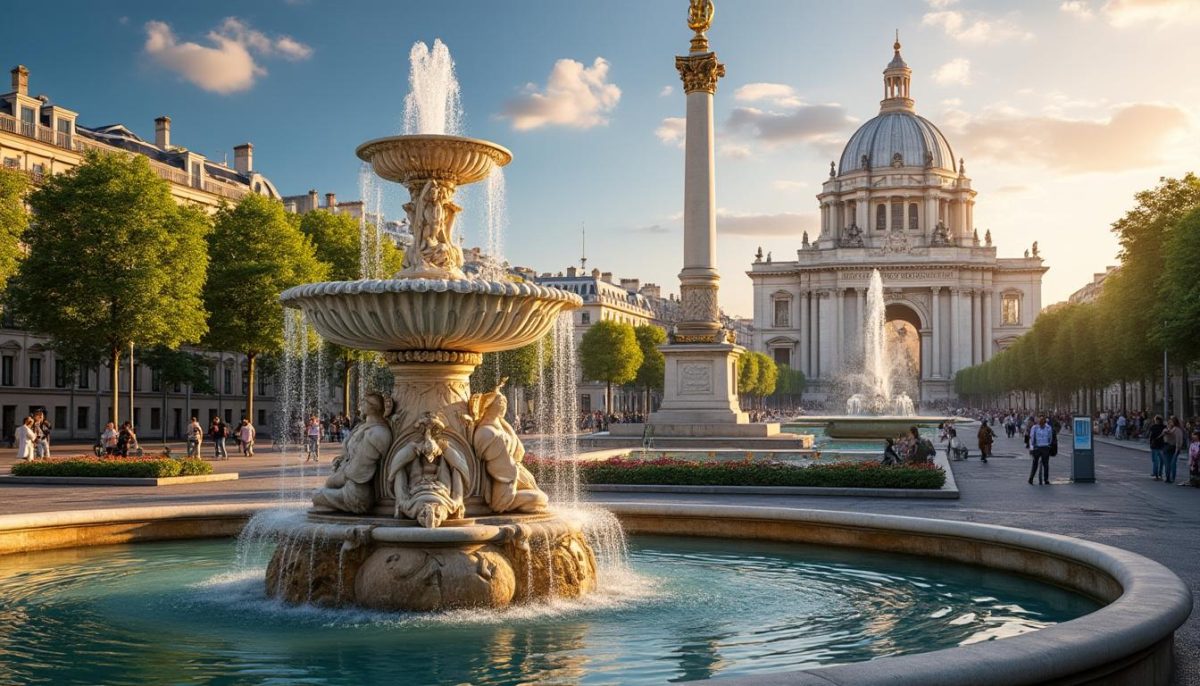
The Fontaine de la Concorde, completed between 1836 and 1840, serves as a landmark example of this architectural dedication. Designed during the reign of Louis-Philippe, it commemorated both maritime commerce and the abundant resources from France’s major rivers. Here, the marriage of practicality and beauty becomes apparent; the fountain was not merely functional, but fabricated in a way that celebrated France’s cultural and geographical wealth. Such examples underscore how fountains in Paris are not just pretty additions to the urban landscape but are filled with a history that reflects the city’s long-standing relationship with water, commerce, and art.
Art and Architecture – An Unforgettable Fusion
The artistic creativity confined within each fountain in Paris is remarkable. Many of these structures are masterpieces, reminiscent of various artistic movements that have flourished across Europe. Renowned architects and sculptors such as Jean Goujon and Edme Bouchardon contributed to the series of creations that define Paris. The art embedded in the sculptures of these fountains provides unique insights into cultural trends and societal values of their respective eras.
The Fontaine de Mars, designed by François-Jean Bralle in 1806, epitomizes this blend of history and artistry. Located on Rue Saint-Dominique, the fountain celebrates martial strength through its intricate carvings and bas-reliefs of Roman deities like Mars, complemented by Hygieia, the goddess of health. Its placement near Les Invalides further reinforces the historical narrative, highlighting the connection between water, warfare, and wellness throughout Paris’s storied past.
The architectural styles exhibited at these fountains range from classical to baroque to neoclassical, offering an extensive visual journey for visitors. They vary in size, scale, and design, each sharing a narrative integral to the broader tapestry of Parisian and French history. For instance, the ornate Fontaine de Saint-Sulpice is celebrated for its monumental scale and the four statues it features, representing pivotal bishops. Created between 1843 and 1848 by the architect Louis Visconti, it stands as a testament to the intersection of religious and civic life, thereby enriching the cultural tableau of the city.
Fountains as Cultural Landmarks
Throughout Paris, fountains have not only quenched thirst but also served as cultural landmarks. Their locations often reflect the stories of the districts they inhabit. They have become social gathering spots where Parisians convene, socialize, and cultivate a sense of community. Establishing these fountains as points of reference, both for navigation and for identity, imbues them with an added layer of significance. For instance, the lively Fontaine Saint-Michel, constructed between 1858 and 1860 under the design of Gabriel Davioud, occupies a critical area in the Latin Quarter, filled with lively cafés and street performances.
This area, often bustling with life, finds a balance in the tranquil presence of the fountain, which attracts both tourists and locals alike. It stands at the intersection of historical narrative and contemporary engagement, showcasing how fountains can adapt and endure across centuries. The aesthetic and cultural value it offers enhances the visual palette of the district, making it an inseparable part of the urban fabric.
By visiting these iconic fountains, one can immerse oneself in the stories they tell—not just through their structures but through the shared experiences they foster. The cultural dialogues that unfold around them, from artists drawing inspiration to couples sharing quiet moments, highlight the multifaceted roles fountains play in the Parisian experience. Their importance thus extends far beyond the realm of art and architecture, encapsulating the daily rhythms of life in Paris. Notably, when discussing the fountains, one must also address their evolution into symbols representing various movements and identities throughout the city’s history.
Importance in Tourism
The fountains of Paris hold significant importance in the realm of tourism, becoming essential attractions that draw millions each year. They entice visitors to explore the districts around them, ultimately serving as gateways to deeper cultural experiences. Programs dedicated to the preservation and promotion of these iconic landmarks have flourished, marking their increasing importance for tourism as well as local pride. Consequently, these structures inform a visitor’s understanding of Paris beyond mere sightseeing.
Many tourists find themselves enchanted not only by the fountains’ aesthetic appeal but also by their historical context. Guided tours often include these sites, allowing visitors to glean knowledge about the intricate designs and the stories behind each fountain’s inception. The tourist experience is thereby enriched, leaving them with not only fond memories of leisure in front of flowing water but also a sense of connectivity with the city’s past.
Moreover, as travelers weave their paths through the city, they are often positioned to witness the convergence of history, architecture, and daily life, prompting a newfound appreciation for local culture. For instance, the popularity of fountains like the Fontaine de Léda and Fontaine des Quatre-Saisons provides a remarkable crossroad where tourists gather, engage, and forge meaningful connections to the city. Thus, these fountains have morphed into vital symbols of tourism in Paris, allowing visitors to integrate deeper into the ever-evolving metropolis.
| Fountain Name | Year Established | Architect/Artist | Significance |
|---|---|---|---|
| Fontaine des Innocents | 1550 | Jean Goujon | Oldest monumental fountain, symbolizes clean water access |
| Fontaine de la Concorde | 1836-1840 | Unknown | Monument to maritime trade, reflects France’s geographic wealth |
| Fontaine de Saint-Sulpice | 1843-1848 | Louis Visconti | Monumental scale, celebrates religious and civic values |
| Fontaine Saint-Michel | 1858-1860 | Gabriel Davioud | Cultural hotspot in the Latin Quarter, blending local life with history |
| Fontaine de Mars | 1806 | François-Jean Bralle | Celebrates health and warfare, depicting significant deities |
Future of Fountains in Paris
The future of Parisian fountains promises to be just as dynamic and compelling as their past. Given their historical significance and cultural importance, there is a sustained interest in preserving these architectural marvels. Restoration and conservation efforts remain a priority for local authorities, ensuring these fountains endure the test of time. Additionally, as urban environments continue to evolve, the demand for sustainability introduces innovative ways to incorporate modern technology into these cherished structures.
In recent years, ecological designs that make use of recycled water, solar energy, and native plant landscaping have gained traction, reflecting a growing societal commitment to environmental responsibility. For instance, the city has initiated pilot projects that integrate water-saving technologies into select fountains, thereby aligning tradition with contemporary ecological practices. Such advancements will ensure that Parisian fountains not only maintain their aesthetic appeal but also enrich the urban ecology.
Moreover, as tourism continues to soar, there is an increasing recognition that fountains can serve as educational platforms to promote environmental awareness. By implementing informational displays around these structures, visitors can engage with questions related to conservation, sustainability, and the history of water management in urban settings. Through these methods, the role of fountains can further expand as they remain timeless symbols of Paris, blending art, history, and nature into a cohesive narrative.