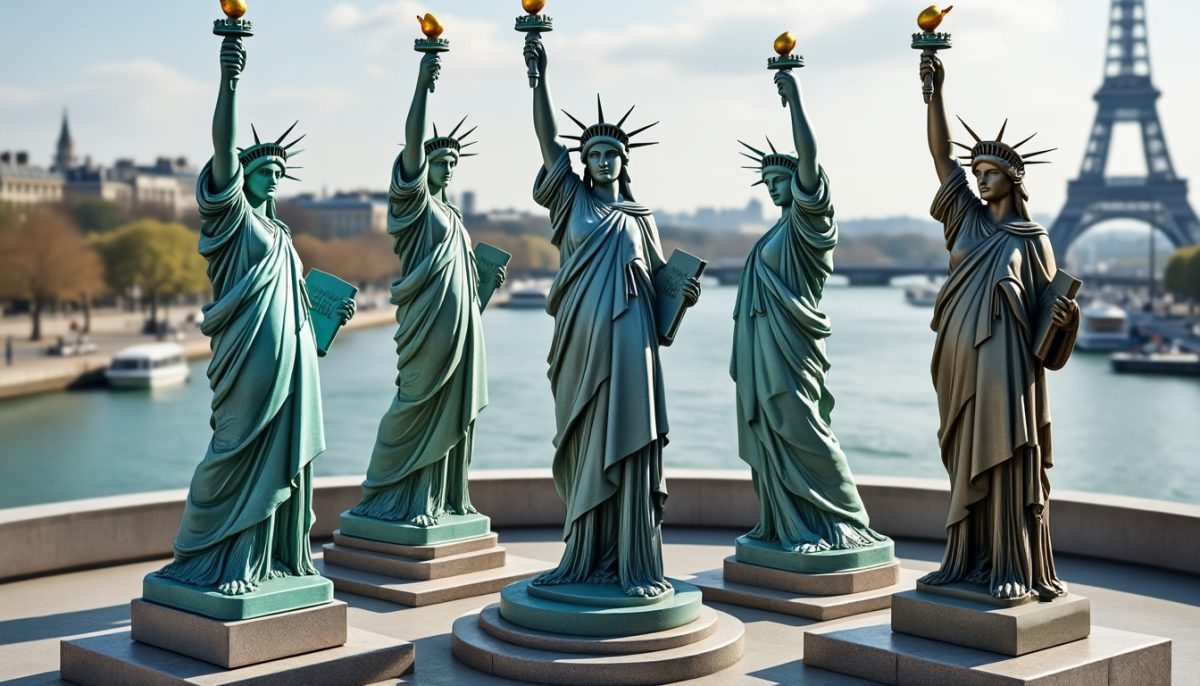
In the heart of Paris, a rich tapestry of history and cultural exchange can be woven around the symbol of liberty that transcends borders. The iconic Statue of Liberty holds a significant place not only in New York Harbor but also within the streets and parks of the City of Light. The statues found in Paris serve as a testament to the enduring Franco-American friendship, embodying the ideals of freedom and democracy that resonate deeply in both nations. As one walks through Paris, the presence of these statues presents an opportunity to explore not just their individual stories, but also the shared history that led to their creation and installation.
The connection between Paris and the Statue of Liberty began in the mid-19th century when French sculptor Frédéric Auguste Bartholdi was inspired to create a monument celebrating liberty after a conversation with Édouard de Laboulaye. This exchange encapsulated the aspirations of both French and American cultures during a time of great political change. As Bartholdi worked on the initial designs, he showcased elements of the statue at various exhibitions in Paris, generating interest and funding for the colossal venture. By the time the statue was completed in 1885 and shipped to New York, its roots were firmly entrenched in Parisian soil.
Understanding the Historical Significance of Liberty in Paris
At its core, the history of the Statue of Liberty in Paris is a multifaceted narrative that highlights deep-seated connections between the two regions. The first replica can be found along the Seine River, a striking reminder of the affection and admiration the French have for the American ideals the statue embodies. This narrative is rich in symbolism, connecting the past to the present, and bringing to light the ideals of liberty that have changed the course of history for many.
Artistry plays a formidable role in the depiction of liberty. Bartholdi’s design was not only an engineering feat but also a profound representation of freedom that spoke to both nations. Over the years, Paris has privileged several replicas of this majestic symbol, each grounded in a unique story. From a small model displayed at the Musée d’Orsay to the larger, more well-known version on the Allée des Cygnes, these sculptures evoke feelings of unity, hope, and remembrance.
The Allée des Cygnes: The Largest Statue of Liberty in Paris
Standing proudly in the middle of the Seine, the largest replica of the Statue of Liberty in Paris graces the Allée des Cygnes. This quarter-scale model was gifted to France by American residents living in Paris in 1889, marking the centenary of the French Revolution. Positioned facing west, the statue symbolically looks toward its American counterpart, further enhancing the narrative of friendship and shared democratic values. Visitors here enjoy a serene promenade, surrounded by lush trees and serene views of the Eiffel Tower, creating a beautiful setting for reflection and appreciation of this iconic figure.
The monument itself has incorporated various elements that reflect its historical significance. Two plaques at the base represent pivotal dates in history: July 4, 1776, the date of American independence, and July 14, 1789, the beginning of the French Revolution. These inscriptions serve to remind visitors of the closely linked histories of both nations and the ongoing relevance of liberty throughout the ages.
Exploring Other Statues of Liberty in Paris
Beyond the celebrated replica on the Allée des Cygnes, Paris boasts several smaller yet equally meaningful renditions of the Statue of Liberty. The Musée des Arts et Métiers houses a significant artifact: Bartholdi’s original plaster model created in 1878. This nearly three-meter tall model illustrates the dedication and intricate design process that culminated in the statue we know today. Visitors can view this piece and other exhibits on the museum’s rich collection of scientific and artistic achievements, linking art and innovation as fundamental to the spirit of liberty.
Just a stone’s throw away at the Musée d’Orsay, another smaller version created for the 1900 Exposition Universelle stands to cheerfully greet art enthusiasts. This statue was once housed in the Jardin du Luxembourg and reflects Bartholdi’s desire to invoke the spirit of liberty within the hearts of his fellow countrymen, reminding them of their shared values.
The Touchstones of Franco-American Friendship: Jardin du Luxembourg and Pont de l’Alma
In the lush surroundings of the Jardin du Luxembourg, a replica was gifted by the American community in Paris to honor those affected by the events of September 11, 2001. This solemn dedication emphasizes the long-standing relationship between the two countries while encapsulating moments of unity in the face of adversity. The oak tree under which it stands serves as a living testament to resilience, while the inscription beneath it reinforces the message of hope and remembrance.
Further along, the golden flame at Pont de l’Alma has morphed into an unofficial memorial for Princess Diana, intertwining themes of both liberty and tragedy. Originally a gift to Paris in 1986 commemorating the centenary of the Statue of Liberty, this sculpture symbolizes the freedom of expression and the love for humanity. The site has become a popular stop for tourists and locals alike, who leave tokens of remembrance as they pay tribute to a beloved figure and the ideals of liberty.
The Artistic Journey of Lady Liberty: From Concept to Icon
The story of Lady Liberty begins with the visionary Frédéric Auguste Bartholdi, who profoundly shaped the concept of monumental sculpture. The inception of the Statue of Liberty emerged from a conversation with Édouard de Laboulaye in the mid-1860s. This pivotal moment showcased the ambitions and aspirations of both nations; Bartholdi’s artistic journey to procure funding and approval culminated in the production of a colossal structure that would come to symbolize the values of democracy and freedom.
During the artistic journey, Bartholdi presented various models and sections of the statue at exhibitions to drum up support, leading to the first showing of Lady Liberty’s head and arm. These parts became attractions in their own right, symbolizing the promise of the final monument. As the years passed, influence swirled around both the creation and the story of the statue, forever linking France and the United States in a shared narrative of liberation.
| Location | Statue Details | Year of Installation |
|---|---|---|
| Allée des Cygnes | Quarter-scale replica | 1889 |
| Musée des Arts et Métiers | Original plaster model | 1878 |
| Musée d’Orsay | Small replica for exposition | 1900 |
| Jardin du Luxembourg | Memorial replica | 2001 |
| Pont de l’Alma | Golden flame sculpture | 1986 |
The Modern Relevance of the Statue of Liberty
As we step into 2026, the impact of the Statue of Liberty resonates more profoundly than ever. In an era defined by movements advocating for freedom and justice globally, the significance of Lady Liberty remains crucial. Both Paris and New York City are grappling with their roles as symbols of liberty in a changing world, where cultural exchanges continue to thrive. The statues in Paris stand as reminders of the commitment to the ideals that inspired their creation and encourage contemporary conversations about freedom and equality.
The journey of the Statue of Liberty, from its conception in Paris to its position as an international emblem of hope, unfolds a story that is not just American but deeply rooted in French culture and history. As visitors explore these monuments spread across Paris, they are invited to reflect on the universal truths of liberty that connect people all over the world.