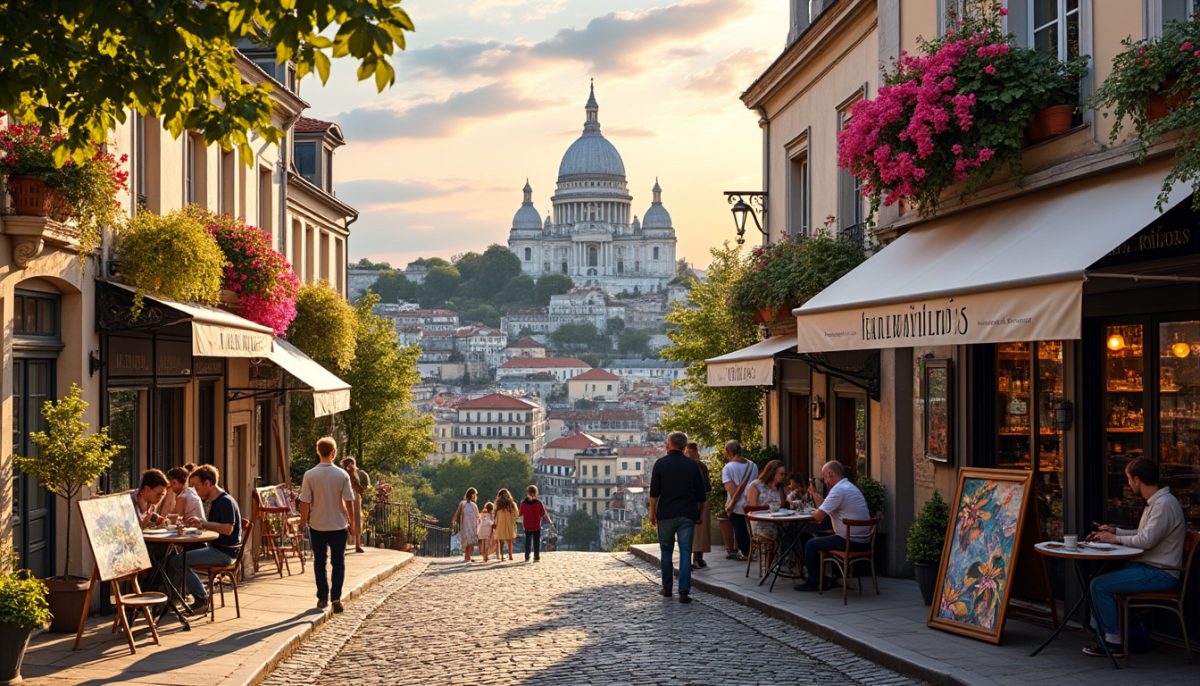
Montmartre, often referred to as one of Paris’s most charming and historic neighborhoods, is a treasure trove of artistic heritage and unique atmospheres. Set on a picturesque hill, this former village offers scenic strolls that captivate the hearts of locals and visitors alike. The cobblestone streets, dotted with historic landmarks, bring to life the stories of legendary artists who once called Montmartre home—figures like Picasso, van Gogh, and Renoir. Today, this area retains its bohemian spirit, welcoming those eager to explore its vibrant culture and breathtaking views.
Whether you’re meandering through the bustling streets around Place du Tertre or seeking hidden gems in tranquil corners, Montmartre is a destination that promises enchantment and inspiration. This article takes you through three distinct walking experiences, each tailored to unveil the diverse charm of Montmartre, where every step resonates with the tales of yesteryear.
Discovering the Nostalgic Charm of Place des Abbesses
Starting your Montmartre journey at the vibrant Place des Abbesses is a must. This square is known for its lively atmosphere, accentuated by the whimsical children’s carousel and the striking Église Saint-Jean de Montmartre, a beautiful brick church that conjures a sense of historical significance. As soon as you step off Metro line 12, you are greeted by the iconic Art Deco Metro entrance designed by Hector Guimard.
From the square, a short walk leads you to the Passage des Abbesses, a quaint passageway that invites exploration. Ascending the gentle hill will bring you to Rue des 3 Frères. Along this journey, you can pause at Square J. Rictus, where a mural tile installation expresses love in numerous languages—a testament to the artistic spirit of the area. This seems fitting, considering Montmartre has historically been a haven for lovers and dreamers.
Continuing down Rue des 3 Frères, a noteworthy stop is located at 11 bis—once the famous rooming house known as Le Bateau-Lavoir. Although the original building has since disappeared, this site was a thriving hub for iconic artists such as Picasso and Matisse. The history here is palpable, and guided walking tours shed light on these famous figures who continuously shaped the art world while residing in Montmartre.
As you make your way to the heart of Montmartre, the village atmosphere becomes increasingly apparent. You will feel less like a tourist and more like a local driving through the scenic streets. Each twist and turn reveals charming cafés, bakeries, and shops, where you might indulge in freshly baked pastries or warm, aromatic coffee. Just be sure to take your time; the allure of Montmartre lies in its ability to surprise you with delightful moments and hidden treasures.
Walking Along the Iconic Rue Lepic
Leaving Place des Abbesses, proceed westwards along Rue des Abbesses, where locals gather for their daily routines. This bustling area transitions smoothly into the scenic Rue Lepic, one of the quintessential streets that defines the residential character of Montmartre. As you walk its cobblestones, the reflections of a bygone era seem to emerge from the buildings lining the street.
The charm of Rue Lepic becomes even more distinct as you approach the Moulin de la Galette, a historic restaurant once frequented by famous Impressionist painters. The café is situated beneath one of the few surviving windmills that once dotted the landscape. Renoir’s painting of this area captures its vibrant energy and social interactions, making a visit to the site truly transporting.
Imagine being part of the artistic conversations that took place here in the 19th century. Van Gogh himself lived nearby, and his works often depicted the life around him, providing a visual representation of the neighborhood’s creative pulse. The climb up the cobblestone road delivers various surprises, including quaint eateries offering a taste of traditional French cuisine and modern bistros that showcase the evolving food scene in Montmartre.
Taking a break at Parc Jean-Baptiste Clément allows for some relaxation while enjoying views of the bustling Parisian life below. This small park is an oasis where you can unwind and reflect on your stroll. Whether it’s the scents of blooming flowers in spring or the vibrant hues of autumn leaves, each season adds a touch of magic.
Short Promenade Through Historical Landmarks
A concise but insightful navigation through Montmartre would not be complete without wandering through its lesser-known streets. Starting once again at Place des Abbesses, venture into Rue Ravignan and take a left onto Rue d’Orchampt, where the appeal lies in the narrow, cobblestone charm. Each turn feels like a step back in time, highlighting the simplicity of village life amidst the bustling metropolis.
This path leads you to important landmarks, including Le Lapin Agile, a cabaret steeped in history. It was here that Picasso and other artists gathered, and it’s easy to understand why this intimate setting inspired their creative endeavors. The ambiance still resonates with the laughter and music of the past. You might even catch a glimpse of a lively performance adding to the rich tapestry of artistic tradition in the area.
Following Rue Lepic toward Place du Tertre, you’ll find yourself swept into a vibrant square alive with creative expression. Here, local artists display their work, and visitors can enjoy a fun mix of portraits and caricatures. The atmosphere is infectious, capturing the essence of Montmartre as a once-thriving artistic neighborhood filled with passion and talent.
Each visit to Montmartre allows you to connect with its artful legacy, creating timeless memories. Make sure to explore side streets that lead to vineyard plots and quaint shops, showcasing the distinctive flavor of Parisian life. While Montmartre is now a tourist destination, its roots still echo in the hustle and bustle around.
The Temptation to Return: Unveiling Montmartre’s Secrets
Montmartre is more than just a neighborhood; it’s a living testament to Paris’s rich immigration patterns, local traditions, and creative currents. It is a cultural landscape that prompts one to wonder what further stories lie hidden in its alleys. A walking tour through Montmartre invites exploration beyond the familiar points and into the depths of the hilltop village.
The charm of Montmartre is not limited to its famous landmarks. Each street, each café, each artist’s canvas opens a window to the vibrancy of life here. The collective spirit of those who have lived and worked in this community is palpable, enveloping visitors in a welcoming embrace that encourages them to linger a little longer. Walking tours reveal not just the artistic legacy of Montmartre but also cultural dialogues that have influenced Paris and its people, rendering it a fascinating site for study and appreciation.
As contemporary life weaves into this historic fabric, Montmartre thrives as a dynamic hub of art, culture, and cuisine. There’s always something new to discover, a fresh experience waiting around the corner—whether it’s a new exhibit in a local gallery or an innovative dish crafted by a passionate chef. On your return to Montmartre, you will find a neighborhood that continuously reinvents itself while honoring its storied past.
| Walking Tour Highlights | Key Features | Recommended Length |
|---|---|---|
| Place des Abbesses | Historic churches, art deco metro entrance | 1 hour |
| Rue Lepic | Moulin de la Galette, local eateries | 1.5 hours |
| Historical Landmarks Route | Le Lapin Agile, Place du Tertre | 2 hours |