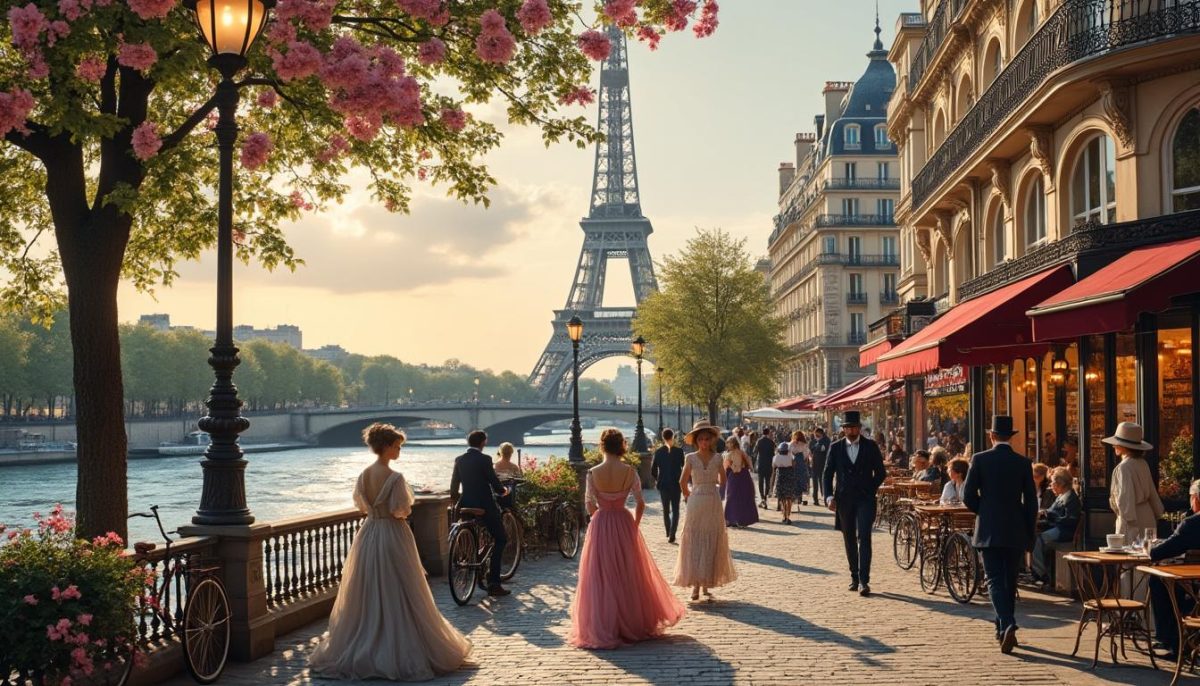
Throughout the expansive streets of Paris, history whispers tales of its vibrant past, particularly during the Napoleonic era when one man reshaped the city’s landscape, ideology, and legacy. Napoleon Bonaparte, a figure often surrounded by controversy, remains a central character in France’s narrative. As we stroll through the historic pathways he once walked, it’s essential to appreciate both the grandeur and complexity of his contributions to Paris. From the iconic landmarks that serve as monuments to military triumph to the urban design that reflects his vision for a modern city, Napoleon was not simply a general; he was a transformative leader who left a profound imprint on French culture and architecture. Discovering his Paris offers a unique blend of art, ambition, and the relentless pursuit of power, creating a vibrant tableau that captures the essence of a city still very much in tune with its imperial past.
The Louvre: From Royal Palace to World’s Most Visited Museum
The journey into Napoleon’s Paris must begin at the Louvre, a testament to the evolution of a space that began as a fortress in the 12th century. Gradually transformed into a royal palace, it was here that Napoleon established his own dominion. Taking residence in the nearby Tuileries Palace, he ensured the Louvre’s significance not only as a royal abode but a cultural beacon. In 1810, the Grand Gallery became the backdrop for his marriage to Marie Louise of Austria, symbolizing the intertwining of love and power.
During his reign, Napoleon augmented the Louvre, converting it into a repository for the artwork he acquired through military conquests. This transformation marked the birth of the Musée Napoléon, an ambitious endeavor that sought to showcase France’s artistic prowess. Among the treasures displayed were works of renowned artists, with many pieces, such as the famed Mona Lisa, drawing millions to its halls each year.
Yet, Napoleon’s influence extended beyond mere decoration. He recognized the underwhelming state of the Louvre’s infrastructure and commissioned essential renovations to seal the gaping roofs left by previous monarchs. The construction of the Arc de Triomphe du Carrousel stands as a grand entrance to the museum, a reflection of his desire to connect contemporary culture with the past. Today, this arch remains a pivotal point for visitors, ushering them into the complex rich with history.
From the Louvre to Rue de Rivoli
Emerging from the Louvre, we make our way to Rue de Rivoli, a street named after Napoleon’s victory in Italy. When he envisioned this thoroughfare, he aimed to create an essential axis in Paris that signified urban unity and aesthetic coordination. Built to connect the Louvre and Place de la Concorde, the architecture embodies a coherent style that ultimately influenced the layout of Paris in the 19th century, a theme that would be echoed by Baron Haussmann in his later renovations.
Proudly sporting uniform façades, the confluence of shops and arcades along Rue de Rivoli invites leisurely exploration, mirroring the excitement and optimism of the Napoleonic era. Here, Parisians and tourists alike can immerse themselves in the vibrant atmosphere that the street has maintained over centuries. The legacy is palpable as one strolls through these arcades, imagining the footsteps of soldiers, the whispers of political machinations, and the laughter of those indulging in the dynamic life of the city.
Place Vendôme: The Monument to Military Glory
Continuing our journey, we arrive at the heart of Place Vendôme, adorned with its elegant column standing tall as a symbol of Napoleonic accomplishments. Although the square itself dates back to the reign of Louis XIV, it was Napoleon who left an indelible mark with the creation of the Vendôme Column—a striking monument crafted from the bronze of captured cannons, commemorating his military successes.
As one gazes upon the column, the intricate reliefs tell stories of heroic battles and victorious campaigns, a narrative shaped, in large part, by Napoleon’s ambition and military prowess. The history of the column is not without its own drama, having undergone numerous transformations over the years, including the removal of Napoleon’s statue only to be replaced eventually, showcasing the contentious nature of his legacy.
This square not only encapsulates the glory of military victories but also reflects the ambitions of a burgeoning empire. Interestingly, the wide avenue connecting Place Vendôme to the grand boulevards is named Rue de la Paix—an apt title considering the duality of ambition and reconciliation that marked Napoleon’s vision for France. Strolling through this area allows one to reflect on the complexities of power and the ongoing dialogues between legacy and memory.
Place de la Concorde: A Balanced Perspective
Next, our exploration leads us to Place de la Concorde, a space steeped in historical significance. Originally named after Louis XV, it bore witness to the gruesome guillotine during the revolution. Napoleon, aiming to redefine this space’s essence, desired a beautiful vista to distract from its dark past. Not only did he understand the power of aesthetics in politics, but he also sought to cultivate a narrative of renewal.
The landscape here provides an incredible view of the Palais Bourbon across the Seine, which became a symbol of parliamentary democracy post-revolution. Napoleon transformed the view by commissioning a classical temple in honor of his Grande Armée, though the transformation took decades and evolved into what is known today as the Église de la Madeleine.
Walking through this square, its fountains and statues foster a reflective ambiance. The harmonious balance between the ancient and the modern reveals the complex layers of Parisian history, a physical manifestation of how Napoleon sought to weave together the fabric of France, bridging its tumultuous past with ambition for a glorious future.
The Arc de Triomphe: A Lasting Monument
No discourse on Napoleon’s impact on Paris is complete without the Arc de Triomphe, arguably his most enduring monument. Commissioned in 1806, this grand structure wasn’t completed until 1836, long after his death. Modeled after the Arch of Titus in Rome, it was designed to celebrate military victories and the glory of a united France. The arch becomes not merely a feature of the Paris skyline but a symbol of resilience, as it commemorates those who fought for their country.
The Arc de Triomphe serves as a poignant reminder that Napoleon’s legacy extends beyond his military conquests. It is also a space of reconciliation, where visitors can pay homage to the Unknown Soldier and reflect on the sacrifices made in the name of liberty. The arch stands central to the routes of protest and celebration, capturing the unity and spirit of the diverse citizenry of Paris.
Climbing to the top offers panoramic views of the city, a vantage point from which to contemplate both the passage of time and the enduring nature of Parisian identity. This perspective deepens the connection to Napoleon, as one stands where he once passed, observing both the beauty and complexity of a city shaped by ambition and strife.
Legacy of Waterworks: A Modern Infrastructure
Napoleon’s foresight extended to public infrastructure; he made significant contributions to the water supply in Paris. Recognizing that the pristine water of the Seine was insufficient for a growing metropolis, he initiated the construction of a canal from the River Ourcq to provide fresh water directly to the city. By 1812, he established a network of fountains powered by this new source, providing residents with accessible water— an innovation that undoubtedly enhanced public health.
The fountains not only beautified the streets of Paris but served as social gathering spots, contributing to the vibrant daily life of the city. Their presence represents a commitment to creating a more livable urban environment, an integral aspect of Napoleon’s broader vision for Paris. Today, the legacy of these waterworks persists, with several fountains still functional, serving as reminders of a time when civic planning took on new significance.
Conclusion: Tracing Historic Pathways in Modern Paris
Strolling through the pathways of Napoleon’s Paris reveals a city not merely defined by its history but by the unique narratives woven into its fabric. Each landmark, from the Louvre to the Arc de Triomphe, tells a story of ambition, transformation, and occasionally, tumult. As we explore the legacies of the Napoleonic era, we uncover a complex interplay between glory and controversy, beauty and hardship, illustrating the depth of Parisian heritage.