In the heart of Paris lies an architectural gem steeped in history: the Saint-Germain-des-Prés Church. As the oldest church in the city, its origins trace back to the 6th century, a time when the influence of the Merovingian Kings shaped the contours of the French landscape. Established by Childebert I, the church’s foundation served as a royal mausoleum, becoming the final resting place for some of France’s earliest rulers and symbolizing the intertwining of faith and power throughout the ages. With each stone and arch, the church whispers tales of warriors, monks, and the ravages of Viking invasions that once threatened its sanctity. Today, the vibrant neighborhood that shares its name pulses with life, home to famed cafés where literary giants gathered and where newfound brilliance continues to flourish amidst the echoes of the past.
The Ancient Foundations: Saint-Germain-des-Prés and the Merovingian Kings
History has a curious way of enfolding itself, layer upon layer, like the ornate facades of Saint-Germain-des-Prés. Founded in 558 AD, the church was initially dedicated to Saint Vincent, whose relics were honored within its walls at the behest of King Childebert I, the son of Clovis. This ambitious ruler sought to establish not just a house of worship but also a beacon of royal heritage, becoming a testament to the early power wielded by the Merovingians.
The first iterations of the church were relatively modest, situated on the banks of the Seine, amidst fields that would eventually evolve into the bustling district we recognize today. It is remarkable to realize that Saint-Germain-des-Prés was once a site far removed from the metropolis—a pastoral haven that fostered early monastic communities. Among its cloisters, monks meticulously transcribed and preserved vital texts, laying the foundation for education and literacy that would resonate throughout France and beyond.
Throughout the centuries, the church served as a necropolis for the Merovingian dynasty. Within its sacred grounds, six generations of kings, including Childeric II, were buried, cementing its status as a royal mausoleum. The crypts, laden with relics and royal history, bear silent witness to the turbulent era of early medieval France. The church’s significance only grew, evolving into a spiritual and political epicenter where matters of the state and church intertwined.
The Monks of Saint-Germain-des-Prés: Guardians of Knowledge
The monastic community that coalesced around Saint-Germain-des-Prés not only upheld religious practices but also played a vital role in the preservation of culture and education during the Dark Ages. As the Viking invasions swept through Paris, threatening the very fabric of life, these monks became protectors of knowledge. Their arduous task of copying texts was paramount during an age when manuscripts were precious commodities.
Amidst the chaos and destruction that the Vikings brought upon the region, the monks persevered, often hiding invaluable texts within the church’s confines. The repeated raids forced them to rebuild, reaffirming their commitment to their sacred mission. Despite the turmoil, the monastery of Saint-Germain attracted learned scholars from all over Europe, transforming it into a center of spiritual growth and intellectual discourse.
The lives of these monks were not mere reflections of religious devotion; they were intertwined with the destiny of a nation that looked to its foundational churches as bastions against uncertainty. The legacy of the Abbey of Saint-Germain-des-Prés is thus paramount in understanding the development of French culture during those turbulent centuries.
Architectural Evolution: From Romanesque to Modern Times
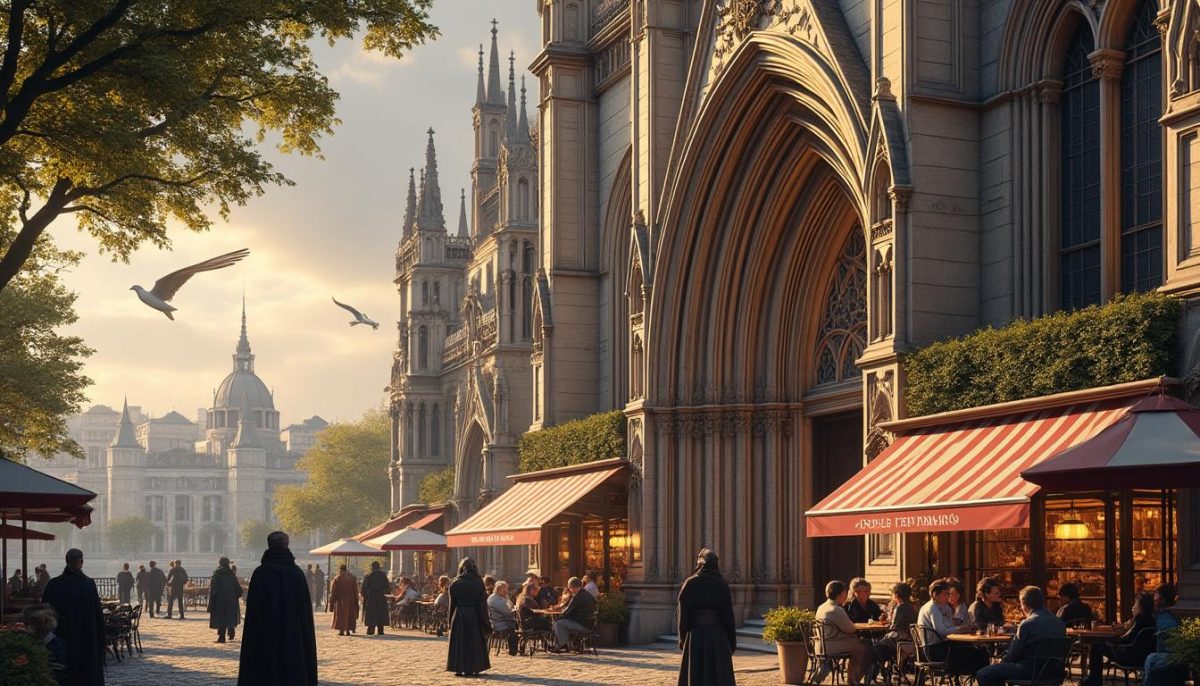
Saint-Germain-des-Prés has undergone a transformative journey over the centuries, mirroring the tumultuous history of Paris itself. The original Romanesque structure, fashionable in the 11th century, displays characteristics such as thick walls, round arches, and barrel vaults that speak of resilience. Its three towering spires, although long gone, once announced its presence across the landscape, embodying both sanctity and strength.
As one walks through the remnants of this ancient church today, they encounter flying buttresses that were added in the 13th century—a testament to the Gothic influences that swept through Europe. The church’s architecture thrived despite the heavy toll of the French Revolution when many of its sacred items were destroyed, and its lands confiscated.
Subsequent restorations have unveiled the church’s historical layers, revealing how each generation has revered or repurposed its holy site. The bell tower, a later addition, along with interior murals introduced in the mid-19th century, narrates the church’s ongoing story of rebirth. With continuous renovations still underway, the Saint-Germain-des-Prés Church balances its ancient roots with a commitment to preserving the architectural treasures that embody its heritage.
Café Culture: Literary Legends and Local Flavor
The neighborhood surrounding Saint-Germain-des-Prés is not solely defined by its historical church but also by the vibrant café culture that has flourished around it. This enchanting district has long been a gathering spot for poets, philosophers, and artists, drawn by the intoxicating atmosphere of creativity that permeates the air. Les Deux Magots, Café de Flore, and Brasserie Lipp are just a few of the iconic establishments where the likes of Ernest Hemingway and Simone de Beauvoir have shared ideas over steaming cups of coffee.
These cafés, with their intimate arrangements and bustling environments, serve as modern-day salons for both locals and tourists alike. A visit to Café de Flore transports one back to the 1920s, when intellectual giants like Jean-Paul Sartre debated the existential questions of the day amidst warm pastries and freshly brewed espresso.
The vibrancy of this café culture continues to attract both the curious and the seasoned Parisian. Stepping inside is not merely a culinary experience but also a dive into the shared communal history of artists, who found inspiration and solace in the same chairs now occupied by tourists. The cultural legacy left behind in these cafés contributes to our understanding of Paris as not just a city but an idea—a tapestry woven together by countless stories.
Preservation of Heritage: The Ongoing Journey of Saint-Germain-des-Prés
As 2026 unfolds, the need for preserving heritage sites like the Saint-Germain-des-Prés Church becomes increasingly urgent, not just for their historical value but for their communal significance. Restoration projects have been initiated to ensure that this ancient monument remains accessible and relevant to future generations. The ongoing work, which includes updating the organ and refurbishing the facilities, aims to honor the church’s past while adapting to contemporary needs.
The church is no longer a solitary entity but rather a part of the vibrant fabric of the Left Bank, seamlessly blending history with modern life. Tourists and locals alike engage with its heritage, participating in services or enjoying the lively atmosphere of nearby cafés. Initiatives to connect the community with its history are central, fostering a sense of ownership over this cherished landmark.
The preservation of Saint-Germain-des-Prés goes beyond bricks and mortar; it embodies the resilience of a culture that refuses to forget its roots. As Paris moves forward, the enduring spirit of this church serves as a reminder of the paths carved out by kings, monks, and artists alike, forever enriching the legacy of this magnificent city.
| Historical Era | Architectural Style | Significant Events |
|---|---|---|
| 6th Century | Early Christian | Foundation by King Childebert I |
| 11th – 13th Century | Romanesque to Gothic | Expansion and Viking invasions |
| 18th Century | Baroque | French Revolution impacts |
| 19th Century | Revival Styles | Restoration and murals added |