There are countless layers to the vibrant tapestry of Parisian life, woven together with rich history and cultural nuances that defy the expectations of even the most seasoned visitors. Beyond the typical tourist experiences lies a treasure trove of quirky and unexpected facts that make Paris not just the City of Light but also a fascinating realm of hidden secrets. From the absence of stop signs to the intriguing history of its urban design, the French capital continues to hold surprises that challenge our perceptions. Whether you are a local, a traveler, or just someone captivated by the allure of Paris, these stories will kindle your curiosity and inspire you to delve deeper into the remarkable narratives that this city has to offer.
The Underground Bunkers of Paris: A Remnant of Turmoil
Paris is often celebrated for its magnificent facades and charming streets, but beneath this romantic image lies an unexpected legacy of conflict and resilience. Beneath the Hotel de Ville, the city’s majestic town hall, lies a network of underground bunkers created in response to the scars left by two significant European conflicts—the Franco-Prussian War and World War I. These bunkers were constructed when tensions began to rise again between the wars, reflecting a pragmatic approach to urban design during precarious times.
After the Commune of 1871, in which rioters burned down the original Hôtel de Ville, the French government recognized the need for enhanced security measures. As they rebuilt the town hall, a series of bunkers were built beneath the structure, designated as emergency shelters. Though designed to protect citizens in times of crisis, these spaces eventually found different uses—today, they serve mainly as storage. This fascinating repurposing is a small but striking reminder of how Paris has evolved, adapting the remnants of its past for the present.
The Uniqueness of Traffic Flow in Paris
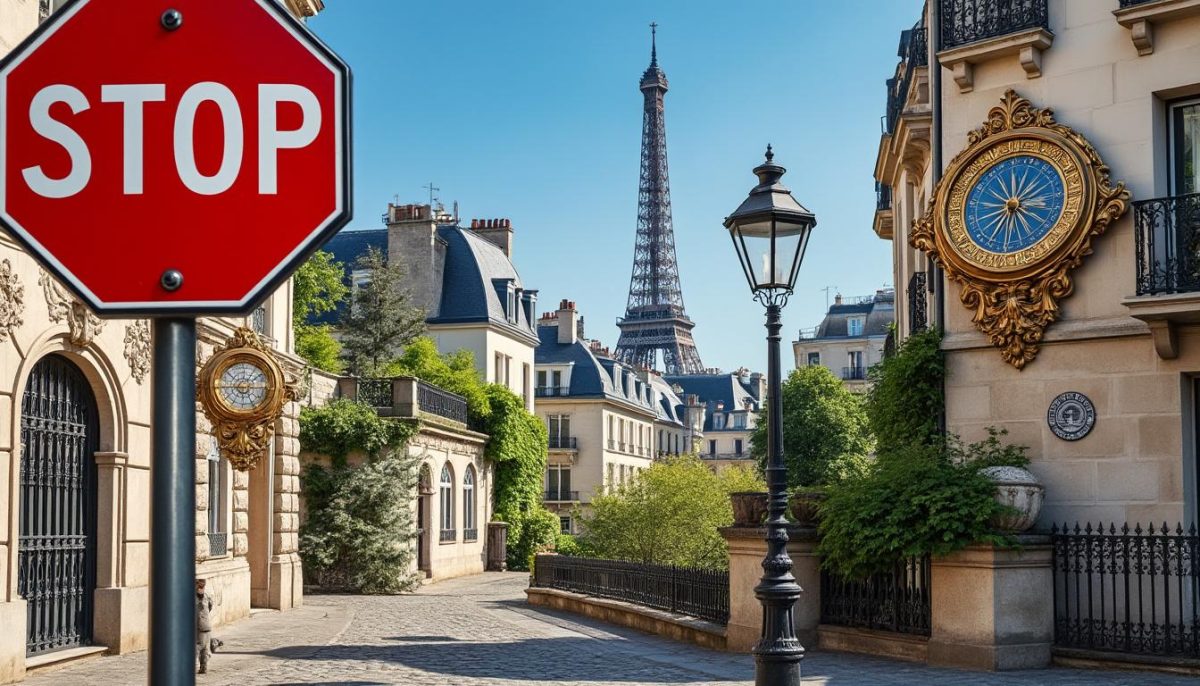
Another quirky aspect of Paris is its distinctive approach to traffic management—specifically, the absence of stop signs. The last stop sign in Paris was taken down in 2013, making it completely unique among major cities worldwide. What many may find surprising is that Paris operates on a system known as “priorité à droite,” or priority to the right. Essentially, this means that vehicles coming from the right have the right of way at intersections. This kind of traffic regulation may confuse visitors who expect the standard presence of stop signs to dictate navigation, contributing to the chaos that is often associated with Parisian traffic.
This traffic practice not only emphasizes the city’s fluidity but also reflects the local philosophy of life—embracing the unexpected. As unruly as it may seem, it fosters a rhythm among drivers that celebrates spontaneity rather than stringent rules. The urban design here encourages nimbleness, a metaphor for how Parisians navigate both their streets and their lives, weaving seamlessly between the old and the new.
A Historical Perspective: The First Black Mayor of Paris
The history of Paris is not merely one of monuments and architecture; it also includes individuals who broke barriers and set precedents. In 1879, Severiano de Heredia made history when he was elected as the president of the Paris City Council, the closest equivalent to a mayor at that time. His election marked a significant milestone as he became the first black mayor of any capital city in the Western world.
Born in 1836 to freed slaves of Cuban heritage, he was sent to France for his education at a young age. His tenure was short-lived, lasting only a few months, but his legacy lingers. Although it was not until 2013 that he received more formal recognition—his name was honored with a street bearing his name in the 17th arrondissement near the cemetery where he is buried. This moment reflects Paris’s slow but ongoing acknowledgment of diverse narratives within its historical tapestry.
A Hidden Historical Landmark in Plain Sight
Within the bustling heart of Paris stands a remarkable yet often overlooked edifice known as the Koechlin-Nouguier Tower, or better known as the Eiffel Tower. While Gustave Eiffel claimed credit for the structure that became synonymous with the city, it is essential to recognize the ingenuity of the engineers who conceptualized it. Maurice Koechlin and Émile Nouguier transformed the vision of a monumental structure into a reality for the 1889 Universal Exposition, symbolizing France’s revival after military defeat. Their idea, though grand in vision, faced the typical challenges of being overshadowed in credit by the figure who championed its construction.
Realizing that their design would be utilized to mark a monumental anniversary—the centenary of the French Revolution—Koechlin and Nouguier faced the striking reality that their innovation would forever be linked to another name. Yet in telling the story of the Eiffel Tower, one must celebrate the collaborative spirit that marked its inception, the spirit that continues to permeate Parisian identity today.
The World’s Largest Sundial: A Timekeeper in the Heart of Paris
At the Place de la Concorde stands an ancient Egyptian obelisk, a monumental gift to France that serves as a whimsical timekeeper. The obelisk is not just a statue; it has been ingeniously transformed into the world’s largest sundial. Marked with Roman numerals, it captures the sun’s rays in a way that reflects the passage of time across its millennia of existence. Constructed back in the 13th century BCE, this obelisk is a historical artifact that links ancient civilization with contemporary urban life.
This sundial doesn’t keep perfect time, as its accuracy wanes except during equinoxes and solstices. Yet it provides a striking visual engagement with the concept of timekeeping, serving as a conversation starter for Parisian life and culture. In a fast-paced world, this ancient relic offers a moment to pause and reflect, reminding us that some things endure while others fade away.
The Evolution of Arrondissements in Paris
Initially, Paris was divided into twelve arrondissements in the aftermath of the French Revolution. However, through the years, the geographic and narrative complexities of Paris have expanded, eventually leading to a total of twenty arrondissements, each with their distinct flavor and charm. Under the influence of Baron Haussmann’s renovation efforts in the 1860s, several suburbs were integrated into the city, redefining the landscape and the socioeconomic profiles of its neighborhoods.
Interestingly, this numerical ordering faced initial backlash, particularly from residents of what became the 16th arrondissement. They protested to avoid the number thirteen for superstition reasons, reflecting the quirky, anecdotal layers of social consciousness ingrained within the Parisian psyche. This shift in numbering was not trivial; it showcased the influence of cultural narratives in urban design and governance.
| Arrondissement | Population (2026) | Main Attractions |
|---|---|---|
| 1st | 17,500 | Louvre Museum, Palais Royal |
| 16th | 170,000 | Bois de Boulogne, Auteuil |
| 20th | 200,000 | Père Lachaise Cemetery, Belleville |
The Allure of Sacre Coeur: A Church That Stays White
Sitting atop the picturesque Montmartre hill, the Basilique du Sacre Coeur is not just known for its stunning architecture but also for an astonishing feature—its dazzling whiteness. Completed in the early 20th century, this church actually becomes *whiter* over time, thanks to the chalk-like quality of its stone. The quarry it was sourced from, located about 100 kilometers south of Paris, exudes a substance when wet that enhances its brightness, yielding a unique architectural phenomenon.
This quality serves not only as a visual marvel but also as an implicit commentary on the relationship between nature, craftsmanship, and urban life. Visitors to Sacre Coeur are not merely captivated by its beauty; they are invited to ponder the geological and historical layers that inform this sacred space in Paris.
Exploring Hidden Secrets of the City
These surprising facts about Paris reveal layers of history, culture, and design that transcend mere appearances. The blend of the past with the evolving narrative of the city exemplifies why Paris continues to captivate us. Through exploring its hidden secrets and engaging with urban design, individuals can appreciate the multifaceted nature of this iconic city. Visitors are encouraged to delve deeper, perhaps through themed walking tours or culinary experiences, to unveil the mysteries that Paris keeps close to its heart.