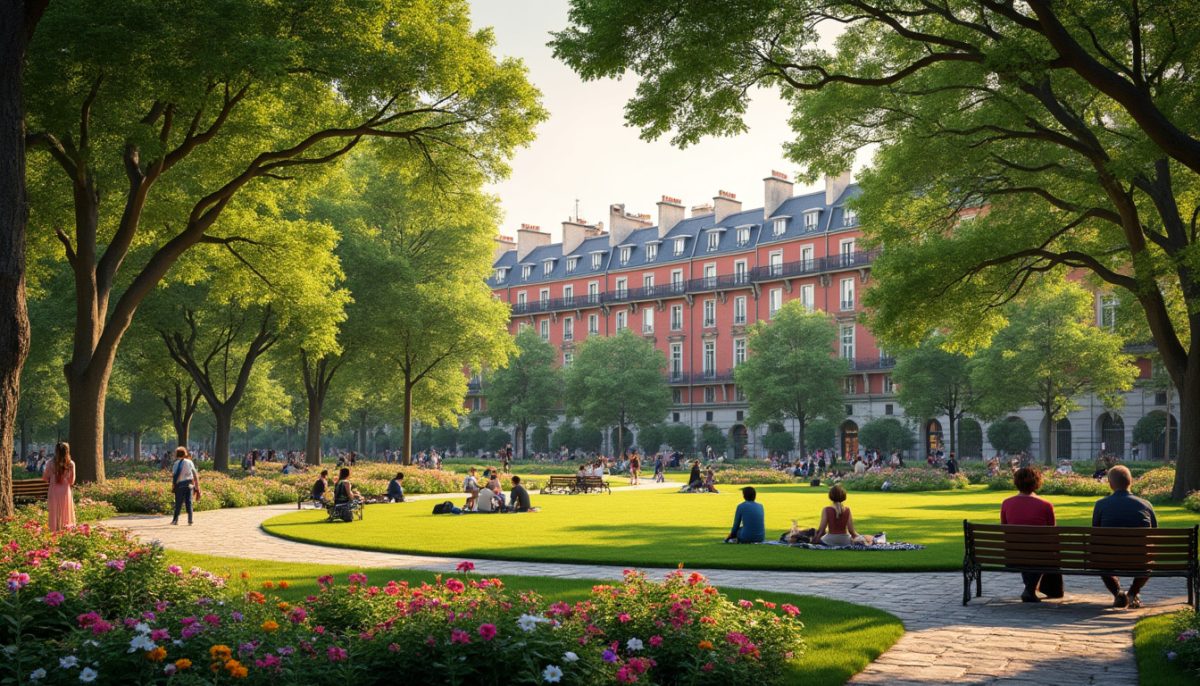
In the heart of Paris, tucked away in the vibrant 20th arrondissement, lies a sanctuary that beautifully juxtaposes urban life with nature’s idyllic offerings. Belleville Park, or Parc de Belleville as it’s known in French, is a remarkable 11-acre oasis that invites visitors to take a respite from the bustling city streets. This park stands as a testament to the revitalization of a once-overlooked hillside, transforming it into a favored locale for locals and tourists alike. With lush gardens, cascading fountains, and breathtaking panoramic views of Paris, Belleville Park is not just a green space; it’s a captivating exploration of the city’s rich history and vibrant culture.
The park was officially inaugurated in 1988, but its story dates back centuries to when Belleville was merely a wine-growing village outside the Paris city limits. Today, the legacy of that history still reverberates in various features of the park. Visitors can find a small vineyard, a homage to Belleville’s winemaking heritage, reminding them of the area’s transformation from a rural setting to an urban playground. Moreover, the park serves as a community hub where laughter, joy, and outdoor activities intertwine, making it an ideal family destination.
Exploring the Natural Beauty of Belleville Park
At first glance, one is immediately struck by the stunning layout of Belleville Park, designed to provide visitors with both breathtaking scenery and an immersive experience in nature. The park’s elevation is one of its most significant features, as it is the highest park in Paris, standing approximately 30 meters above sea level. This altitude not only offers remarkable views of the Paris skyline but also creates a unique microclimate that nurtures an array of plant species.
The design of the park is an exploration of the spontaneous nature of urban parks. Unlike France’s classic formal gardens, which boast symmetrical paths and geometrically arranged trees, Belleville Park’s pathways meander organically down the hillside. They offer a winding tour through various flora and hidden corners. The central staircase elegantly connects the tiered pathways, enhancing the experience of exploring the lush surroundings.
A notable feature of the park is the Belvédère, a pavilion that rises above the rest, presenting visitors with expansive views that include iconic landmarks such as the Eiffel Tower and Montparnasse Tower. This picturesque spot is perfect for photography enthusiasts keen to capture the juxtaposition of nature against the urban backdrop. Below the Belvédère is the Fontaine de Belleville, where a series of cascading water features adds serenity to the vibrant atmosphere of the park. These burbling fountains and their surrounding lush greenery create tranquil resting spots, inviting visitors to relax and unwind.
Activities and Family Fun at Belleville Park
Belleville Park is not only a peaceful escape; it’s a vibrant area designed for families and outdoor activities. The expansive space invites children to explore freely, with numerous spots for picnicking or simply enjoying the sun. One of the park’s most engaging features for kids is the imaginative wooden playground. Designed with safety and creativity in mind, this playground includes gentle climbing walls, portholes, and slides, with the longest slide in Paris drawing excitement from its young users. The playground operates as an engaging environment where children can socialize, discover, and create unforgettable memories.
The park’s kid-friendly atmosphere extends beyond merely play areas. Families can partake in various activities throughout the year. Seasonal events often feature local artists and musicians, transforming the park into an open-air gallery celebrating community talent. The combination of outdoor festivities and lush surroundings cultivates a sense of belonging and connection among visitors.
This multi-faceted park supports numerous outdoor activities as well. From jogging to leisurely strolls or yoga classes in the grass, Belleville Park presents ample opportunities for all ages. Community organizers frequently host events such as picnics, movie nights under the stars, and even workshops focusing on gardening and sustainability — enhancing community involvement and awareness regarding the importance of green spaces in urban settings.
A Glimpse into the History of Belleville Park
The history of Belleville is as fascinating as its transformation into an urban park. In fact, the area was primarily a vineyard in the Middle Ages, boasting a rich cultural heritage that celebrated wine production. It wasn’t until the mid-19th century that Belleville became an integral part of Paris due to the Haussmannian renovation. This transition marked a significant shift in its identity and urban landscape.
During this transformative period, many of the local vineyards were replaced by limestone mines, leading to poor living conditions for many workers who flocked to the area. These historical narratives contribute to the park’s cultural significance within the community. By the 1980s, when the park was built, the earlier slum conditions had long persisted, and the park was seen as a crucial improvement, providing essential green space amid the crowding.
Today, Belleville Park houses over 1,200 trees, and its planting includes diverse flowers that bloom throughout the seasons. These efforts showcase a renewed commitment to preserving natural habitats and promoting biodiversity within urban settings. In the heart of the park, birds and other wildlife have found a home, adding to the vibrancy of the oasis. Visitors can enjoy the sight and sounds of resident flocks, which contribute to the ecological balance of this urban park.
Visiting Belleville Park: Practical Information
For those wishing to explore Belleville Park, the experience is accessible and welcoming. The park is open throughout the day, with varying hours depending on the season; generally, it opens at 8:00 AM and closes by 8:30 PM. It is conveniently located near metro stations, making access straightforward for anyone traveling around Paris. Visitors can enter through several points, with prominent entrances at 47 Rue des Couronnes leading to the lower areas and 27 Rue Piat granting access to the Belvédère at the upper portions.
Moreover, Belleville Park also serves as a cultural hub for the 20th arrondissement, often hosting events like exhibitions, concerts, and markets, encouraging a connection between historic and contemporary Paris. These activities enrich the visitor experience and foster a stronger sense of community.
| Feature | Description |
|---|---|
| Size | 11 acres of diverse green space |
| Elevation | Highest park in Paris, approximately 30 meters |
| Playground | Features the longest slide in Paris |
| Flora | Over 1,200 trees and various seasonal flowers |
| Accessibility | Multiple entrances, close to metro stations |
As the sun sets, Belleville Park creates a different ambiance, becoming a tranquil retreat perfect for evening strolls. The park’s well-lit pathways and delightful corners remain inviting for those seeking solace or a picturesque place for contemplation. The blend of art, nature, and community creates a perfect backdrop to open conversations and shared experiences.
The Role of Belleville Park in Community Life
In contemporary Paris, where the pace of life accelerates rapidly, Belleville Park serves as a crucial anchor point in the urban fabric of the 20th arrondissement. The lush green space is not merely a recreational area; it has evolved into a cultural living room for residents. Locals often gather for picnics, casual meetups, or simply enjoy moments of solitude amid nature.
The park’s design encourages interaction among visitors. The tiered paths allow for casual encounters, fostering connections that might not happen in a more rigidly designed space. Programs initiated by local associations often utilize the park for open-air film screenings, art exhibitions, and cultural festivals. These events celebrate the park’s identity as a community space, allowing diverse voices and perspectives to flourish.
In 2026, concern for environmental stewardship continues to grow, leading Belleville Park to serve not just as a refuge, but as an educational platform for sustainability and conservation. Community workshops often focus on teaching residents about urban gardening, composting, and biodiversity, emphasizing the park’s role in championing ecological awareness.
Ultimately, Belleville Park stands as a unique narrative within the city of Paris — an escape that marries lush greenery and urban life. With its rich history, community-driven activities, and breathtaking views, the park vividly exemplifies what it means to cherish nature in the heart of a bustling metropolis. To truly appreciate Paris, one must experience Belleville Park, a revitalized oasis that pays homage to the past while ushering in the future.