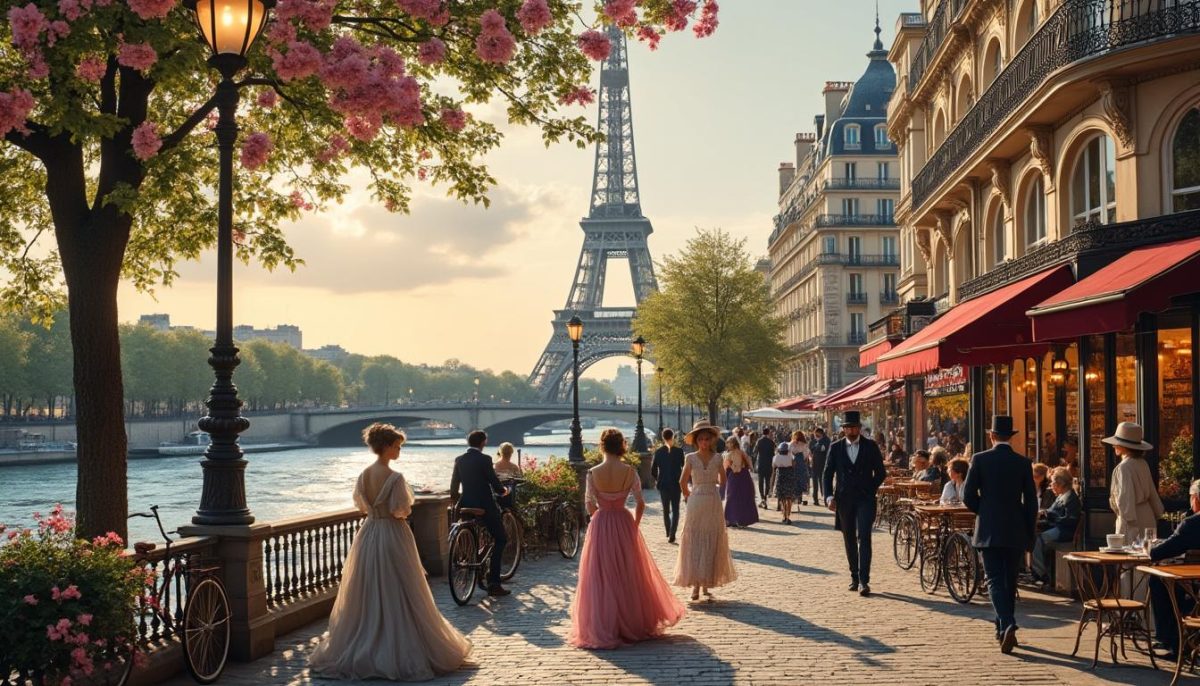
The Eiffel Tower, a monumental testament to human ingenuity, has captivated the hearts and minds of millions since its unveiling in 1889. In a unique artistic tribute, the rich history of this landmark has found a new life through the lens of Japanese art, specifically inspired by Katsushika Hokusai’s celebrated work, *Thirty-Six Views of Mount Fuji*. This modern exploration transcends time and culture, merging the vibrant aesthetics of the East with the iconic silhouette of the Eiffel Tower against the stunning Parisian backdrop. Through various perspectives, contemporary photographers capture not just the structure itself, but the ambiance and emotion it evokes, making every snapshot a tribute in its own right.
As we delve into this creative endeavor, the goal becomes clear: each image serves as a window into the heart of Paris, showcasing not only the Tower but also the surrounding atmosphere—whether it be the hustle of the Seine or the serene glow at sunrise. In 2026, Paris continues to embrace its artistic heritage, allowing the Eiffel Tower to stand as both a cultural icon and a canvas for imaginative interpretations. This fusion of styles adds a layer of depth to our understanding of the Eiffel Tower, reminding us that art knows no boundaries. Just as Hokusai did with Mount Fuji, contemporary artists take on the challenge of redefining perspectives, encouraging us to see our world from new angles.
Understanding Hokusai’s Influence Through Modern Perspectives
Katsushika Hokusai, a master of ukiyo-e woodblock printing, revolutionized the art world in the early 19th century with *Thirty-Six Views of Mount Fuji*. His series not only celebrated the mountain itself but also showcased various scenes surrounding it, each infused with detailed observations of nature and daily life. This meticulous approach to capturing the essence of an iconic landmark resonates with those who seek to explore the stories behind the Eiffel Tower. When we approach the Eiffel Tower with a similar lens, we honor Hokusai’s legacy, transforming our interpretation of this Parisian icon.
In recent years, photographers like Mark Craft have drawn upon Hokusai’s influence to create modern adaptations. Through a series aptly titled *36 Views of the Eiffel Tower*, Craft encapsulates the diversity of perspectives that can be captured around the Tower. Be it fog veiling the structure or the shimmering reflection on the Seine, each photograph conveys a distinct narrative. For instance, the image “In the Morning Fog, from Trocadero” allows viewers to sense the ethereal quality of a Parisian dawn, deliberately drawing parallels between nature’s elements and human-made structures. Such interpretations inspire individuals to appreciate the Eiffel Tower beyond its physicality—making art an avenue for deeper engagement.
Interpreting Scenic Views in Contemporary Paris
Each perspective revealed through Craft’s lens becomes a piece of a larger puzzle, contributing to the rich tapestry of Parisian life. One might consider “At Sunset, from Place de la Concorde”. This view captures not only the Eiffel Tower silhouetted against a vividly colored sky, but also highlights the bustling dynamics of a city that remains eternally alive. The interplay of light and shadow, along with movement in the foreground, mirrors the vibrant spirit of Paris, creating a dialogue between the eternal and the transient.
Moreover, the photos of local vendors and tourists interacting with the Eiffel Tower add an intimate layer to the series. By including snapshots of day-to-day life surrounding this landmark, Craft presents Paris as a living organism, constantly evolving yet anchored by its historical symbol. This cultural fusion reveals the dual nature of the Eiffel Tower as both a tourist attraction and a fundamental element of local identity. Observers cannot help but feel a connection to the stories embedded within each scene.
A Cultural Fusion: The Eiffel Tower in Artistic Movements
The beauty of the Eiffel Tower extends beyond its architectural brilliance; it has become a source of inspiration across cultural and artistic movements. The relevance of this landmark transcends borders and disciplines. In the late 19th century, the Eiffel Tower triggered the concept of *Japonisme*, the fascination for Japanese art and aesthetics that swept through Europe. Influencing countless artists, this appreciation for Japan can be traced in many works, from Impressionist painters to contemporary photographers.
Today, *Japonisme* finds itself revitalized in the context of the Eiffel Tower. Artists express their interpretation of this landmark through various mediums, including photography, painting, and sculpture, creating a cultural dialogue between France and Japan. The layered compositions that emerge from this dialogue reflect a modern understanding of identity and heritage. For instance, Craft’s works not only echo Hokusai’s techniques but also lay claim to the resonance of the Eiffel Tower, exploring how perceptions have changed over time.
Artistic Techniques and Styles in Modern Photography
Techniques used in modern photography often incorporate the essence of traditional practices seen in Hokusai’s work. For instance, the use of color contrasts and textures in Craft’s photographs mimics the ukiyo-e style, bringing depth and vibrancy to the static structure of the Eiffel Tower. The skillful use of natural light transforms each photograph, evoking emotional responses from viewers. Picture “Eiffel Tower Reflection, Parc Andre Citroën”. This shot captures a moment where the Tower is mirrored in the water, symbolizing harmony between nature and human achievement.
Such versatile interpretations encourage an exploration of personal perspectives. By engaging with these works, audiences are invited to reflect on their own experiences with the Eiffel Tower. Do they recall a moment spent with loved ones while gazing up at the Tower’s illuminated form? Or perhaps a quiet sunrise enjoyed from a hidden vantage point? In juxtaposing personal memories with communal narratives, the cultural significance of the Eiffel Tower is enriched, weaving a collective history that spans generations.
Capturing the Essence of Paris Through Diverse Perspectives
One of the most powerful aspects of art is its ability to engage with audiences on multiple levels. The series *36 Views of the Eiffel Tower* not only pays homage to Hokusai but also emphasizes the importance of perspective in the relationship between viewer and subject. Each photograph represents a unique story, reflecting the profound connection between Paris and its people.
Consider the evocative “Food Vendor at Trocadero” image. It captures a slice of everyday life—the energy and joy of a bustling environment. This perspective anchors the Eiffel Tower within a larger context, creating an inviting atmosphere that resonates with both locals and visitors. Each click creates a bridge between culture and familiarity, establishing an emotional connection to the city.
The Role of Photography in Modern Storytelling
In an era where visual storytelling dominates, the ability to capture authentic experiences through photography is paramount. As the Eiffel Tower continues to be a global symbol of Paris, its representation must evolve to reflect contemporary sentiments. This is where Craft’s work becomes remarkable. It captures the vibrant essence of Paris through snapshots that invite viewers to engage personally with each image.
The responsibility of photographers like Craft extends beyond mere depiction; they become narrators of the urban landscape, documenting fleeting moments that embody the spirit of Paris. By blending the aesthetic of Hokusai with modern techniques, these photographers offer a fresh narrative of the Eiffel Tower, inviting audiences to discover new layers of meaning in a familiar sight.
Conclusion: The Enduring Legacy of the Eiffel Tower
The legacy of the Eiffel Tower endures through myriad perspectives that honor its significance. As an emblem of artistic inspiration and cultural fusion, the Tower continues to evolve, much like the city it stands in. Through the lens of artists influenced by Hokusai, new stories unfold, encouraging us to contemplate our relationship with this timeless landmark.
In 2026, as we celebrate this fusion of art and architecture, we recognize that the Eiffel Tower remains not just a structure but a vibrant participant in the ongoing narrative of Paris. Its silhouette against the sky is a reminder of the dialogues between cultures and the shared stories that define our experiences.