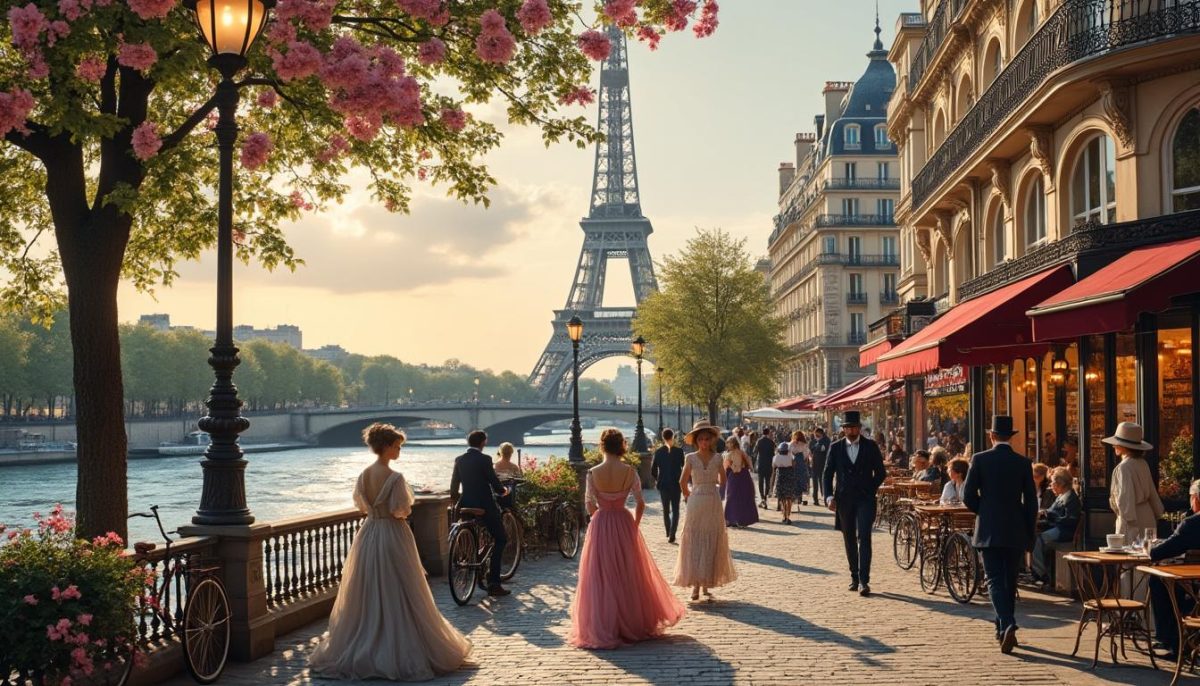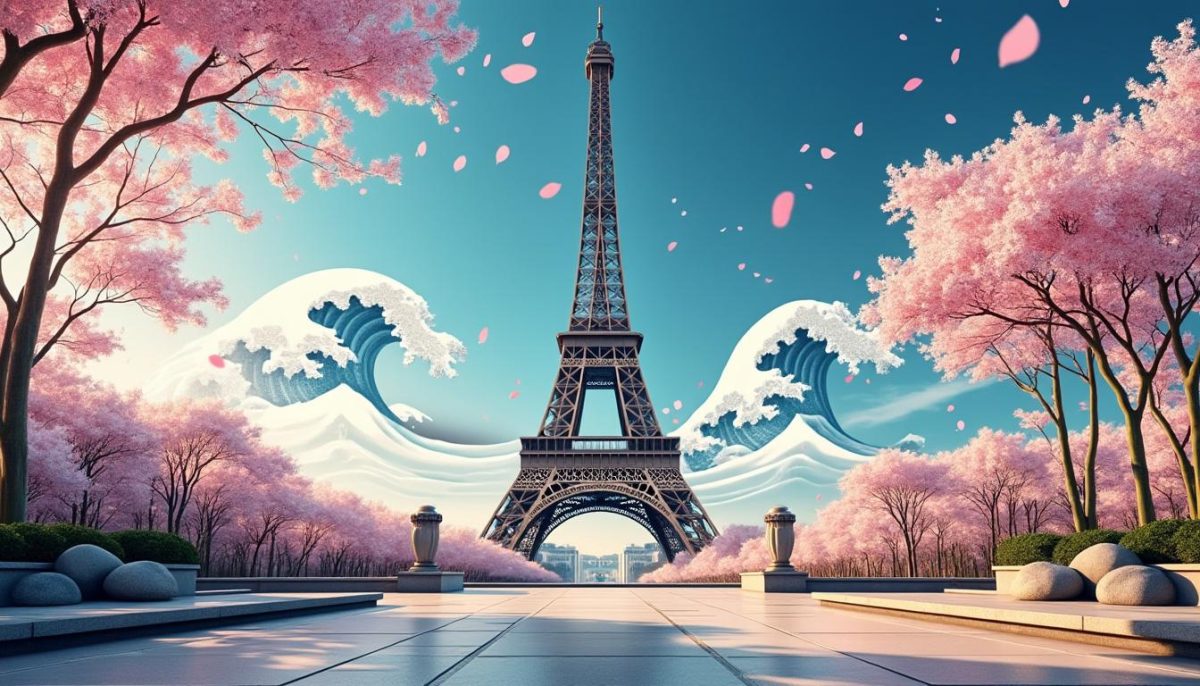
The Eiffel Tower, an enduring symbol of Paris, captivates not only the city’s residents but also millions of visitors each year. Constructed for the 1889 Exposition Universelle, this architectural wonder has stood the test of time, evolving into a cultural icon that represents romance, innovation, and national pride. In recent years, the interest in the Eiffel Tower has expanded beyond its physical structure; it has become a subject of artistic exploration, particularly through the lens of Japanese art. The homage to Hokusai’s “Thirty-Six Views of Mount Fuji” has inspired a new interpretation of this landmark, allowing artists to convey its essence in a dynamic and visually engaging manner.
In this third segment of our exploration, we highlight the final twelve views from the series “36 Views of the Eiffel Tower.” This artistic endeavor draws inspiration from Hokusai’s approach to showcasing his subjects from various angles and perspectives. The series not only serves as an homage to a master of Japanese art but also celebrates the Eiffel Tower’s role in the architectural tapestry of Paris. Through photography and creativity, each perspective reveals a new layer of the tower’s character, inviting viewers to appreciate its multifaceted nature.
Artistic Perspectives Inspired by Hokusai
The concept of exploring a single subject from multiple viewpoints is a compelling artistic endeavor. Hokusai’s original work captured the awe-inspiring presence of Mount Fuji, presenting it through different seasons, weather, and cultural contexts. Similarly, “36 Views of the Eiffel Tower” captures the iconic structure against a backdrop of various Parisian settings, blending creativity with cultural history.
Each view presents a unique snapshot, allowing the viewer to connect emotionally with the landmark. For instance, one photograph showcases the Eiffel Tower peeking through the branches of trees in the Trocadéro Gardens—a tranquil scene that contrasts with the bustling life of Paris. Another perspective captures the tower bathed in the warm glow of the setting sun, an ephemeral moment that evokes feelings of nostalgia and wonder.
Let’s explore the significance of these artistic approaches and examine how they enhance our understanding of the tower as more than just an architectural marvel; it becomes a living part of Parisian life.
The Role of Light and Atmosphere
The interplay of light and shadow is a hallmark of great photography, and many views in this series highlight this aspect beautifully. For example, the photograph known as “Eiffel Tower with Setting Sun” captures the tower against a vibrant sky, emphasizing its silhouette and creating a striking visual narrative.
Such artistic choices are reminiscent of Impressionist painters who captured fleeting moments, pushing the boundaries of light and perception. This connection to the artistic heritage of France cannot be understated, as it roots the modern interpretations of the Eiffel Tower in a rich cultural context.
Technological Evolution of Perspectives
The evolution of photographic technology has played a significant role in how we capture moments and perspectives. From the early days of photography to the modern era of digital imaging, advancements have allowed artists to experiment with new techniques. The series of views of the Eiffel Tower is a fine example of how technology can enhance artistic expression.
In particular, the use of long exposure techniques in “The Inner Eiffel Tower at Night” transforms the landmark into a fantastical glow of colors. This interpretation offers a contemporary perspective that remains respectful of historical artistic influences. The collaboration between technology and art exemplifies a cultural fusion that resonates with audiences today.
| Perspective | Year Taken | Description |
|---|---|---|
| Les Demoiselles of the Trocadero | 2007 | A view showcasing the Eiffel Tower framed by the statues at the Trocadéro, bridging classical and modern sculpture. |
| The Inner Eiffel Tower at Night | 2009 | A mesmerizing perspective highlighting the illuminated structure against the night sky. |
| Eiffel Tower with Setting Sun | 2017 | A dramatic sunset view, emphasizing the silhouette of the Eiffel Tower. |
| Across the Seine at Port Debilly | 2010 | A serene view of the tower as seen from the banks of the Seine, capturing both nature and architecture in harmony. |
| What a Gargoyle Sees, Notre Dame | 2012 | A perspective from the bell tower of Notre Dame, framing the Eiffel Tower against a historical backdrop. |
Cultural Significance and the Evolution of Art
The exploration of the Eiffel Tower through the artistic lens invites us to consider how cultural significance evolves over time. Initially celebrated for its revolutionary engineering, the tower has grown to symbolize a diversity of experiences that echo through Paris’s streets. Artists, photographers, and creators continuously interpret this landmark, making it relevant to each generation.
The different views featured in the series reflect this ongoing dialogue between the past and present, merging traditional themes from Japanese art with modern techniques. This synergy allows contemporary artists to pay homage to their predecessors while simultaneously redefining how cultural icons are perceived.
Moving forward, the conversation around the Eiffel Tower will likely evolve, as we embrace new challenges and innovations in art and technology. The series invites us to contemplate our connection to cultural landmarks and how we interpret their significance as we navigate changing times.
Looking Ahead: Future Perspectives
As we navigate the contemporary art landscape, the future of perspectives and representations of the Eiffel Tower holds boundless possibilities. The intersection of technology, creativity, and cultural narrative opens doors for new explorations. Artists will undoubtedly explore innovative mediums, ranging from virtual reality experiences to installations that immerse audiences in the essence of Paris.
This evolution reminds us that the Eiffel Tower is not merely a static structure; it serves as a backdrop for personal stories, artistic endeavors, and cultural reflections. Each perspective shared in this series paves the way for further explorations, inspiring future artists to engage with the tower in ways that bridge past, present, and future.
In closing, the homage to Hokusai laid the groundwork for an ongoing conversation about the significance of the Eiffel Tower in the realm of art and culture. As time progresses, the perspectives from which we view this landmark will continue to evolve, enriching the collective experience of Paris and inspiring future generations. Through these artistic expressions, the Eiffel Tower will remain a dynamic part of the city’s identity, celebrating its role as a cultural landmark for years to come.