The landscape of 19th-century France underwent a seismic shift, a transformation that would resonate throughout the world of art for generations to come. This period marked the emergence of Impressionism, a movement characterized by its radical departure from traditional artistic conventions and its penchant for capturing light and color in ways that had never been seen before. As we delve into this artistic revolution from 1851 to 1900, we uncover the interplay of cultural, social, and political forces that shaped the Impressionist vision, alongside the lives and works of celebrated artists such as Claude Monet and Pierre-Auguste Renoir. The backdrop of industrialization, urban modernity, and social change provided fertile ground for an artistic revolution that continues to captivate audiences today.
The Foundations of Impressionism: Historical Context
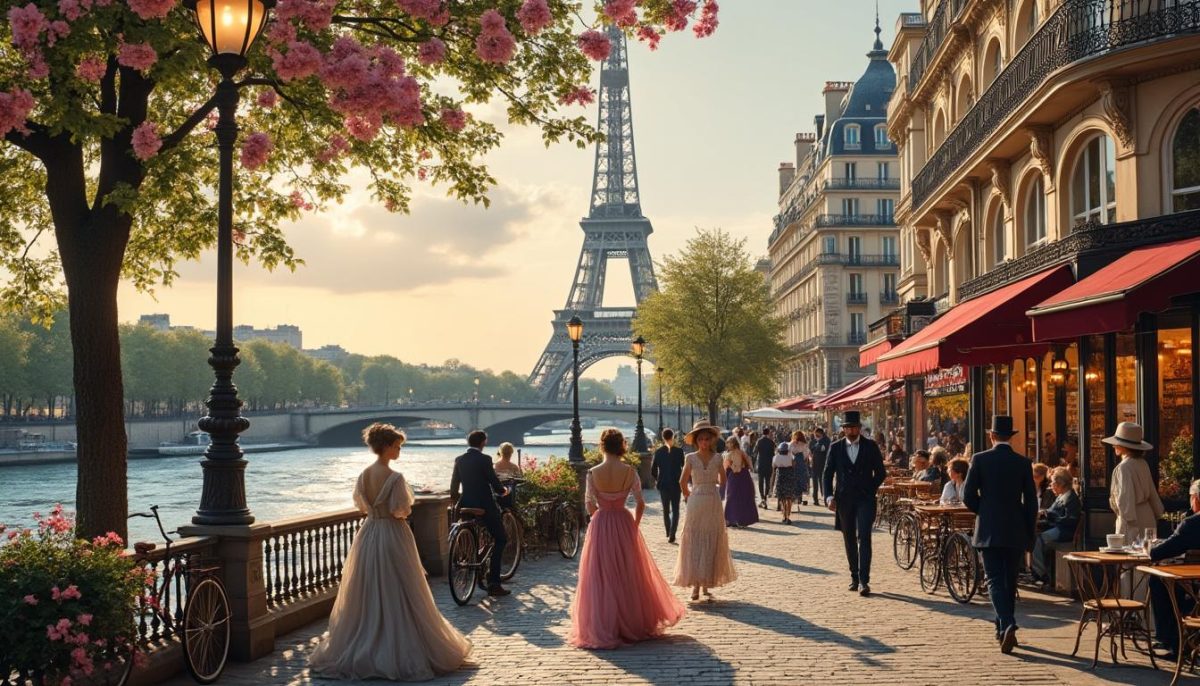
To fully appreciate the impact of Impressionism, one must first consider the historical context in which it emerged. The mid to late 19th century was not simply a time of artistic exploration; it was an era of profound social upheaval and transformation in France. The rebuilding of Paris under the direction of Baron Haussmann led to a modern city characterized by wide boulevards, public parks, and a vibrant café culture. This urban renewal coincided with a period of political unrest, including the Franco-Prussian War and the subsequent Paris Commune, which brought artists into direct engagement with the social issues of their time.
The artistic scene, too, was evolving rapidly. The rise of Realism, exemplified by the works of Gustave Courbet and Jean-François Millet, focused on depicting everyday life without idealization. Courbet’s large-scale canvases rejected historical and mythological themes, instead celebrating the mundane existence of ordinary people. Such a shift laid the groundwork for the Impressionists, who would take these ideas further, employing new techniques that prioritized color and light over form.
For instance, Millet’s seminal work, “The Sower,” exhibited at the Paris Salon in 1851, showcased a profound commitment to depicting reality, serving as an inspiration for later artists. The Universal Exposition at the Crystal Palace in London in 1851 highlighted these evolving tastes and significantly influenced contemporary artists. It was within this vibrant milieu, rife with both conflict and innovation, that Impressionism began to coalesce.
The Emergence of Techniques and Themes
Impressionists broke away from the confines of academic art by adopting a unique approach characterized by rapid brush strokes, vibrant colors, and a keen observation of natural light. This focus on light and color enabled them to capture transient moments of everyday life. One landmark technology that profoundly influenced their practice was the invention of paint tubes with screw-on tops in 1857. This innovation allowed artists greater mobility and spontaneity, leading them to paint en plein air, or outdoors, directly from their surroundings.
The use of short, visible brush strokes became a hallmark of Impressionism, enabling artists to convey the essence of their subjects without laboring over intricate details. Monet’s series of paintings depicting the Rouen Cathedral exemplified this technique, where he captured various light conditions throughout the day, illustrating the changing effects of nature. In contrast, Renoir often focused on the joys and intimacy of social life, as seen in his famed “Le Bal du Moulin de la Galette,” which depicts a lively outdoor party, filled with warm light filtering through the trees.
Through their work, Impressionists celebrated modernity and the fleeting nature of life, encapsulating the bustling heart of French society. They painted what they observed, often depicting scenes of Parisian street life, leisure activities, and landscapes, thus documenting a rapidly changing world in ways that were direct and immediate.
The Role of Exhibitions in Promoting Impressionism
The journey of Impressionism wasn’t without its challenges. Traditional art institutions, particularly the Paris Salon, favored established academies and were often resistant to the radical approaches of the Impressionists. The Salon des Refusés, established in 1863, allowed artists whose works were rejected by the Salon to exhibit instead. This became a critical moment for artists like Édouard Manet, whose “Le Déjeuner Sur l’Herbe” sparked controversy yet set the stage for the Impressionist movement.
In 1874, the first exhibition organized by the Anonymous Cooperative Society of Artists showcased works by Monet, Degas, Renoir, and others. This exhibition marked a turning point for the group, solidifying their identity and attracting a diverse audience interested in contemporary art. Subsequent exhibitions continued to gain visibility, with artists presenting pieces that reflected their passionate engagement with the world around them.
The impact of these exhibitions cannot be overstated. By providing a platform for modern artistic expression, they enabled Impressionists to challenge conventional norms and convey their vision effectively. They managed to engage an audience that was increasingly curious about new artistic developments and open to alternative viewpoints. This dynamic between artists and exhibitions fostered an environment ripe for innovation—a testament to the significance of collaborative and collective efforts in the art world.
Throughout this vibrant era, the Impressionist movement was not an isolated phenomenon. It was continually influenced by other emerging movements, notably Art Nouveau and Post-Impressionism, which began to develop in the late 19th century. While Impressionists focused on light and color, Post-Impressionists like Vincent van Gogh and Paul Cézanne took these principles as a foundation, building upon them with personal interpretations and symbolic representation.
Additionally, artists were often informed by literature and philosophy that flourished during this period. In particular, the works of writers like Charles Baudelaire captured the essence of modernity, paralleling the Impressionists’ artistic endeavors. Baudelaire’s exploration of contemporary life in “Les Fleurs du Mal” resonated deeply with artists aiming to reflect the rapid changes in society through their works.
This cross-pollination of ideas resulted in a rich tapestry of innovation, moving from the fluid brush strokes of the Impressionists to the emotional intensity inherent in Post-Impressionism. The fluid exchange of techniques and themes continued to refine the trajectory of modern art, eventually foreshadowing movements such as Cubism and Abstract Expressionism.
The Legacy of Impressionism in Modern Art
By the close of the 19th century, Impressionism had established itself as a foundational movement that reshaped the landscape of modern art. While many contemporary critics dismissed the art as frivolous or merely decorative, the movement’s emphasis on color and light redefined how painters approached their subjects, paving the way for future generations.
Artists who followed, such as Henri Matisse and Pablo Picasso, draw upon the principles established by the Impressionists, pushing the boundaries of expression and abstraction to new heights. The Impressionists fostered a dialogue around the purpose and nature of art, influencing not only painting but also literature, music, and other artistic disciplines. The color palette and brushwork that were once deemed controversial became intrinsic to the identity of modern artistic expression.
In 2026, the impact of the Impressionist movement is celebrated with numerous exhibitions, such as those at the Musée d’Orsay. This institution acts as a guardian of Impressionist masterpieces and demonstrates their enduring significance in contemporary culture. The inherent exploration of light, color, and life that characterized this era continues to resonate today, marking Impressionism as a lasting pillar of artistic innovation.
| Year | Key Events in Impressionism |
|---|---|
| 1851 | Jean-François Millet exhibits “The Sower” at the Paris Salon. |
| 1863 | Salon des Refusés features Manet’s “Le Déjeuner Sur l’Herbe.” |
| 1874 | First Impressionist exhibition held by the Anonymous Cooperative Society of Artists. |
| 1883 | Monet moves to Giverny, creating a significant body of work. |
| 1900 | Monet begins the Water Lilies series, his most celebrated work. |
As we reflect on this artistic journey, the emergence and evolution of Impressionism remains a profound testament to humanity’s quest for expression and relevance through art. The movement’s legacy lives on, inspiring countless artists and audiences to engage with the world through the lens of beauty and ephemeral moments.