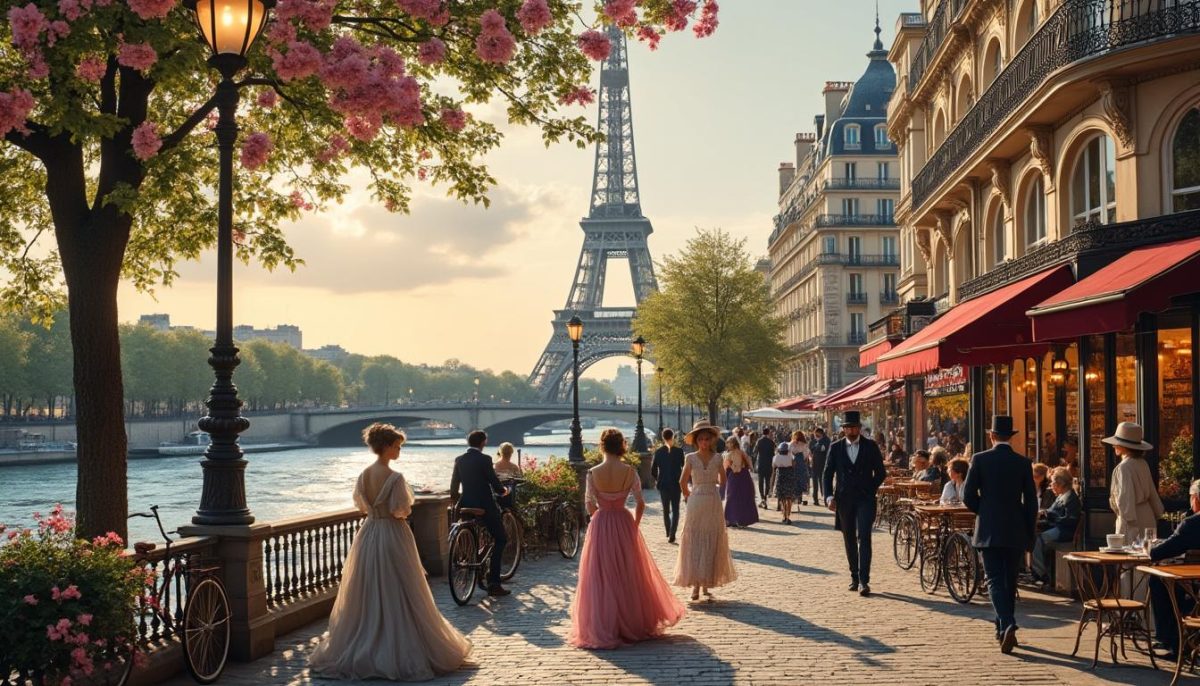
As we stroll through the vibrant streets of Paris, the ghost of Marie Antoinette whispers tales of her extravagant life, threaded through the city’s rich history. While she is often associated with the opulence of Versailles, the heart of her royal indulgence also beat in the Parisian landscape, where she sought excitement, fashion, and, ultimately, refuge. A journey tracing Marie Antoinette’s footsteps in Paris offers a unique glimpse into her complex character and the tumultuous times she navigated. It invites us to wander from the remnants of her royal abode to the locations steeped in the drama of the French Revolution, reflecting a life marked by both grandeur and tragedy. Through delectable pastries and decadent fashions, we will uncover how this misunderstood queen forged her legacy amidst the turbulent backdrop of eighteenth-century Paris.
Exploring Marie Antoinette’s Favorite Haunts in Paris
Marie Antoinette once roamed the bustling streets of Paris, indulging in her favorite pastimes that shaped the essence of her personality. One of her first stops is the historic Strohrer Patisserie, nestled at 51 Rue Montorgueil. This patisserie, famously known as the oldest in Paris, opened its doors in 1730 and boasts a rich connection to the royal family. Imagine her delight as she savored the creamy pastries crafted by Nicolas Stohrer, the original pastry chef who once introduced the queen to exquisite flavors. Rumor has it that Marie Antoinette regularly ordered delicate treats, which she enjoyed alongside a glass of champagne, making this establishment a symbol of her indulgent spirit.
As fashion was also a significant aspect of her identity, we reflect on the work of Elisabeth Vigée Le Brun, her favorite painter. The artist immortalized Marie Antoinette in over thirty portraits, capturing her beauty and the fashionable persona she meticulously curated. A visit to the Louvre offers the opportunity to see some of Le Brun’s artwork, including a striking self-portrait alongside her daughter. Despite the political turmoil that loomed over her, it is through these artistic expressions that we can glimpse the opulent life Marie led and her relentless pursuit of beauty that, ironically, contributed to her downfall.
The Queen’s Footsteps in Fashion and Art
Fashion was perhaps one of the most potent tools in Marie Antoinette’s arsenal. Upon her arrival in France, she fired the royal fashion experts and sought out Rose Bertin, a talented dressmaker from a modest background. This decision revolutionized the fashion world, as Bertin became known as the “Minister of Fashion,” creating stunning gowns that captivated the elite. The relationship between the queen and her designer illustrated a dramatic shift in haute couture, resonating through history to influence modern designers today. It is said that the styles they pioneered still inspire fashion houses like Dior and Givenchy.
However, the extravagant spending and lavish wardrobe choices did not go unnoticed. The opulence led to public outrage, as the impoverished populace struggled in the face of rising taxation and food scarcity. This discord made Marie Antoinette a symbol of royalty disconnected from the realities faced by her subjects. As we traverse the vibrant neighborhoods where she shopped for fabric and struggled with her image, we see how her choices defined her, intertwining her legacy with notions of privilege and excess.
The Tuileries Palace: A Hub of Royal Activity
The Palais des Tuileries, where Marie Antoinette sought solace during her final years, stands as a poignant reminder of her complicated relationship with the monarchy. Originally constructed in the sixteenth century, the palace served as a royal residence between the Louvre and the Tuileries Garden, but its history is marred by revolution. After the storming of the Bastille in 1789, the royal family was forced to vacate Versailles and take residence in Paris, where tensions brewed. It was here that Marie Antoinette witnessed the growing unrest among her people and, despite her efforts to connect, found herself increasingly isolated.
The palace became a stage for political drama, where revolutionary fervor ignited and culminated in the capture of the royal family. Marie Antoinette’s attempts to escape in 1791 ended in disaster, leading to house arrest and ultimately, her execution. A visit to the Tuileries site today unveils the profound impacts of her life decisions, with remnants of the once-glorious palace marking the spot of great historical significance. The arc de Triomphe du Carrousel remains a notable reminder of the Tuileries, offering a space to contemplate the interplay of power and consequence.
From Royalty to Imprisonment
As we reflect on Marie Antoinette’s final days in the Conciergerie, the atmosphere of despair looms heavily. This former palace turned prison held the queen for several months prior to her execution. Visiting the Conciergerie today, viewers can step into replicas of her prison cell, gaining a glimpse into the stark reality that contrasted sharply with her previous life of opulence. Interestingly enough, her sister-in-law, Elisabeth, also faced tragic circumstances here, and the lives of both women were forever altered by the tides of revolution.
Details of Marie Antoinette’s time in captivity—her stoicism, resilience, and eventual conviction of treason—offer a poignant narrative of her descent from a life filled with extravagance to one defined by loss and loneliness. The turbulent history of France intertwines dramatically with her personal story, highlighting the sheer unpredictability of fate. The memories of the prison walls whisper of her very human struggle against the political maelstrom that ultimately shaped the nation.
The Final Act: The Place de la Concorde
On October 16, 1793, the world as Marie Antoinette knew it came to a brutal end. The Place de la Concorde, originally known as the Place de la Révolution, served as the site of her execution. Today, a simple plaque commemorates the tragic event that marked a turning point in French history. This central square was a miasma of energy and hostility, where nobles like Marie was guillotined during the Reign of Terror. The site remains a hallowed space that tells the story of her life, resolute even in death.
The juxtaposition of her execution against the backdrop of Paris facilitates conversations about justice, power, and the accountability of leadership. Despite the tumultuous end to her reign, Marie Antoinette’s legacy carries on, sparking ongoing discussions in contemporary society. Her story continues to captivate the imaginations of countless people, serving as a reminder of the volatility of power, the complexities of individual identity, and the consequences that arise from the intersection of societal expectations and personal ambition.
Legacy and Reflection
Marie Antoinette’s life embodies not only the excesses of an era but also the profound lessons gleaned from adversity. Through her indulgent lifestyle fostered in Paris and her eventual downfall, we uncover a story of resilience. This lesson reminds us that history continuously shapes culture, and the threads connecting past and present remain inextricably woven into the fabric of society. As we reflect on her journey, we are left with a bittersweet understanding of the crown she bore: a symbol both of royalty and the burdens that accompany it, echoing through the annals of time.
| Location | Historical Significance | Current Status |
|---|---|---|
| Strohrer Patisserie | Oldest patisserie in Paris, frequented by Marie Antoinette. | Still operational, known for exquisite pastries. |
| Conciergerie | Prison where Marie Antoinette was held before execution. | Historical site with museum exhibits. |
| Place de la Concorde | Execution site of Marie Antoinette. | Commemorative plaque at the site. |
| Palais des Tuileries | Royal residence during the revolution. | Remains as a historical memory; location of the arc. |