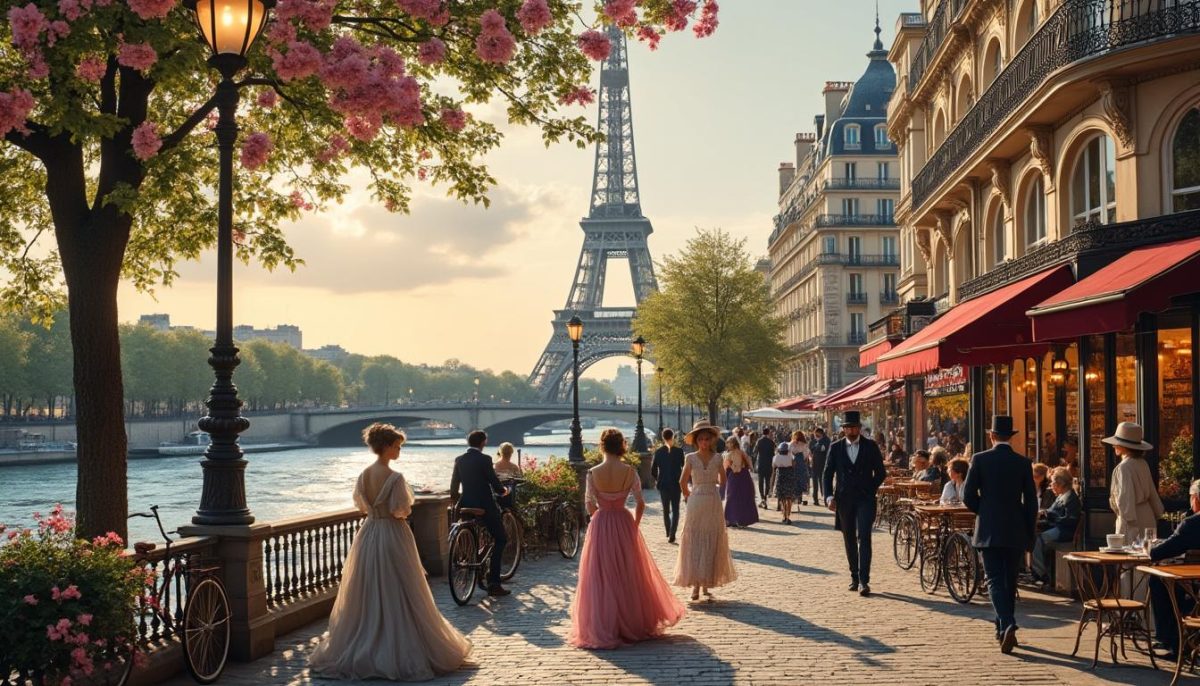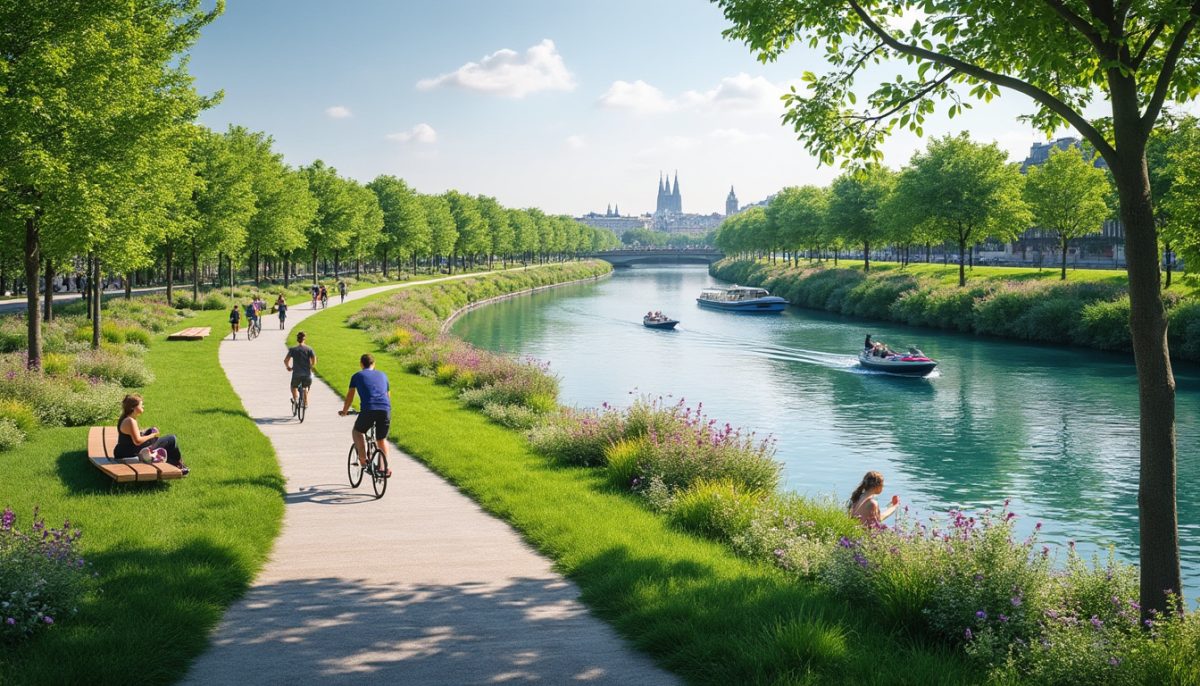
In the heart of Paris, the transformation of the city’s riverbanks into the vibrant Parc Rives de Seine stands as a testament to the power of urban revitalization. Once dominated by the roar of automobiles, these banks were reclaimed to serve the community, evolving into a green oasis that marries ecological balance and recreational opportunities. Stretching over seven kilometers along the banks of the Seine, this urban park is more than just a pleasant escape; it embodies a vision of sustainability, community engagement, and biodiversity. The project began in earnest in 2013, marking a decisive shift in the urban landscape of Paris, where nature and urban life coexist harmoniously.
The revitalization of the riverbanks was not merely an aesthetic change; it represented a holistic approach to urban planning that prioritized public space over vehicular access. In a city known for its rich history and stunning architecture, the Seine’s banks were long treated as thoroughfares, facilitating the passage of 43,000 motorists each day as late as 2016. Recognizing the unsustainable nature of this model, city planners and environmental advocates campaigned for a new vision—one that emphasized the potential for ecological restoration and community engagement. Hence, the Parc Rives de Seine was born, providing an opportunity not just for leisure, but for community gathering and interaction.
The History Behind the Revitalization of the Riverbanks
The evolution of the Parc Rives de Seine is steeped in the historical context of urban planning in Paris. From the 1930s to the 1970s, there existed a profound commitment to automobile-centric city planning. This era was marked by significant figures like President Georges Pompidou, who envisioned highways carving through the heart of Paris, often at the expense of pedestrian spaces. However, this vision faced mounting opposition, particularly when plans to further develop the Left Bank at the foot of Notre Dame met fierce resistance.
As urban residents began to prioritize public spaces and ecological integrity, the tide started to turn. Events in the early 1990s, including the designation of the riverbanks as a UNESCO cultural heritage site, laid the groundwork for future transformations. These shifts culminated in a series of initiatives led by successive mayors, particularly Bertrand Delanoë and later Anne Hidalgo, who championed the greening of the city’s landscape. Delanoë’s introduction of the summer-long Paris Plages transformed the Right Bank into a seasonal beach, bathing the urban landscape in sunlight and communal joy.
It was during this transformative period that, in 2013, the Left Bank motorway was closed to traffic, marking the inception of the Parc Rives de Seine. This action was a radical departure from the past, reclaiming what had long been a neglected space for cars and re-envisioning it as public land where families and visitors could reconnect with the river and with each other.
Ecological and Community Benefits
One of the most significant outcomes of the Parc Rives de Seine is its emphasis on sustainability and biodiversity. The new green environment has introduced thousands of trees and plants that contribute to the local ecology, helping to create habitats for various species while improving urban air quality. These efforts demonstrate a genuine commitment to enhancing the ecological footprint of the city.
The park’s design promotes recreational activities for all, featuring walking and cycling paths that span both riverbanks, enabling users to traverse this picturesque environment at their leisure. Facilities such as playgrounds, sports tracks, and climbing walls ensure that visitors of all ages can engage with the park’s offerings. The integration of public art installations along the riverbanks not only beautifies the area but also instills a sense of cultural heritage and local identity.
Restaurants and cafes dotted along the riverbanks further enhance the communal experience, turning the park into a social hub. Boasting diverse culinary options, these eateries cater to locals and tourists alike, providing opportunities for social interaction and community bonding. The riverside atmosphere fosters a sense of belonging, making it an essential public space in the busy urban landscape of Paris.
Landscape Design and Urban Integration
The landscape design of Parc Rives de Seine is a work of art in itself. The vision behind this project was to create a seamless blend of natural beauty and urban function. Expert planners have meticulously crafted spaces that prioritize pedestrian access while preserving the natural characteristics of the riverbanks. This intentional landscape design allows for a fluid interaction between the vibrant city life and the serene river environment.
As visitors traverse the park, they encounter lush lawns perfect for picnics, sculptures that provoke thought and discussion, and quiet nooks designed for reflection. The presence of pedal-powered stations emphasizes the city’s commitment to environmentally friendly transportation, allowing park-goers to recharge their devices while enjoying their surroundings.
Encouraging Eco-Conscious Behavior
In addition to providing a space for recreation, the park acts as a catalyst for eco-conscious behaviors among Parisians and visitors. It serves as a living example of sustainable urban development, encouraging individuals to adopt more environmentally friendly practices. Through activities hosted in the park—such as workshops on gardening and sustainability—visitors are educated on the importance of preserving our natural resources and how they can contribute.
The park also focuses on biodiversity, creating habitats for local fauna that were once absent in the heavily urbanized areas of Paris. This return of wildlife not only enriches the local ecosystem but also captivates visitors, providing unique opportunities for educational experiences and fostering a greater appreciation for nature.
Impact on Local Economy and Tourism
The transformation of the Parc Rives de Seine has had profound implications for the local economy as well. With its new status as a vibrant public space, it has attracted both tourists and locals, leading to increased foot traffic in nearby shops and restaurants. This influx has provided economic opportunities for local businesses, creating a positive feedback loop that sustains the park’s ongoing maintenance and programming.
In this evolving landscape, one can also observe a shift in Parisian tourism; visitors seeking authentic experiences are encouraged to explore these new green spaces rather than traditional, crowded attractions. The park’s promotion of local culture—through art exhibitions, gardening workshops, and community events—offers a unique perspective, allowing tourists to engage genuinely with the city.
The Future of Parc Rives de Seine
As we continue to embrace sustainable urban living, the future of Parc Rives de Seine appears promising. Plans for further enhancements include more comprehensive ecological programming, community-driven events, and educational programs focusing on sustainability. This vision not only aims to extend the park’s reach but also to solidify its role as a cornerstone of public life in Paris.
| Aspect | Description |
|---|---|
| Length | 7 kilometers |
| Area | 10 hectares |
| Ecological Features | Thousands of plants, trees, and wildlife habitats |
| Activities | Walking, cycling, sports, dining |
| Community Programs | Workshops, events, and cultural activities |
The historic evolution of Parc Rives de Seine illustrates a successful model of urban planning redefining the relationship between city dwellers and their environment. As Parisians and visitors continue to enjoy this extraordinary space, it stands as an enduring reminder of what a city can achieve through collective vision and dedication to sustainable public spaces. A visit to Parc Rives de Seine is not just an escape from urban life; it is an inspiration for a greener, more connected future.