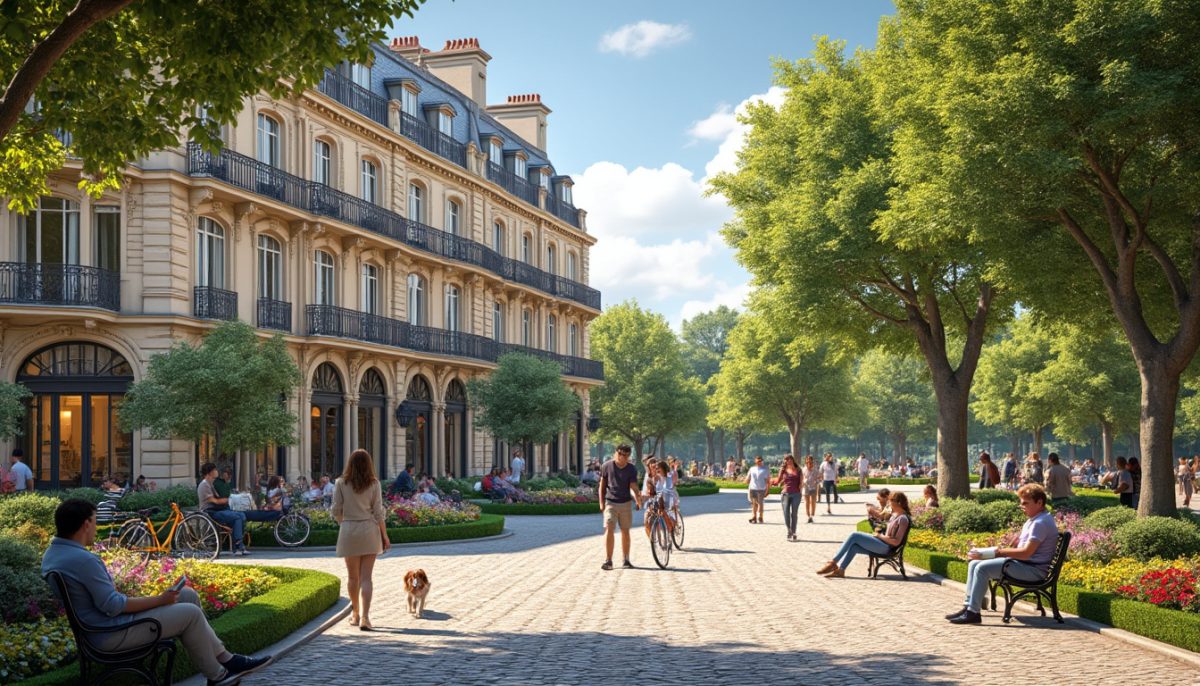
For anyone wanting to immerse themselves in the essence of Parisian life, a visit to Parc Monceau is essential. This beautifully landscaped park, located in the heart of the 8th Arrondissement, offers a delightful escape from the hustle and bustle of city life. Spanning over twenty acres, Parc Monceau is not only a feast for the eyes but also a sanctuary for those looking to unwind. As you wander through its manicured lawns, filled with historic Paris charm, it’s easy to see why this park is loved by locals. Young children can be spotted playing in the playgrounds, while joggers gracefully navigate the scenic pathways. The captivating blend of nature and history presents a magnificent opportunity to experience the authenticity of French culture among the sophisticated backdrop of Paris.
Designed during the late 18th century, the park showcases a variety of unique architectural elements inspired by England, forming an urban garden that successfully harmonizes with its surrounding architecture. From whimsical follies to serene ponds, every corner of Parc Monceau tells a narrative intertwined with the history of the city. It was under the visionary guidance of Philippe d’Orléans, a cousin of Louis XVI and a notable figure in French history, that the park began to take shape. His aspirations led to the creation of a retreat dotted with curious structures that entice visitors to explore its depths. With its rich history and vibrant atmosphere, Parc Monceau serves as a reminder of Paris’s storied past while simultaneously offering a modern day haven for leisure and relaxation.
The Historical Significance of Parc Monceau in Paris
The origins of Parc Monceau can be traced back to 1778 when it was transformed from a simple field into a sophisticated park by the Duke of Orleans, Philippe d’Orléans. His vision for the park was heavily influenced by English gardens, which were becoming increasingly fashionable among the Parisian elite at the time. Collaborating with artist Louis Carrogis Carmontelle, he incorporated various architectural follies throughout the grounds. These included a Roman colonnade, an Egyptian pyramid, and even a temple dedicated to Mars, creating an enchanting atmosphere that continues to captivate visitors today.
The park experienced significant transformations over the years, particularly during the tumultuous events of the French Revolution. Philippe d’Orléans, a liberal thinker, ultimately faced tragic consequences for his progressive views when he was guillotined in 1793. Following his death, the park was eventually acquired by the City of Paris, transforming it into a public space in 1860. Since then, Parc Monceau has remained a popular destination for locals and tourists alike, representing a blend of history and leisure encapsulated in a beautiful outdoor environment.
The park’s design, inspired by the arts and culture of the time, is evident in the ornamental features scattered throughout. A fine example is the Pavilion de Chartres, constructed at the main entrance in the 19th century. This iconic structure once served as a customs house and later as a luxurious garden viewing apartment reserved for the Duke, showcasing the duality of functionality and elegance in its design. Visitors are always drawn to the park’s gates, designed by the renowned architect Gabriel Davioud. The gold-tipped wrought iron work is a staple of the park’s aesthetic appeal and represents a significant portion of Paris’s architectural heritage.
Structures and Features That Define Parc Monceau
Today, Parc Monceau is a vibrant urban oasis that boasts a plethora of intriguing structures. As one strolls along its pathways, they can encounter the delightful variety of characters that have become synonymous with this Paris Park. The statues throughout the park depict important figures from French history and literature, including Frederic Chopin and Guy de Maupassant, whose artistic legacies are immortalized in stone. Each piece serves as a reminder of the creative spirit that has flourished in this part of the city.
The park also features an enchanting pond filled with water lilies, creating a picturesque backdrop for photographs and leisurely afternoons. The surrounding flora, including an impressive sycamore maple tree, adds to the natural charm of the area. This 30-meter tall tree is not only the oldest in Paris, having been planted in 1853, but also offers a refreshing green canopy that provides shade for picnicking families and wandering couples.
For families with children, Parc Monceau is particularly appealing. The well-maintained playgrounds allow little ones to express themselves freely, while parents can relax nearby. The charming carousel adds a fairytale touch, turning a casual park visit into a memorable experience. Amenities such as free Wi-Fi, snack bars, and clean water fountains also enhance the overall visitor experience, making it easier for families to enjoy the day in comfort.
Artistic Influence of Parc Monceau
Parc Monceau has long captured the imagination of artists, notably inspiring several celebrated painters during the Impressionist era. Claude Monet, for instance, famously depicted the park in a series of six paintings in the late 1870s. His works reveal how the park functioned as a social hub for the wealthy citizens of Paris, showcasing his evolving style. Observers can appreciate the way the sunlight plays through the leaves and reflects off the serene waters, painting a vivid picture of life within this urban garden.
Another prominent artist, Gustave Caillebotte, also found inspiration in Parc Monceau and captured the park’s lively atmosphere in his own works. His Impressionist techniques focus on light and shadow, symbolizing the vibrancy of everyday life. Walking through the park today, one can almost envision the brushstrokes of these artists bringing the scenery to life, emphasizing the park’s historic significance and its ongoing role in fostering creativity and cultural dialogue.
As a representation of Paris tourism, it serves not just as a recreational spot but also as an open gallery exhibiting the intertwined relationship between nature and artistic expression. Exploring these connections adds an extra layer of appreciation for both the park and the city as a whole, encouraging visitors to explore the myriad ways in which the natural and artistic worlds intersect.
Local Attractions Near Parc Monceau
The surrounding area of Parc Monceau boasts numerous local attractions, making it an ideal starting point for a comprehensive exploration of the 8th Arrondissement. Just a short walk from its gates, visitors can discover the hidden gem, Musée Nissim de Camondo, located at 63 Rue Monceau. This art museum is housed in a stunning mansion and offers a captivating view into the world of 18th-century French art and lifestyle.
Nearby, the Musée Jacquemart-André at 158 Boulevard Haussmann also invites art enthusiasts to revel in its collection of French and Italian masterpieces. Additionally, for those interested in Asian art, Musée Cernuschi is conveniently located just a few blocks away at 7 Avenue Velasquez, offering a unique perspective on the city’s rich cultural tapestry.
Explorers can enjoy leisurely strolls through the elegant streets lined with beautiful hôtels particuliers, buildings that showcase the architectural grandeur of Paris. Notable esthetic charms can be found in direction of the Hôtel Menier, which bears an impressive façade, drawing the attention of architecture aficionados. For culinary enthusiasts, the vicinity is home to exquisite dining options, providing plenty of opportunities to savor local flavors, including a visit to restaurants helmed by renowned chefs, ensuring that every visit to the area is memorable.
| Local Attractions | Address | Highlights |
|---|---|---|
| Musée Nissim de Camondo | 63 Rue Monceau | 18th-century French art Architectural beauty |
| Musée Jacquemart-André | 158 Boulevard Haussmann | French and Italian masterpieces Stunning interiors |
| Musée Cernuschi | 7 Avenue Velasquez | Asian art collections Unique cultural perspectives |
As the sun sets over the Paris Park, Parc Monceau continues to radiate its allure, echoing the historical narratives and artistic endeavors that have taken place within its boundaries. This enchanting site embodies not just the beauty of the city, but its heart and soul, characterized by its harmonious blend of nature, history, and culture.