The bridges of Paris are not merely functional structures; they embody the city’s heart and spirit. Spanning the Seine, these architectural marvels connect not just the Right and Left Banks, but also the past and present of this magnificent city. Each bridge carries its own narrative, blending history with modernity, offering spectacular views, and showcasing the city’s artistic essence. From the grandeur of the Pont Alexandre III to the understated charm of the Pont des Arts, the bridges serve as vital arteries of Parisian life. Tourists and locals alike traverse these paths not only for practical reasons but to indulge in the scenic vistas they provide.
This article delves into some of the most celebrated bridges that grace the Seine, exploring their unique architecture, historical significance, and the experiences they offer. Understanding these structures adds depth to the Parisian landscape and enriches the experiences of those who walk across them. Embracing this fusion of history and modern life, one discovers that each bridge is a doorway into a different facet of Paris, an invitation to explore its diverse neighborhoods, cultural landmarks, and the river that ties it all together.
Architectural Marvels of Paris: A Closer Look at the Bridges
The Seine River is adorned with a remarkable array of bridges, each showcasing different architectural styles and historical periods. From the ancient stones of the Pont Neuf to the contemporary design of the Passerelle Simone de Beauvoir, these structures tell the story of the city through their construction and decoration.
The Pont Neuf, ironically named the “New Bridge,” is the oldest in Paris. Completed in the early 17th century, it marks a pivotal moment in bridge construction, being the first entirely stone bridge. Its wide, open spaces were revolutionary for its time, allowing both pedestrians and merchants ample room. The bridge’s design is functional yet elegant, adorned with numerous arches that gracefully span the river. Its strategic location connects the bustling Île de la Cité with both riverbanks, making it a focal point of activity.
As you stroll across the Pont Neuf, the equestrian statue of Henry IV greets you from its center, providing a poignant historical reminder of the bridge’s past. This melding of art and utility showcases how architecture can celebrate history while serving contemporary needs. As you walk, every step connects you not only with the present but with the pulse of Paris through the ages.
Pont Alexandre III: The Grandeur of a Bygone Era
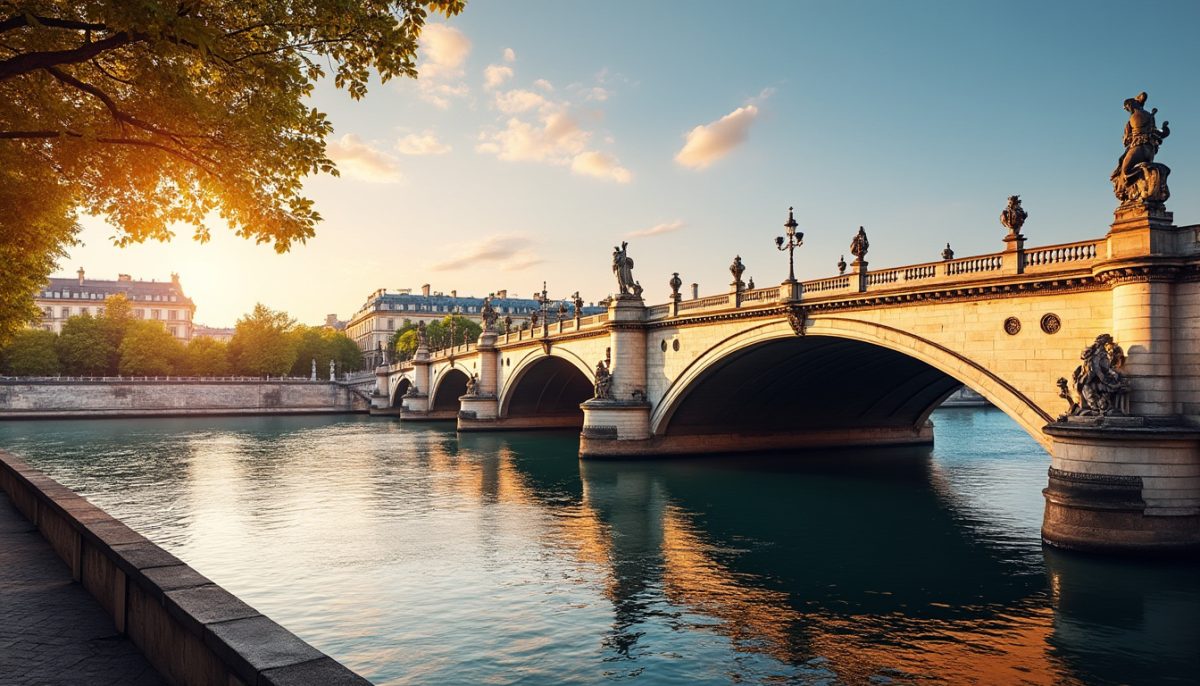
Among Paris’s bridges, the Pont Alexandre III stands as a testament to the opulence of the Belle Époque. Completed in 1900 for the Exposition Universelle, this bridge is often hailed as the most extravagant in the city. Adorned with ornate sculptures, gilded lanterns, and Art Nouveau elements, it captures the eye and imagination of all who traverse it.
Linking the Champs-Élysées with the Esplanade des Invalides, the bridge’s arches exhibit incredible engineering prowess that allows it to maintain a low profile—a stunning feature that ensures uninterrupted views of the city’s landmarks. The symbolism behind its design reflects diplomatic ties with Russia, making it not just an architectural statement, but a historic pillar of Franco-Russian alliances.
Visiting the Pont Alexandre III at sunset reveals a gorgeous interplay of light and shadow, especially with the sparkling reflections dancing on the Seine. This enchanting experience solidifies its reputation as a favorite spot for both tourists and locals. Many opt for memorable photographs against the backdrop of its intricate design, making it a cultural landmark in its own right.
A New Perspective: The Passerelle Simone de Beauvoir
Entering the realm of modern architecture, the Passerelle Simone de Beauvoir presents an intriguing contrast to the ornate designs of Paris’s older bridges. Opened in 2006, this footbridge is a significant engineering achievement, devoid of central support, creating a sweeping curve across the Seine. Named after the influential feminist writer Simone de Beauvoir, it symbolizes not only freedom of movement but also a forward-thinking approach to urban design.
This pedestrian bridge links the Parc de Bercy with the Bibliothèque François-Mitterrand, making it an ideal promenade for those wishing to explore the vibrant 13th Arrondissement. Its minimalistic design, consisting of sleek wooden planks and ample seating, invites leisurely walks and reflects a contemporary aesthetic. While lacking in ornamental features, the Passerelle Simone de Beauvoir thrives on its simplicity, creating a harmonious dialogue with the surrounding environment.
Walking across, visitors can appreciate scenic views of the Seine, the dynamic architecture of the nearby library, and the natural beauty of the park, fostering a unique experience of urban connection. This bridge embodies how Paris continually evolves while paying homage to its rich history.
Pont des Arts: A Haven for Lovers and Artists
The Pont des Arts, a pedestrian bridge constructed in 1804, stands out not just for its allure but also for its role as a cultural hotspot. Historically significant as the first iron bridge in Paris, it connects the Louvre with the Institut de France. Renowned for its intimate setting, it has become synonymous with romance and artistic expression.
Visitors often gather here to admire the picturesque scenery, sketch the beauty of the Seine, or enjoy impromptu performances by local musicians. Once adorned with countless love locks, the bridge became a poignant symbol of devotion until city officials intervened to preserve its structure. Today, the Pont des Arts continues to provide a vibrant space for people to pause, reflect, and share moments.
Walking across the bridge, one cannot help but be enveloped by the creative energy that fills the air, making it a favorite for couples seeking to capture the essence of Paris. Its open design allows for unobstructed views of the Seine’s beauty, reminding everyone of the connection between people and place.
A Rich Tapestry of History, Art, and Life
The array of Paris’s bridges is akin to a rich tapestry, each thread contributing to the overall narrative of the city. They serve as vital connectors of neighborhoods, historical events, and cultural milestones. Every bridge crossed offers not just a means of travel but an opportunity to reflect on the beauty surrounding you—a vibrant city that has weathered centuries of change.
| Bridge Name | Year Completed | Architectural Style | Significance |
|---|---|---|---|
| Pont Neuf | 1607 | Stone Arch | Oldest bridge in Paris, connects Île de la Cité |
| Pont Alexandre III | 1900 | Beaux-Arts | Symbol of Franco-Russian relations |
| Passerelle Simone de Beauvoir | 2006 | Modern Suspension | Pedestrian bridge linking cultural spaces |
| Pont des Arts | 1804 | Iron | First iron bridge, hub for art and romance |
The bridges of Paris are more than mere crossings of the Seine. They are vibrant symbols that celebrate the interconnections of life in the city. Whether one seeks dramatic views, historical insights, or romantic moments, these bridges offer a myriad of experiences that collectively shape the identity of Paris. The timeless nature of these crossings reflects both the old and the new elements of the city, ensuring they remain a critical part of its landscape for generations to come.