Paris, known as the City of Light, has undergone numerous transformations throughout its rich history. Among these changes, none have been as profound as those orchestrated by Baron Georges-Eugène Haussmann in the mid-19th century. Appointed by Napoleon III, Haussmann was tasked with overhauling a crumbling medieval city plagued by overcrowding and disease. His ambitious urban planning project not only redefined the city’s physical landscape but also established a template for modern urban renewal. The creation of wide boulevards, expansive parks, and innovative infrastructure marked a turning point in Parisian history, paving the way for a new era of culture, art, and social life. The legacy of Haussmann’s work remains visible today, as Paris stands as a model of urban elegance and functionality, attracting millions of visitors every year.
Haussmann’s Vision: The Birth of Grand Boulevards
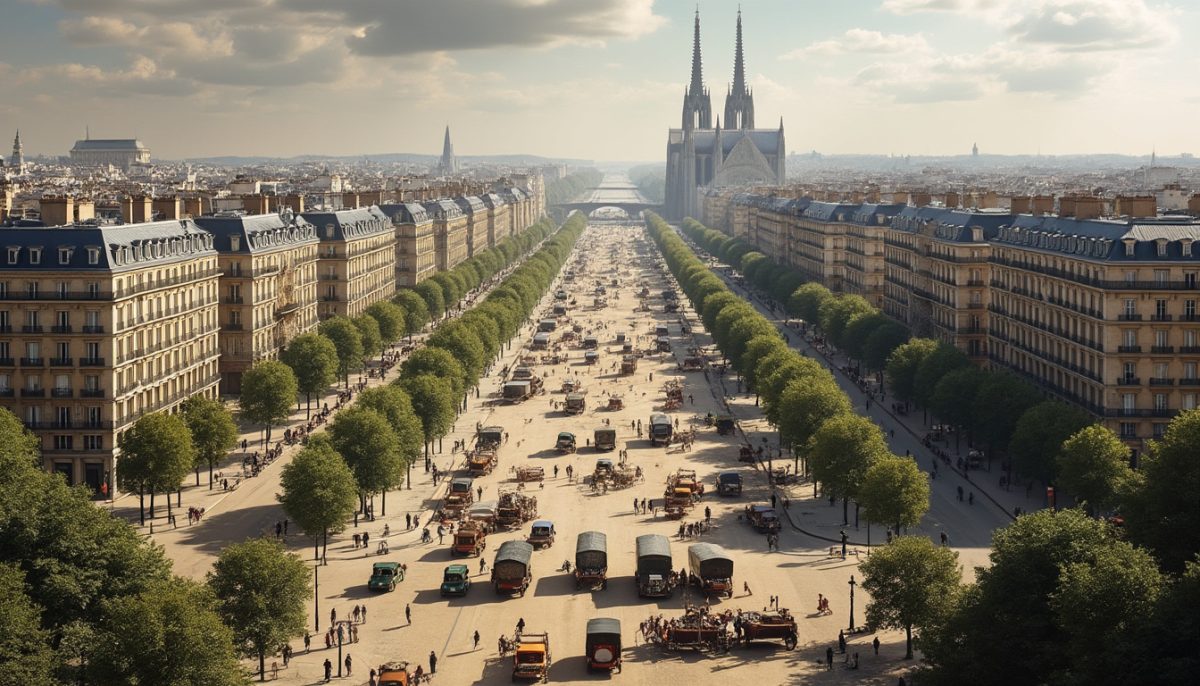
In the early days of his project, Baron Haussmann faced monumental challenges. The streets of Paris were a chaotic labyrinth of narrow, winding pathways that hardly allowed for efficient movement or sanitation. The city was bursting at the seams, its population density creating a breeding ground for disease and social unrest. To remedy this, Haussmann envisioned a city characterized by broad, straight boulevards that not only facilitated traffic flow but also improved air quality.
One of the most significant aspects of Haussmann’s vision was the transformation of public spaces. Parks, such as the Parc des Buttes-Chaumont and Parc Monceau, were designed to provide urban dwellers with green spaces for relaxation and leisure. These parks became a vital component of Haussmann’s design, promoting a healthier lifestyle among the citizens. The introduction of uniform architecture along these boulevards created visual coherence, allowing people to navigate the city with ease while appreciating its aesthetic beauty.
Haussmann’s plan involved demolishing approximately 20,000 buildings, displacing thousands of residents, and erasing entire neighborhoods that had existed for centuries. This ‘urban cleansing’ was not without controversy. Critics argued that he was destroying the city’s historical identity, transforming it into a mere backdrop for the wealthy bourgeoisie. Nonetheless, the sweeping reforms initiated by Haussmann were aimed at improving public health and urban infrastructure. His street grid reduced crime rates and helped establish a burgeoning commercial center.
The Infrastructure Revolution
Beyond the aesthetic changes, Haussmann’s plans included a comprehensive overhaul of the city’s infrastructure. A crucial element was the development of an extensive sewer system, which addressed the chronic sanitation issues that had plagued Paris for centuries. The project laid the groundwork for modern urban sanitation and was instrumental in reducing the spread of diseases like cholera, which had caused several outbreaks in the past.
The innovations extended to water management as well. Haussmann’s administration constructed underground reservoirs and aqueducts to supply clean water to Parisian residents. This focus on modern infrastructure not only improved living conditions but also represented a shift in how urban planners approached public health and safety. Today, Paris remains lauded for its advanced sewage and water systems, which are often highlighted as exemplary models for cities worldwide.
The Impact of the Paris Commune
Just as Haussmann’s plans were coming to fruition, a series of events would dramatically alter the trajectory of Parisian history. The Franco-Prussian War, followed by the siege of Paris in 1870, culminated in the rise of the Paris Commune in 1871. Emphasizing social equality, the Commune aimed to implement radical social reforms, in stark contrast to Haussmann’s elite-focused vision.
This two-month uprising resulted in significant destruction, particularly in key areas that Haussmann had revitalized. The Hôtel de Ville was torched, and numerous other buildings suffered irreparable damage. Once the Commune was quashed, proponents of Haussmannian architecture and planning were left to reconsider the balance between modernization and social equity. The subsequent years would challenge the city’s identity and the viability of Haussmann’s legacy.
A City Divided: Social Consequences
The fallout from the Paris Commune highlighted the inequities that had been exacerbated by Haussmann’s urban renewal efforts. Entire neighborhoods were razed, and the working-class families displaced by the renovation found themselves relocated to the outer districts, further deepening social divides. The criticism that Haussmann’s projects primarily benefited wealthier Parisians intensified.
This growing disparity shaped the socio-political landscape of Paris for decades. Many began to question whether urban planning could genuinely improve quality of life for all citizens. In the wake of the Commune, as Paris rebuilt itself physically, it also had to address issues of social cohesion and community identity amidst the pursuit of modernity. Ultimately, the Commune’s brief existence and subsequent suppression became a pivotal part of Paris’s evolving narrative, shedding light on the tensions between progress and equity.
The Cultural Renaissance: Belle Époque
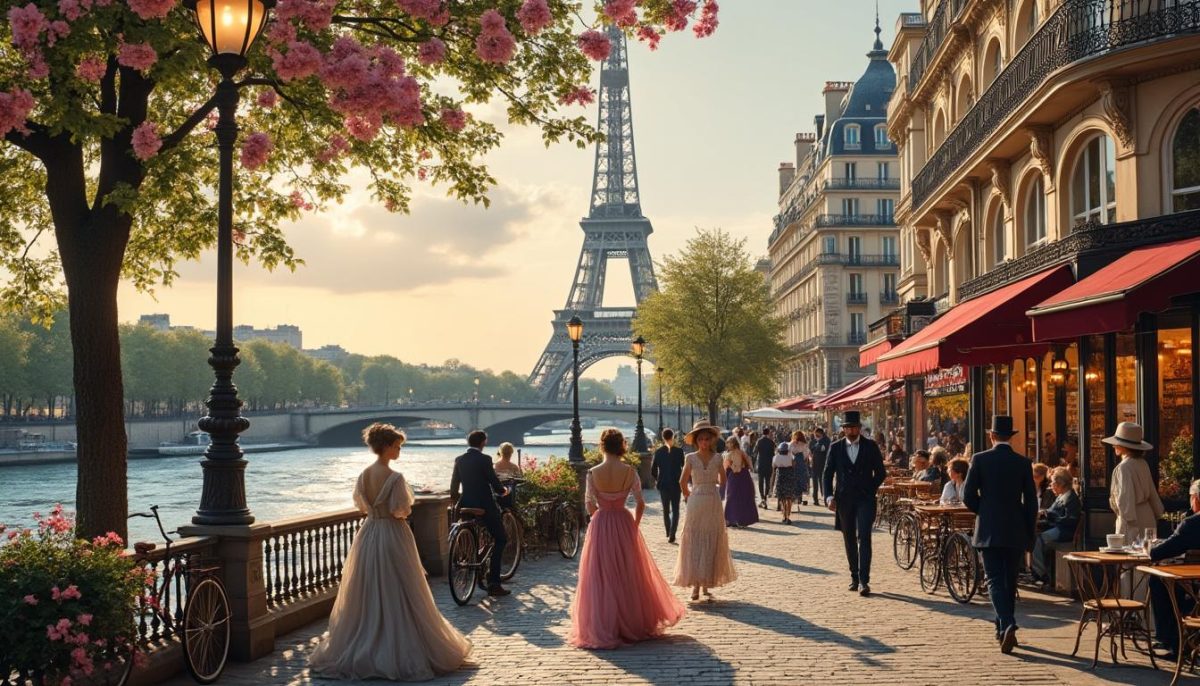
Following the turbulent episodes of the Commune, Paris emerged into a period of remarkable cultural vibrancy known as the Belle Époque. This era, which flourished from the late 19th century until the onset of World War I, saw a surge in artistic innovation and social activity that further established Paris as a global cultural capital. The combination of Haussmann’s urban design and the expressive art movements, including Impressionism and Art Nouveau, defined this unique epoch.
As cafés flourished on the newly constructed boulevards, intellectuals, artists, and philosophers congregated, sparking dynamic conversations that would shape modern thought. The construction of the Eiffel Tower for the 1889 World’s Fair encapsulated this spirit of modernity and ambition, transforming not just the skyline but also the identity of the city itself. With the Metro’s opening in 1900, Paris solidified its status as a modern metropolis linked through its comprehensive transportation network.
Artistic Innovations and Urban Life
The Belle Époque was marked not only by physical changes in the urban landscape but also by an explosion of creativity. This period gave rise to iconic institutions and events that encapsulated the Parisian joie de vivre. The Moulin Rouge, a cabaret founded in 1889, became a symbol of nightlife and artistic expression, epitomizing the era’s celebration of modern life.
Parisian society was increasingly intertwined with the arts. The Impressionists, including Monet and Degas, captured the essence of this transformed city on canvas, depicting its gleaming boulevards and bustling streets. The relationship between urban space and cultural expression became a defining feature of life in the city, showcasing how Haussmann’s planning laid the groundwork for a vibrant, modern society.
Resilience Through Turmoil: Modern Paris
Despite the devastation brought by the World Wars, Paris consistently rebuilt and evolved. Post-World War II, a wave of modernization swept across the city. New architectural projects—like the Centre Pompidou and La Défense—marked a departure from Haussmann’s aesthetic while paying homage to his ambitious vision. The reverberations of his urban planning continue to influence contemporary city design.
The challenges faced by Paris in the 21st century have reiterated the need for sustainable urban development. Modern initiatives focus on green spaces, pedestrian-friendly streets, and enhanced public transportation systems, all of which echo Haussmann’s desire for a cleaner, healthier city. Today, Paris remains a resilient testament to the power of urban renewal, blending historical grandeur with contemporary innovation.
A City Reimagined
The ongoing narrative of Paris is one of transformation and adaptation. The foundations laid by Haussmann have allowed the city to emerge resiliently, integrating modern infrastructure while cherishing its historical legacy. In 2026, Paris stands at the precipice of continued evolution, embracing challenges as it navigates the complexities of urban living in a rapidly changing world. The influence of Haussmann’s planning principles can still be observed in how the city approaches urban renewal and sustainability, making Paris a constant source of inspiration for cities around the globe.
| Time Period | Key Developments | Social Impact |
|---|---|---|
| 1850s-1870s | Haussmann’s renovations, sewer system, parks | Displacement of working-class residents, improved public health |
| 1871 | Paris Commune uprising and suppression | Social divisions intensified, brief reign of socialist government |
| Late 19th Century | Flourishing of the arts, construction of the Eiffel Tower | Rise of cultural identity, establishment of Paris as a cultural hub |
| Post-World War II | Modern architectural projects, sustainable initiatives | Continued adaptation and resilience in urban planning |