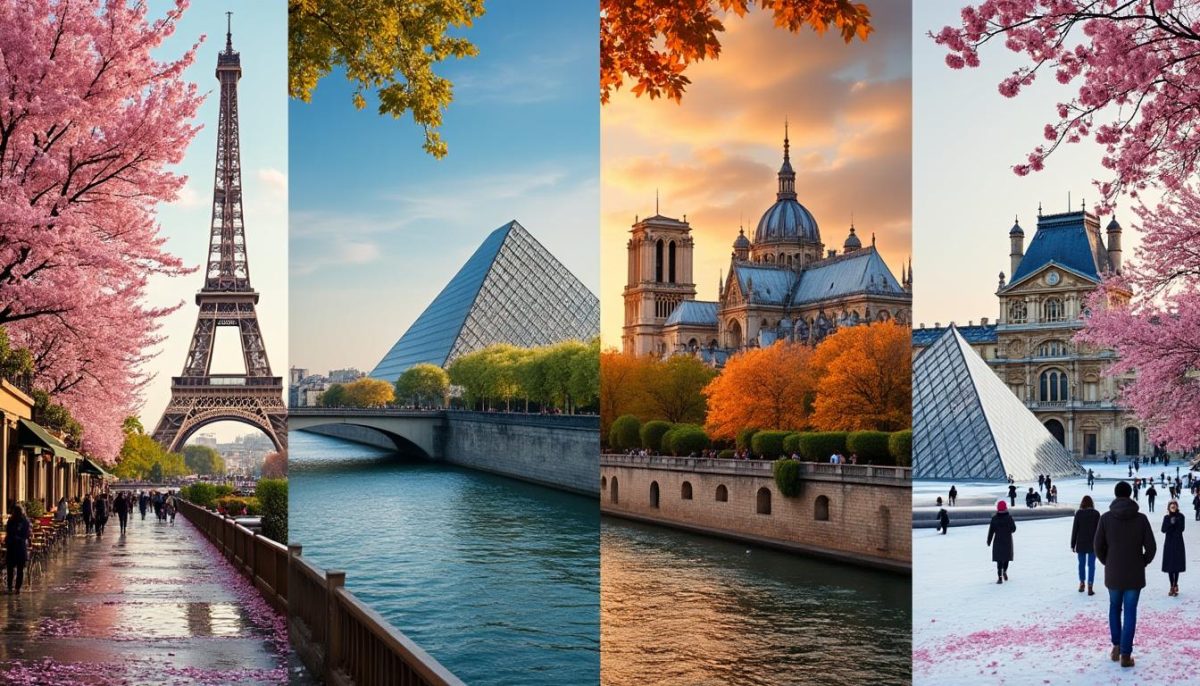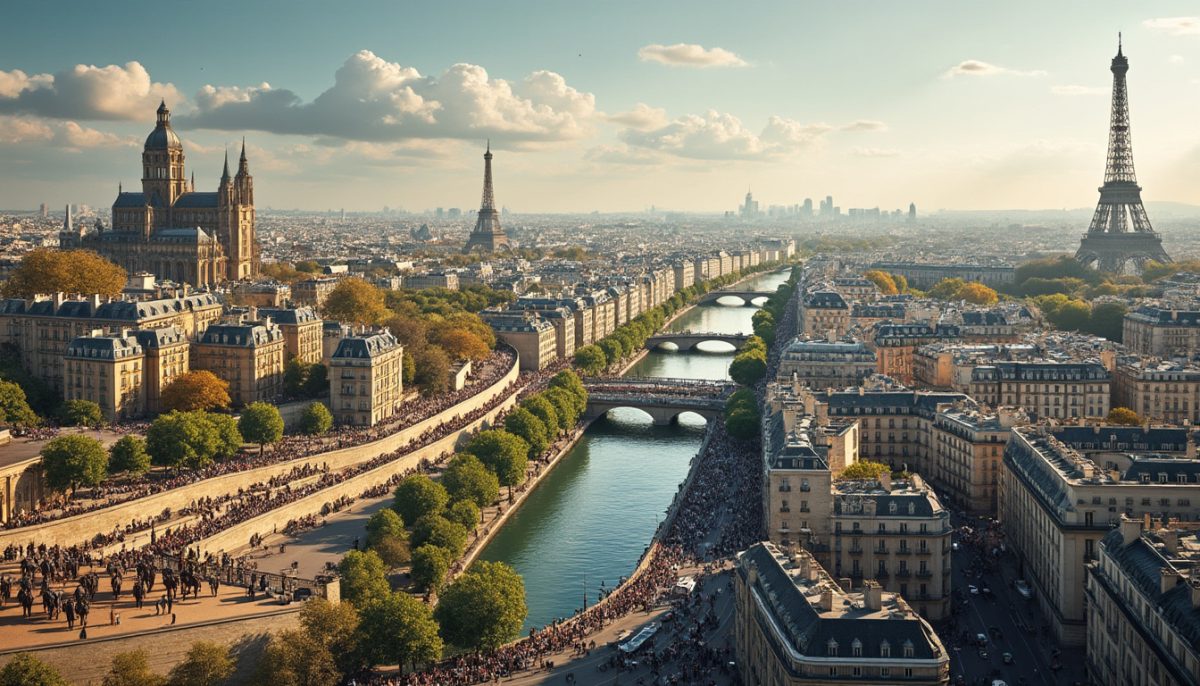
The evolution of Paris’s population is a fascinating narrative that vividly illustrates the city’s transformation from a quaint Gallic settlement to a bustling metropolis. This journey, steeped in history, captures the essence of human migration, urbanization, and the varied demographic trends that have shaped the City of Light. From its modest beginnings along the Seine, where early inhabitants thrived amidst rich natural resources, to the vibrant and densely populated urban landscape of today, the story of Paris’s population is a reflection of cultural shifts, economic changes, and historical events that resonate even in the modern era. Today, Paris stands not only as the heart of France but also as a dynamic hub that continues to attract individuals from across the globe, reflecting a rich tapestry of experiences and identities.
Ancient History and Initial Settlement of Paris
The foundation of Paris dates back to about 50 AD when it was a small settlement known as Lutetia, inhabited by the Parisii tribe. Initially, the population was sparse, consisting of just a few thousand people engaged in fishing and trade along the Seine River. This river not only provided sustenance but also served as a vital transportation route for goods, positioning Lutetia as a commercial point of interest during Roman rule. At its zenith, the population swelled to approximately 80,000 residents, transforming it into an essential trading hub.
However, the city faced challenges over the centuries. Following the collapse of the Roman Empire in the 5th century, various invasions significantly impacted the city’s demographics. By the 9th century, Viking raids had caused the population to drop substantially. It’s noteworthy that by the turning point of the millennium, Paris’s population dwindled to around 20,000 inhabitants. This decline marks a significant transition in the urban narrative, showcasing a fragile stability in city life during tumultuous times.
The Rise of Paris in the Middle Ages
The Middle Ages marked a significant period of recovery and growth for Paris. By the 12th century, it began to flourish again, becoming the largest city in Europe by 1550, flaunting its title with a population crossing 400,000. This rise can be attributed to improved agricultural practices and the establishment of trade routes that attracted merchants and artisans. However, this growth wasn’t linear; Paris faced monumental challenges, including the Black Plague and the Hundred Years’ War, which led to devastating population losses.
During the Black Plague in the 14th century, Paris saw its population decimated. Yet, under the reign of Henry IV in the early 17th century, the city rebounded remarkably, with an ever-increasing influx of inhabitants seeking opportunities. The urban layout started expanding outward, especially after the annexation of surrounding territories in the 19th century, making Paris a beacon of urban renewal and development.
Population Patterns in the Modern Era
The 20th century ushered in a new era for Paris, marked by significant shifts in its demographic landscape. The population peaked in the early 1920s, reaching almost 3 million residents. However, this growth was followed by a slow, steady decline through the latter half of the century, primarily influenced by various socio-economic factors that led to urban sprawl. By 1990, the population had reached its nadir at approximately 2.1 million.
The changes during this period were stark across different arrondissements. Notably, the centrally located districts experienced a consistent decline, while the outer arrondissements saw significant growth, reflecting a migration pattern where individuals sought more affordable living conditions and amenities. The table below illustrates the dramatic population shifts among several Paris arrondissements from 1872 to 2009:
| Area | 1872 Population | 2009 Population |
|---|---|---|
| 1st Arrondissement | 74,286 | 17,767 |
| 15th Arrondissement | 75,449 | 238,914 |
| 19th Arrondissement | 93,174 | 186,507 |
| 3rd & 4th Arrondissements (Marais) | 184,690 | 62,496 |
Demographic Trends and Future Projections
As of today, central Paris houses about 2.2 million inhabitants, while the greater metropolitan area has expanded to host over 12 million residents, underscoring the city’s continued allure. The metropolitan area reflects a blend of cultures and backgrounds, with a notable 25% of its residents born abroad. This diverse demographic enriches Paris, shaping its modern identity and making it a global cultural epicenter.
The trends in urbanization and migration continue to redefine Paris’s landscape. As the demand for urban living persists, further migrations are expected, particularly among young professionals seeking career opportunities. The challenges associated with such growth include housing shortages and the need for sustainable urban planning as the city approaches its next centennial milestone.
Census data from recent years indicate a consistent influx of international migrants alongside a stabilization of native-born populations, which creates a dynamic cultural mosaic. Thus, the population growth pattern, while perhaps less explosive than in previous eras, remains robust and vibrant.
Migration Patterns and Their Impact on Paris’s Demographics
Throughout its history, migration has been a continuous theme, deeply impacting the *demographic composition of Paris*. Historical waves of migrants, whether driven by economic opportunities, wars, or cultural exchanges, have played a pivotal role in shaping the city. The last century alone has witnessed significant migration waves, particularly from former colonies, enriching Paris’s cultural fabric.
The modern era has seen a significant transformation in the Central Paris population demographics. In the past two decades, young expatriates and students from various countries have flocked to the city, seeking educational and professional opportunities. This has led to a demographic landscape where nearly 45% of the population comes from outside the Paris region. The influx is not limited to specific nationalities; it encompasses a mosaic of cultures across Europe, Africa, and Asia, reinforcing the city’s role as a global melting pot.
Comparative Analysis with Other Major Cities
When juxtaposing Paris’s demographic trends with other major cities worldwide, it becomes evident that urbanization is a universal phenomenon. Cities like London and New York also exhibit complex migration patterns resulting from globalization. In many cases, urban centers experience higher immigration rates, influencing the housing market and public infrastructure. However, what sets Paris apart is its rich tapestry of historical relevance, stemming from its ancient roots paired with modern globalization.
Such comparisons invite important questions: how will migration continue to influence demographic changes in Paris? Will the city manage to create a balance between retaining its historical heritage while accommodating the evolving needs of its diverse populace? These inquiries underscore the multifaceted nature of designing urban spaces for the future, ensuring that as Paris evolves, it holds onto its vibrant legacy.