The allure of Paris is not solely defined by the Eiffel Tower or the Louvre; it is also shaped by the multitude of bridges that connect its enchanting banks. Among these, none is as iconic as the Pont Neuf. Despite its name, which translates to “New Bridge,” it stands as the oldest bridge in the city, captivating visitors with its rich history and stunning architecture. This enduring landmark, inaugurated in 1607, is a testament to both past ingenuity and contemporary innovation.
Today, the Pont Neuf not only serves as a vital connection across the Seine but also encapsulates a narrative that weaves through centuries. With the recent transformations, including artistic installations that honor its legacy, the bridge remains at the heart of Parisian life and culture. It has successfully bridged the gap between history and modernity, making it a favorite among locals and tourists alike. From bustling markets and serene views to striking artistic initiatives, the Pont Neuf continues to be an integral part of Paris’s urban fabric.
The Historical Significance of Pont Neuf
Before delving into the modern innovations surrounding the Pont Neuf, one must acknowledge its deep historical roots. Commissioned by Henry III in 1578, the bridge faced numerous delays and was finally completed under the reign of Henry IV. Its construction signified a major evolution in bridge design, as it was built entirely from durable limestone, unlike its wooden predecessors that often succumbed to disasters. This shift not only enhanced its longevity but also allowed for more pedestrian-friendly designs.
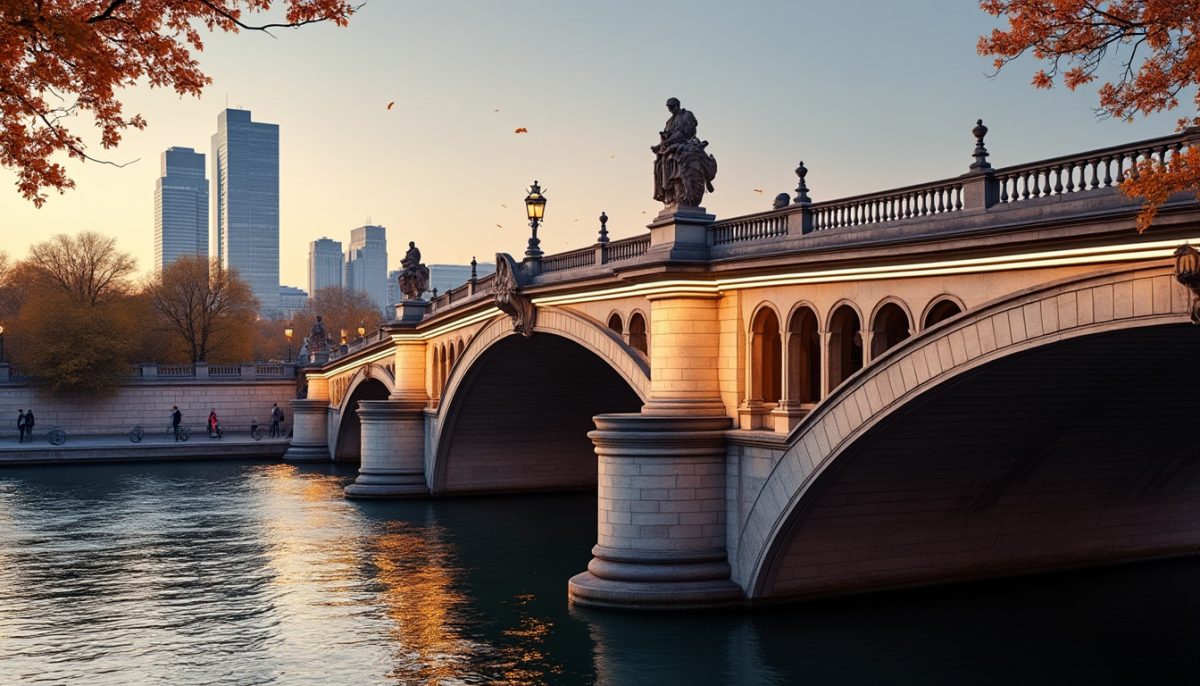
The Pont Neuf features a series of twelve arches, carefully constructed to span the Seine elegantly. This design was revolutionary for its time, prioritizing not only functionality but also aesthetic appeal. Pedestrians were given the freedom to traverse without the hindrance of structures cluttering the deck—an innovative feature that made it different from earlier bridges laden with shops and homes. Moreover, the bridge was designed with alcoves, providing spaces for individuals to pause and soak in the vibrant atmosphere of Paris. These alcoves have become ideal spots for locals to meet, socialize, and indulge in impromptu picnic gatherings.
Throughout its history, the Pont Neuf has borne witness to pivotal moments in Parisian culture and politics. Royal proclamations were often publicized here, making it a focal point for those seeking to stay informed. Its wide pathways welcomed bustling markets and lively gatherings, where Parisians from all walks of life would converge. From artisans showcasing their crafts to vendors selling their wares, the bridge truly reflected the essence of Parisian community.
Even during the turbulent times of the French Revolution, when many statues and monuments were demolished, the Pont Neuf stood resilient. The statue of Henry IV, which had adorned the center of the bridge, was destroyed and later replaced, symbolizing the endurance of both the bridge and the spirit of the city. To this day, Henry IV’s statue remains a captivating feature, embodying the complexities of Paris’s historical narrative.
Modern Innovations and Artistic Transformations
The Pont Neuf may be steeped in history, but it is also a canvas for contemporary innovation. In recent years, it has become a hotspot for artistic expression, with noteworthy installations that invite reflection and dialogue. Perhaps one of the most significant projects planned for 2026 is JR’s “La Caverne du Pont Neuf“, an immersive art installation transforming the bridge into a cavernous experience. This initiative is inspired by the ancient quarries that lie beneath the city, utilizing modern technology and artistic vision to connect past with present.
JR, a French street artist known for his large-scale public art projects, aims to engage visitors in a sensory journey that evokes the layers of history embedded within the Pont Neuf. Visitors will be able to step inside a 120-meter-long installation, complete with a soundtrack by none other than Thomas Bangalter from Daft Punk. This fusion of art, sound, and architecture will not only rejuvenate the bridge but also enhance its cultural significance, establishing it as a locus of modern creativity.
Beyond JR’s bold project, the bridge also reflects a commitment to sustainability. Recent renovations have introduced eco-friendly measures, aligning with Paris’s ambition to become a greener city. Enhanced lighting systems and maintenance practices ensure that the Pont Neuf remains accessible and appealing while preserving its historical integrity. These modern updates ensure that the bridge serves as both a functioning infrastructure piece and an aesthetic marvel.
The combination of historical resonance and modern innovation has made the Pont Neuf a prime example of urban adaptability. In a city that continuously evolves, this bridge serves as a reminder of its roots while embracing future possibilities. Visitors can witness a daily tapestry of life that unfolds on its arches, from morning joggers to evening strollers basking in the glow of Parisian lights.
Cultural Significance and Public Engagement
The cultural impact of the Pont Neuf extends beyond its architectural beauty. Viewed as a crucial public space, it has become a gathering place for both locals and tourists, embodying a vibrant community hub within the city. In the past, it functioned as a bustling marketplace; today, it serves as a backdrop for a plethora of social interactions—from spontaneous musical performances to art exhibitions.
Throughout the year, various events are organized on and around the bridge. Festivals often celebrate Paris’s artistic diversity, showcasing local talent and inviting Passersby to participate in the festivities. Such events not only revive the bridge’s historical role as a center of social life but also invite people from diverse backgrounds to share their cultures and stories. In this way, the Pont Neuf dynamically embodies the essence of a multicultural Paris in 2026.
This enduring landmark also reflects the city’s commitment to public art and cultural outreach. The surrounding areas are home to galleries and performance spaces that align with the artistic spirit of the Pont Neuf. As Paris looks towards a future infused with cultural dynamism, the bridge will continue to play a pivotal role as a platform for expression—inviting visitors to partake in the ongoing conversation between history and modernity.
Moreover, the nearby historical trivia spots invite enthusiasts to explore the narrative layers intricately woven into Paris’s urban landscape. This engagement fosters a deeper understanding of the city’s evolution, highlighting how bridges like the Pont Neuf remain vital to its rich cultural tapestry.
A Visitor’s Guide to the Pont Neuf Experience
Visiting the Pont Neuf is an adventure filled with endless possibilities. For tourists, it serves as a gateway to explore the surrounding attractions, making it a perfect starting point for a day of discovery. The bridge’s strategic location offers easy access to iconic sites such as Notre-Dame Cathedral, the historic Île de la Cité, and the vibrant Latin Quarter.
One of the best ways to truly appreciate the beauty of the Pont Neuf is to embark on a scenic walk across its length, taking in the stunning views of the Seine and the bustling life that unfolds below. The adjacent Place Dauphine, another picturesque spot, is often less crowded and offers a serene environment for relaxation while enjoying a picnic or simply soaking in the atmosphere.
For a unique experience, consider joining a guided bicycle tour that will take you across various bridges in Paris, including the Pont Neuf, offering insights into each landmark’s significance. Such tours enhance one’s understanding of Paris’s architectural evolution and urban life while providing a fun and active way to explore the city.
Finally, as you plan your visit, don’t forget to capture memories with stunning photographs. The architectural lines of the Pont Neuf, combined with the river’s shimmering water, create perfect backdrops for striking images. Whether it’s at dawn or dusk, the bridge’s beauty continually surprises—enticing visitors to return again and again, ensuring that it remains as timeless as it is modern.
| Year | Event | Significance |
|---|---|---|
| 1607 | Inauguration of Pont Neuf | First stone bridge without houses, promoting pedestrian access |
| 1818 | Reinstatement of Henry IV Statue | Symbol of resilience during turbulent political changes |
| 2026 | La Caverne du Pont Neuf Installation | Celebration of modern artistic innovations intertwining history |