The Place de la Concorde stands as a magnificent testament to Paris’s tumultuous history, where the glories of royal legacy interweave with the fervent passions of revolutionary times. This iconic square, recognized as the largest in Paris, boasts an impressive 21-acre expanse that connects prominent avenues with notable monuments. The architectural elegance, combined with historical significance, positions the Place de la Concorde as a pivotal landmark that deserves exploration. As visitors tread its cobblestones, they are invited not only to admire its scenery but also to absorb the stories that echo through time.
Constructed during the reign of Louis XV, Place de la Concorde was initially named after the king himself. Its grand design was envisioned by the architect Ange-Jacques Gabriel, featuring a symmetrical layout adorned with fountains, statues, and an imposing Egyptian obelisk. Yet, beyond its beauty lies a darker narrative, as the square is intrinsically linked to the French Revolution, a period marked by political upheaval and the quest for equality. As we delve deep into the layers of history surrounding this significant site, we uncover tales of power, betrayal, and transformation that resonate with the essence of Paris.
Royal Beginnings: The Creation of Place de la Concorde
Upon its inception in the mid-18th century, the Place de la Concorde was envisioned as a symbol of royal strength and authority. Commissioned by King Louis XV, the square was designed to be an urban masterpiece that served as an extension of the nearby Tuileries Gardens, allowing for a seamless transition between the regal and the public sphere.
The initial idea was to erect a monumental statue of Louis XV in the center. However, this plan faced dramatic changes in the wake of the French Revolution. The once magnificent equestrian statue stood for less than two decades before it was torn down, reflecting the volatile sentiments of a populace hungry for change. This transition marked the beginning of the square’s complex identity, morphing from a celebration of monarchy to a site of retribution and justice. Louis XVI, the successor to Louis XV, would experience the bitterness of this transformation firsthand.
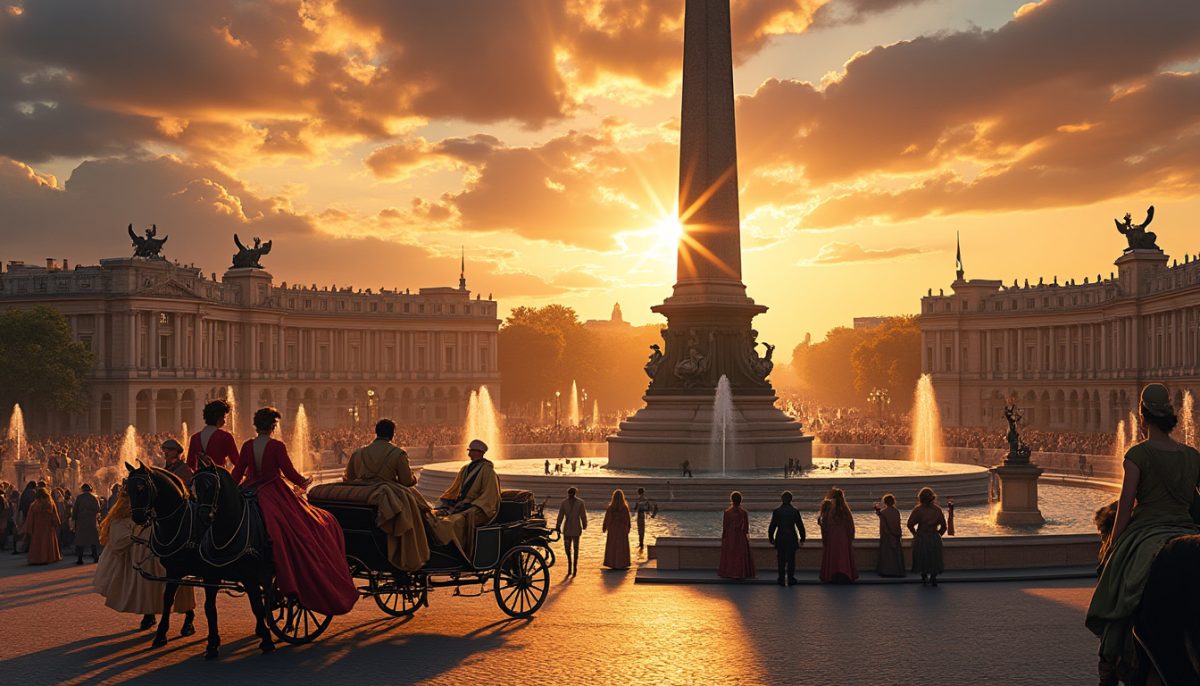
One of the standout features of the Place de la Concorde is its remarkable Egyptian obelisk. Standing at an impressive 23 meters and dating back over 3,300 years, the obelisk was a gift from the Viceroy of Egypt, Mohammed Ali Pasha, to Louis-Philippe in the 19th century. It arrived in Paris after a monumental effort, showcasing not only the opulence of monarchy but also the era’s fascination with Egyptology. Today, it remains a focal point of the square, drawing countless tourists who marvel at its size and history.
Architecturally, the square features stunning Neoclassical façades designed by Gabriel. These structures frame the square’s northern edge, creating a visual harmony that complements the obelisk and statues that dot the landscape. The buildings, once home to royal offices, now contain various institutions, including the prestigious Hotel de Crillon, which offers a glimpse into the luxurious lifestyle of Parisian nobility. Visiting the Hotel de Crillon allows guests to experience this nuanced blend of history and modern luxury.
The Evolution During the French Revolution
As the revolutionary fervor erupted in the late 18th century, the dominance of monarchy faced fierce opposition. In 1792, the square was renamed the Place de la Révolution, becoming a stage for some of the Revolution’s most infamous events. It was here that the realities of political strife became palpable; the guillotine, a grim symbol of the era, found its home in this once-celebrated square.
The execution of Louis XVI on January 21, 1793, marked a historic turning point in both the square’s identity and the broader narrative of France. The king’s death was not just the fall of a ruler but heralded the end of an era. His wife, Marie Antoinette, along with other prominent figures like Georges Danton, would also meet their fates at this pivotal historic site. Over a span of months during the Reign of Terror, the square witnessed the execution of approximately 1,300 individuals, illustrating the tumultuous clash between the ruling class and revolutionary ideals.
Interestingly, the square’s name was changed to Place de la Concorde in 1795, symbolizing a desire for harmony amidst the fallout of violence and chaos. This renaming can be seen as an ironic twist, as the square’s legacy became infused with both commemorative and cautionary tales. The architectural landscape began to reflect this shift, with additions and adjustments made to accommodate the ever-changing narrative of Parisian politics.
Architectural Marvels and Monumental Statues
Beyond its historical tumult, the Place de la Concorde remains a locus of architectural grandeur. The twin fountains that grace either side of the obelisk are prime examples of the era’s artistic expression. Designed by the sculptor Jacques-Ignace Hittorff, these fountains symbolize different navigational themes: naval and river navigation, reflecting France’s maritime heritage and its commitment to showcasing art as public discourse.
The intricate sculptures adorning the fountains represent major French cities, including Bordeaux, Marseille, and Lille. This artistic choice underscores the square’s role as a center of unity among diverse regions of France, celebrating both local pride and national identity. Additionally, the figures in these fountains are replicas of those seen in St. Peter’s Square in Rome, showcasing the interconnectedness of European artistic movements during the period.
Another architectural highlight is the Pont de la Concorde, a bridge that spans the Seine and connects the square to the Left Bank. Constructed using stones from the demolished Bastille, this bridge further solidifies Place de la Concorde’s link to revolutionary history. The bridge was completed in 1791, serving both practical and symbolic functions, bridging the gap between old and new Paris, royal and revolutionary.
Modern-Day Significance and Tourism
In contemporary times, Place de la Concorde has transcended its historical roots to become a celebrated tourist destination. Each year, millions flock to the square to learn about its past, admire its architectural beauty, and take in the vibrant atmosphere that characterizes this part of Paris. The square is not only a historic site but also a cultural hub, frequently hosting events and festivals that showcase the dynamic spirit of the city.
The position of Place de la Concorde at the intersection of the Champs-Élysées and the Jardin des Tuileries makes it a prominent stop for tourists. With easy access to nearby attractions, visitors often find themselves drawn to the square. Taking a leisurely stroll through the gardens or heading down the bustling Champs-Élysées offers a taste of both nature and urban life in Paris. The square’s accessibility, coupled with its remarkable features, ensures its status as a must-visit site.
Furthermore, surrounding the Place de la Concorde are several key establishments, including the Hotel de la Marine and various diplomatic missions, such as the American Embassy, which further enriches the area’s historical appeal. Visitors can dive into Parisian café culture, sampling local delicacies while absorbing the extraordinary views of the obelisk and fountains.
| Feature | Description | Historical Significance |
|---|---|---|
| Egyptian Obelisk | Ancient monument standing at the center of the square. | Gifted by Mohammed Ali Pasha in 1831, symbolizing royal power. |
| Fountains | Two ornate fountains representing navigation. | Showcases work of Jacques-Ignace Hittorff. |
| Pont de la Concorde | Bridge connecting the square to the Left Bank. | Constructed from stones of the Bastille, reflecting revolutionary history. |
| Proximity to Tuileries | Located adjacent to the famous garden. | Enhances tourist attractions in the area, linking history with leisure. |