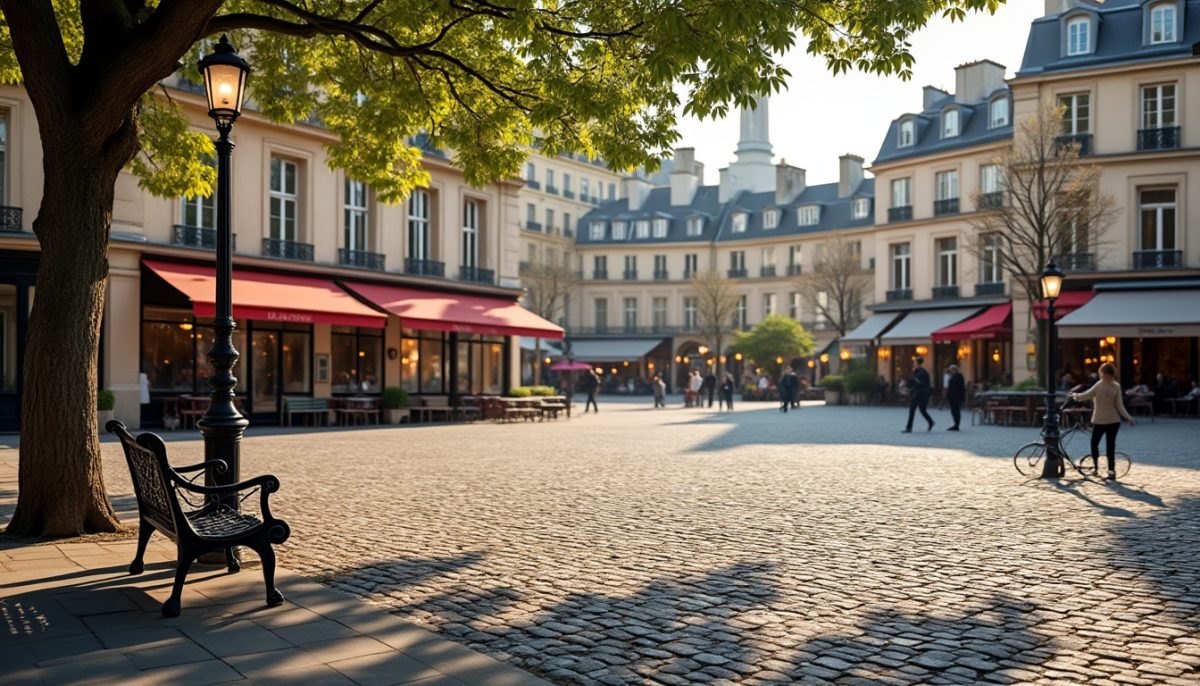
Just a stone’s throw from the bustling crowds of Île de la Cité lies the enchanting Place Dauphine, a peaceful haven that invites locals and visitors alike to take a breath and enjoy the beauty encapsulated within its triangular frame. As you stroll through Paris, it’s easy to get swept up in the grandeur of landmarks such as Notre Dame and Sainte Chapelle. However, Place Dauphine offers a refreshing escape from this urban buzz, beckoning you to slow down, connect with the charming atmosphere, and marvel at its rich history. With elegant architecture and leafy trees, it creates a contrast to the frenetic pace of the city. This hidden gem enchants anyone fortunate enough to discover its serene allure, serving as a reminder that tranquil spots can always be found amidst the city’s lively rhythm.
Discovering the History Behind Place Dauphine
The origins of Place Dauphine date back to the early 17th century when King Henry IV envisioned a modern Paris. He aimed to shape a civilized space, striking a balance between aesthetics and utility. This square, inaugurated in 1615, was an integral part of a larger project that included the famous Pont Neuf, which remains one of Paris’s most iconic bridges. The very layout of Place Dauphine is remarkable; it utilizes the triangular contours of Île de la Cité. This design choice was not simply artistic but practical, allowing for seamless connectivity between the bustling bridge and the serene enclave.
During its inception, Place Dauphine was adorned with charming homes featuring red-bricked facades and characteristic French architecture, which aimed to create an uninterrupted visual harmony. However, much has changed since its completion, with many original structures replaced or altered over the centuries. Today, the only remaining historical buildings are those along the Pont Neuf, representing a small yet significant connection to the past.
In 2009, the cherished chestnut trees that previously framed the square were lost to disease, but they have been replaced by a more resilient variant that now begins to restore the area’s traditional “canopy” appearance. This ongoing adaptation illustrates how Place Dauphine continues to evolve while maintaining its core essence—a testament to the resilience and transformative nature of this beloved space.