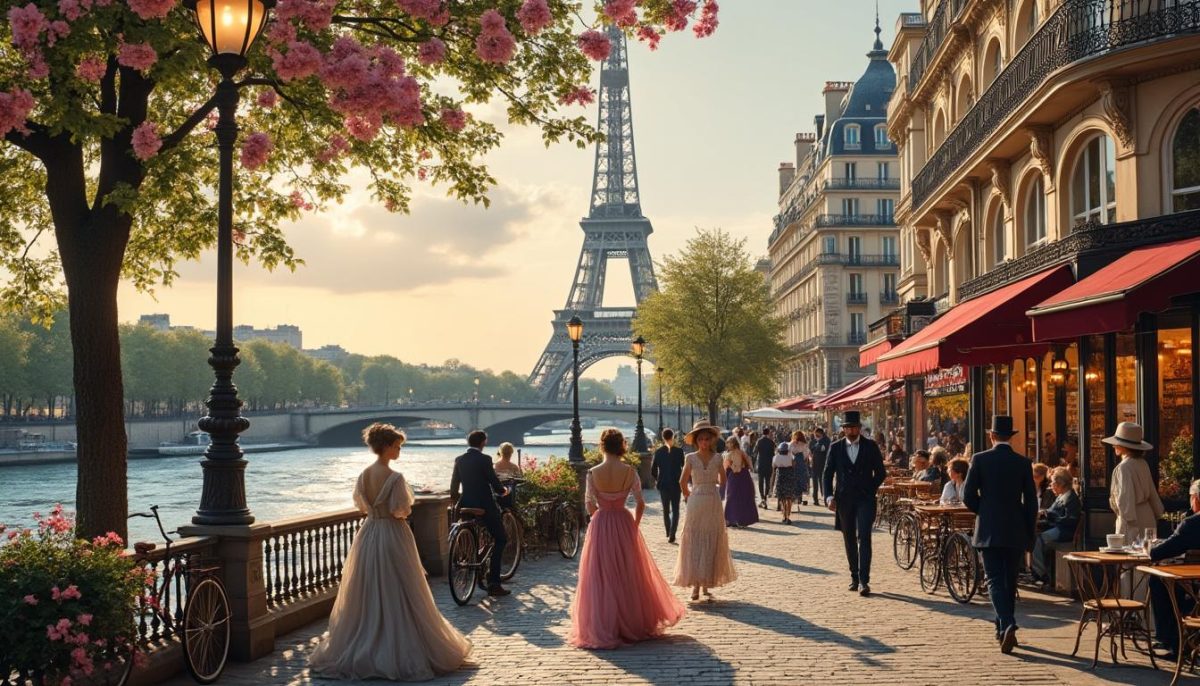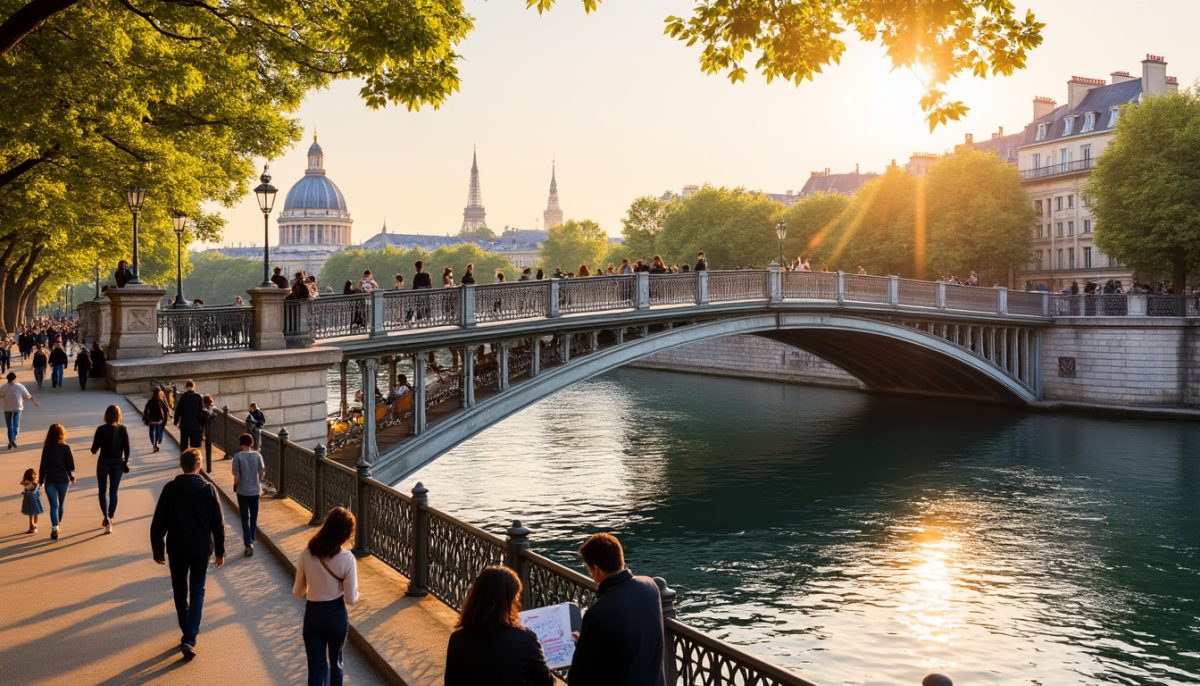
As the sun begins its descent over the Seine, casting a golden hue upon the waters, the allure of Paris deepens. The river, a constant in the city’s evolving tableau, meanders through the heart of the capital, linking its past with its present. Iconic landmarks, historic bridges, and tranquil quays define the banks of the Seine, offering countless opportunities for exploration and admiration. While many structures span the river, only a select few offer dedicated pathways for pedestrians, inviting visitors to experience the intimate beauty of Paris from an often overlooked vantage point. A walk along these pedestrian bridges opens new vistas and narratives, weaving together stories of history, art, and love in the city that is synonymous with romance.
Each bridge carries its own distinct charm, crafted with unique architecture and imbued with the essence of the neighborhoods they connect. From the vibrant atmosphere surrounding the Pont des Arts to the serene elegance of the Passerelle Simone de Beauvoir, these pedestrian bridges create inviting pathways for those keen to revel in their surroundings. This journey immerses walkers in the rhythm of the Seine, where each pedestrian bridge becomes a symbol of connectivity, beckoning exploration and discovery. Every arch and pathway tells a story, imbuing the river walk with a sense of purpose and wonder, enhancing the experience of both locals and tourists alike. Embark on this urban stroll and uncover the iconic bridges that epitomize the spirit of Paris.
Revisiting History: The Bridges of the Seine
Understanding the significance of the pedestrian bridges in Paris requires a brief dive into the history that forged them. The city, enriched by its civilization along the Seine, saw its earliest settlements established by the Parisii people on the Île de la Cité. Over the centuries, Paris expanded further, with the Seine serving as a vital artery for trade, communication, and transportation. This historical context underscores the evolution of the bridges, which now number nearly forty, each representing a different era, technological advancement, and artistic vision.
The construction of these bridges has often mirrored advancements in engineering and architecture. The oldest bridges were often simple structures, primarily built of stone and designed for utility. However, as Paris transformed into a cultural hub, the designs became more ornate and reflective of the city’s burgeoning identity. The blend of utilitarian function with aesthetic beauty is particularly evident in the pedestrian bridges, which emphasize accessibility while also serving as artistic statements. This historical perspective enriches the experience of modern visitors who stroll across these iconic structures, allowing them to appreciate not merely the present but the layers of history encapsulated in every step.
Moreover, these bridges are more than mere crossings. They are witnesses to countless moments that have shaped Paris’s narrative, from royal processions and revolutionary gatherings to romantic rendezvous and casual strolls. The stories woven into the very fabric of each bridge enhance their charm and significance, resonating with any who traverse them. Whether it’s the love stories whispered on the Pont des Arts or the artists inspired by the views from the Passerelle Simone de Beauvoir, each walk turns into a journey through time, connecting the past to the vibrant pulse of contemporary Paris.
The Pont des Arts: A Pedestrian’s Paradise
The Pont des Arts stands out as perhaps the most famous of the pedestrian bridges in Paris. Originally commissioned by Napoleon Bonaparte in the early 19th century, this bridge epitomizes the romantic spirit of the city. Initially constructed as a simple metal structure, it has undergone various transformations — both structurally and in popular use. Today, it serves as a vibrant meeting point for locals and tourists alike.
With its stunning views over the Seine and the nearby Louvre, the Pont des Arts invites visitors to pause and appreciate the beauty of the surrounding architecture and landscape. The bridge became a popular spot for couples to attach love locks, symbolizing their commitment to one another, although this practice has raised concerns over the impact on the bridge’s structural integrity. In recent years, efforts have been made to preserve its elegance, thereby ensuring it remains a cherished part of Paris’s urban tapestry.
One cannot help but be drawn to the bridge’s unique ambiance. Musicians often gather here, adding a soundtrack to the scenery, while artists set up easels to capture the views. An afternoon spent on the Pont des Arts offers not only breathtaking scenic views but also an opportunity to engage with the city’s artistic spirit, making it a pivotal stop on any walking tour of Paris.
Exploring the Architectural Marvels of the Seine
As one continues to stroll along the Seine, the diversity of bridge architecture becomes apparent. Each pedestrian bridge showcases distinctive design features that reflect the era of its construction. For instance, the Passerelle Debilly, a lesser-known yet striking metal footbridge, links the Quai Branly to the Palais de Tokyo. Built for the Paris Exposition in 1900, it exemplifies the architectural ingenuity of its time. Its minimalistic metal framework is reminiscent of the Eiffel Tower, even sharing a similar era of construction.
In contrast, the Léopold Sédar Senghor Bridge, originally known as the Pont de Solférino, reflects a more modern approach to bridge design. Spanning the Seine with a single graceful arch, its sleek lines contribute to the riverscape while facilitating easy access between the Musée d’Orsay and the Tuileries. Apart from being an engineering marvel, the bridge’s dedication to Senegalese poet and former president Léopold Sédar Senghor adds an enriching cultural layer, capturing the essence of global connectivity that Paris embraces. It serves as a reminder of the city’s commitment to honoring diverse identities and histories.
These architectural wonders not only serve practical purposes but also contribute to the overall aesthetic of Paris. Integrating art with engineering, each bridge enhances the skyline and the river walk, making them integral to the urban experience. The picturesque allure of bridges like these captivates photographers and artists, who find inspiration in their intricate designs and the reflections cast on the flowing water below.
Bridges That Connect History and Community
As one travels east along the Seine, the Pont Saint-Louis emerges, seamlessly connecting Île de la Cité to Île Saint-Louis. Unlike other bridges, this structure is unique as it doesn’t touch either bank of the river, allowing it to maintain a dedicated pedestrian experience. Originally dating back to the early 1600s, the current iteration embodies both a historic charm and modern durability, making it an integral passageway for locals and visitors alike.
Pont Saint-Louis provides access to a rich community that thrives on the island. Charming cafes, artisanal shops, and historic buildings flank its path, creating a vibrant atmosphere filled with life and stories. As one walks across, there’s a sense of continuity and connection to both the past and present. The bridge stands as a testament to the importance of connectivity within urban space, allowing for the flow of culture and community.
On the other hand, the Passerelle Simone de Beauvoir, a more recent addition completed in 2006, allows walkers to traverse from the National Library to Parc de Bercy. Its contemporary design features a sleek silhouette that complements the ongoing urban renewal in the area. This bridge promotes not only accessibility between neighborhoods but also represents the modern evolution of bridge architecture. Celebrated for its innovative engineering, the Passerelle Simone de Beauvoir enhances everyday life by encouraging people to explore the scenic riverside, fostering a sense of connection in a bustling metropolis.
Enchanting Experiences along the River Walk
The true magic of Paris unfolds along the Seine, where each pedestrian bridge enhances the immersive experience of a river walk. Taking the time to explore these routes reveals not only remarkable views but also hidden gems set against the backdrop of historical significance. The scenic paths lined with trees, benches, and carefully curated gardens create spaces for relaxation and contemplation, making them perfect for leisurely afternoons or romantic evenings.
A stroll along the Seine connects one to various city landmarks, including the majestic Notre-Dame Cathedral and the Louvre, while providing opportunities to admire street performers, local artists, and unique installations along the way. Imagining oneself as a part of this vibrant tapestry brings new life to the pedestrian bridges, amplifying their significance beyond mere crossing points.
Visitors can take full advantage of the breathtaking views offered by bridges like the iconic Pont Alexandre III, which rises majestically over the Seine. Whether during the golden hour or under an enchanting night sky, this picturesque locale invites exploration and admiration, enhancing the joy of urban strolling. The stunning architecture, historical context, and the promise of new discoveries unite to create a memorable experience that encapsulates the essence of Paris.
| Bridge Name | Location | Year Built | Architectural Style |
|---|---|---|---|
| Pont des Arts | Île de la Cité to Louvre | 1804 | Metal structure |
| Passerelle Debilly | Quai Branly to Palais de Tokyo | 1900 | Metal footbridge |
| Pont Saint-Louis | Île de la Cité to Île Saint-Louis | 1970 | Modern design |
| Léopold Sédar Senghor | Musée d’Orsay to Tuileries | 1999 | Single arch |
| Passerelle Simone de Beauvoir | Mitterrand Library to Bercy | 2006 | Contemporary design |
The Allure of the Seine: Final Thoughts
Every bridge, every step taken along the Seine’s edge enhances the experience of Paris, revealing the city’s intricate connection to its waterways. Whether during a casual stroll or a focused walking tour, the pedestrian bridges stand as enduring symbols of the city’s architecture, culture, and vibrant community life. As an ever-evolving metropolis, Paris continues to embrace the past while looking toward the future, and its bridges remain a vital part of this journey — a testament to the beauty and spirit of urban exploration. So lace up your walking shoes, and let the Seine guide you through the enchanting maze of Paris.