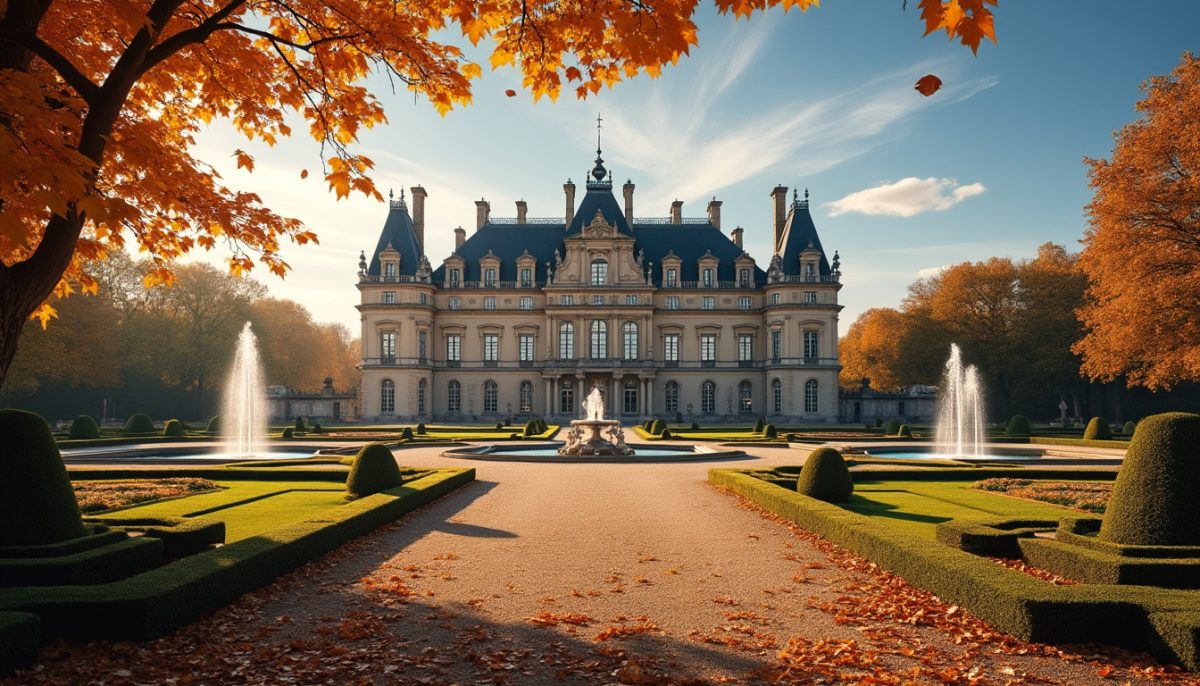
On the southeastern fringes of Paris lies the stunning Château de Vaux-le-Vicomte, a dazzling gem of French Baroque architecture that served as the inspiration for the grand Palace of Versailles. Built in the 17th century for Nicolas Fouquet, the Minister of Finances under Louis XIV, this estate encapsulates a vibrant narrative of ambition, creativity, and a tragic downfall. As visitors stroll through the meticulously manicured gardens designed by André Le Nôtre or gaze upon the opulent interiors crafted by the revered architect Louis Le Vau and painter Charles Le Brun, they step into a world that, while historical, speaks volumes about the art of French living. Vaux-le-Vicomte not only reflects the heights of architectural ingenuity but also the intricate tapestry of French history, culture, and politics that marked its era. With every visit, one encounters echoes of a bygone age where beauty and design formed the very fabric of societal identity.
The Grandeur of Vaux-le-Vicomte: A Historical Overview
The history of Vaux-le-Vicomte is intrinsically tied to the rise and fall of its founder, Nicolas Fouquet. Originally a modest chateau purchased by Fouquet at the tender age of 26 in 1641, the estate underwent magnificent transformations as his fortune grew. Through his keen political acumen and artistic vision, he hired some of France’s finest creatives to craft a masterpiece that encapsulated the idea of grandeur. The estate became a vibrant cultural hub, attracting artists, writers, and thinkers of the time. Artists like Molière, who premiered his play “Les Fâcheux” during one of Fouquet’s extravagant celebrations, graced its halls, symbolizing Vaux-le-Vicomte’s status as a center of artistic inspiration.
As the estate expanded, it adopted elements that defined the French Baroque style, particularly in its architectural and landscaping features. The gardens, a hallmark of Le Nôtre’s design, were not merely ornamental but infused with symbolism and function, embodying a union of nature and human creativity. The grand fountains, perfectly aligned hedges, and ornate statues tell stories of mythology and power, each contributing to the narrative that Vaux-le-Vicomte was crafted to tell. It stood as a testament to the ambitions of a man who dared to build a private paradise that rivaled the royal establishments of the time.
Yet, it was not just an estate; it was an embodiment of Fouquet’s aspirations. The lavish celebrations held at Vaux-le-Vicomte highlighted the social dynamics of 17th-century France, where art and power intertwined. Each soirée, filled with dazzling displays of wealth, opera, and elaborate meals, solidified the estate’s reputation as a cornerstone of French culture. But as history would tell, such grandeur often draws the eyes of ambition and envy. The rising star of Fouquet would soon face a direct conflict with the ambitions of none other than King Louis XIV, marking the beginning of a dramatic turn in this historical narrative.
The Fête That Changed Everything: Fouquet’s Downfall
The fateful evening of August 17, 1661, would prove to be pivotal for both Nicolas Fouquet and Vaux-le-Vicomte. On that day, Fouquet organized an extravagant celebration in honor of his sovereign, Louis XIV. The estate buzzed with excitement as the guests enjoyed a feast that would make history, complete with theatrical performances, music, and lavish decorations. The centerpiece of the entertainment was Molière’s newly written play, “Les Fâcheux,” designed to capture the king’s favor. However, the festivities, which were meant to be a showcase of loyalty and devotion, instead sparked a sense of rivalry.
As the evening unfolded, it became increasingly clear that the opulence surrounding Vaux-le-Vicomte threatened to eclipse the very grandeur of the monarchy. Deeply perturbed, Louis XIV perceived Fouquet’s show of wealth not as admiration, but as a challenge to his authority. Fueled by jealousy and influenced by his cunning advisor Colbert, the king moved to dismantle the very world Fouquet had built. What followed was a tragic episode of betrayal; Fouquet was arrested, convicted of embezzlement, and sentenced to life imprisonment. The grand estate that had once served as the epicenter of culture and art was stripped of its valuables—statues, tapestries, and even a collection of prized orange trees—while Louis XIV seized upon the opportunity to create something even more monumental.
In a twist of fate, the lessons gleaned from Vaux-le-Vicomte laid the groundwork for the creation of Versailles. The ambitions behind this new palace, embellished with opulent decorations and sprawling gardens, were straightforward: to establish a focal point of royal power and cultural identity. The architectural marvels at Versailles, including the Hall of Mirrors and the expansive gardens, owe their stylistic roots to the aesthetics pioneered at Vaux-le-Vicomte. In recognizing the magnificence of Fouquet’s estate, Louis XIV paralleled his vision of an even grander political theater to reinforce his reign.
Rediscovering Vaux-le-Vicomte Today: Cultural Events and Activities
Fast forward to today, Vaux-le-Vicomte has been elegantly restored, offering visitors an opportunity to immerse themselves in the opulence of 17th-century France. The estate, just a short journey from Paris, regularly hosts splendid events that celebrate its rich heritage. From Easter garden festivities to the enchanting candlelit tours on summer nights, every experience is crafted to evoke a sense of wonder that harks back to its golden age.
The architecture and landscaping have been carefully preserved, allowing guests to appreciate the original vision of Nicolas Fouquet. Tours of the estate often include walking through the meticulously landscaped gardens where every path tells a story of artistry and history. The history of garden design at Vaux-le-Vicomte, characterized by symmetry and grandeur, serves as a precursor to modern landscaping, demonstrating how nature and art can coexist harmoniously.
Additionally, Vaux-le-Vicomte has become a sought-after venue for exclusive experiences such as private picnics in the gardens, where visitors can enjoy gourmet offerings amidst the tranquil beauty of the estate. Visitors are treated to curated meals alongside sparkling champagne, all while relaxing on ornate blankets, reminiscent of the lavish soirees of Fouquet. One can easily envisage the mingling of nobility and artists, echoing the vibrant atmosphere that once enveloped the estate.
Moreover, the annual candlelit dinner offers an unforgettable experience, where the gardens glow under the soft illumination of thousands of candles. Guests can savor a multi-course dinner while being serenaded by enchanting melodies—truly a feast for the senses. Events like these not only showcase the beauty of Vaux-le-Vicomte but also engage visitors in the rich tapestry of history, art, and culture that defines this stunning estate.
A Lasting Legacy: The Artistic Inspiration of Vaux-le-Vicomte
The legacy of Vaux-le-Vicomte extends far beyond its architectural marvels. The estate stands as a testament to artistic inspiration, demonstrating how a single vision can transform into a cultural phenomenon. Numerous artists, playwrights, and intellectuals were drawn to the estate, and its allure continues to attract visitors and creatives to this day. The narrative surrounding Vaux-le-Vicomte showcases the intersection of power, artistry, and ambition, revealing profound insights into the psyche of 17th-century France.
One of the estate’s most enduring influences is its role in shaping garden and architectural design. Vaux-le-Vicomte was a precursor to many gardens established across Europe, and its emphasis on formal gardens has set a standard for beauty and elegance. The intricate design, characterized by geometric shapes, tree-lined pathways, and water features, creates a captivating space that binds the environment and human creativity.
Moreover, the tales of its founder serve as an important reminder of the fragility of success. Nicolas Fouquet’s story, intertwined with that of Vaux-le-Vicomte, sheds light on the intricate dynamics of power within French society. It exemplifies how ambition, when unchecked, can lead to one’s downfall, a narrative that resonates through time and across diverse cultural landscapes. Artists and historians alike continue to draw inspiration from this poignant tale, ensuring that the legacy of Vaux-le-Vicomte remains vibrant in contemporary discourse.
| Year | Event | Significance |
|---|---|---|
| 1641 | Purchasing of the original chateau | Marking the beginning of Fouquet’s rise |
| 1661 | Fouquet’s opulent fête | Turning point leading to his arrest |
| 1682 | Construction of Versailles begins | Resulting from Fouquet’s initial vision |
| 2026 | Modern restoration and cultural events | Reviving interest and maintaining legacy |
In exploring Vaux-le-Vicomte, one cannot help but acknowledge its grand narrative and enduring beauty, firmly etching its place in the fabric of French history. As you wander through its gardens or marvel at its architecture, each step resonates with the stories of those who walked before, crafting an experience that is both timeless and transformative.