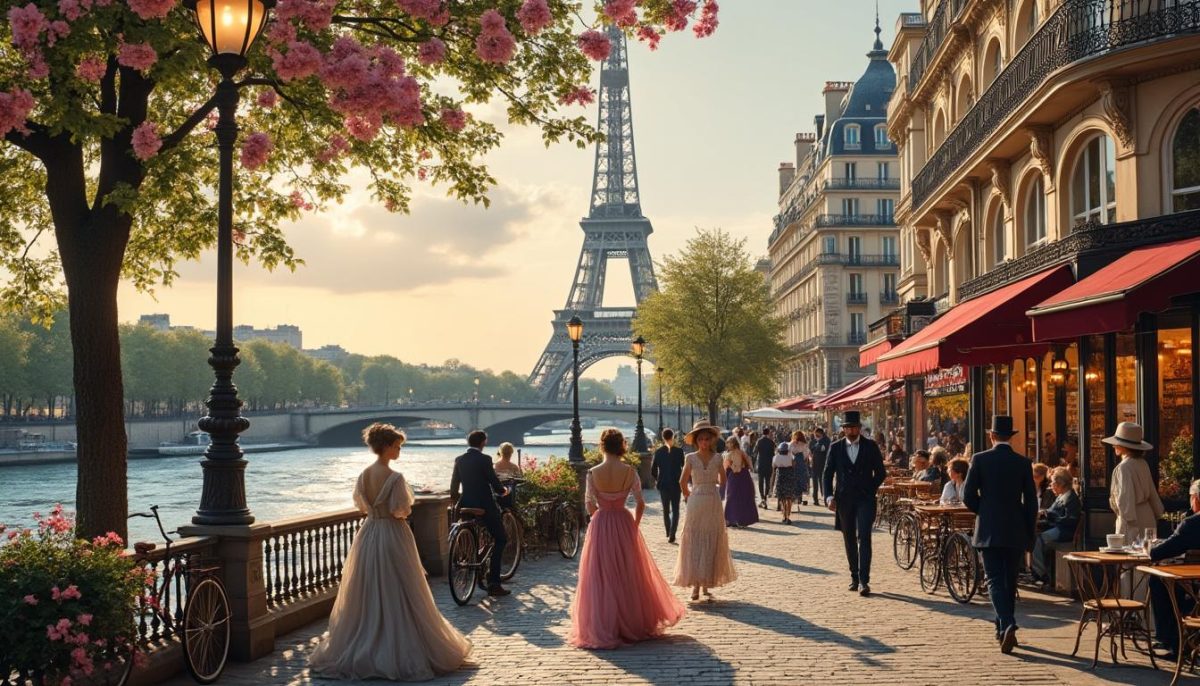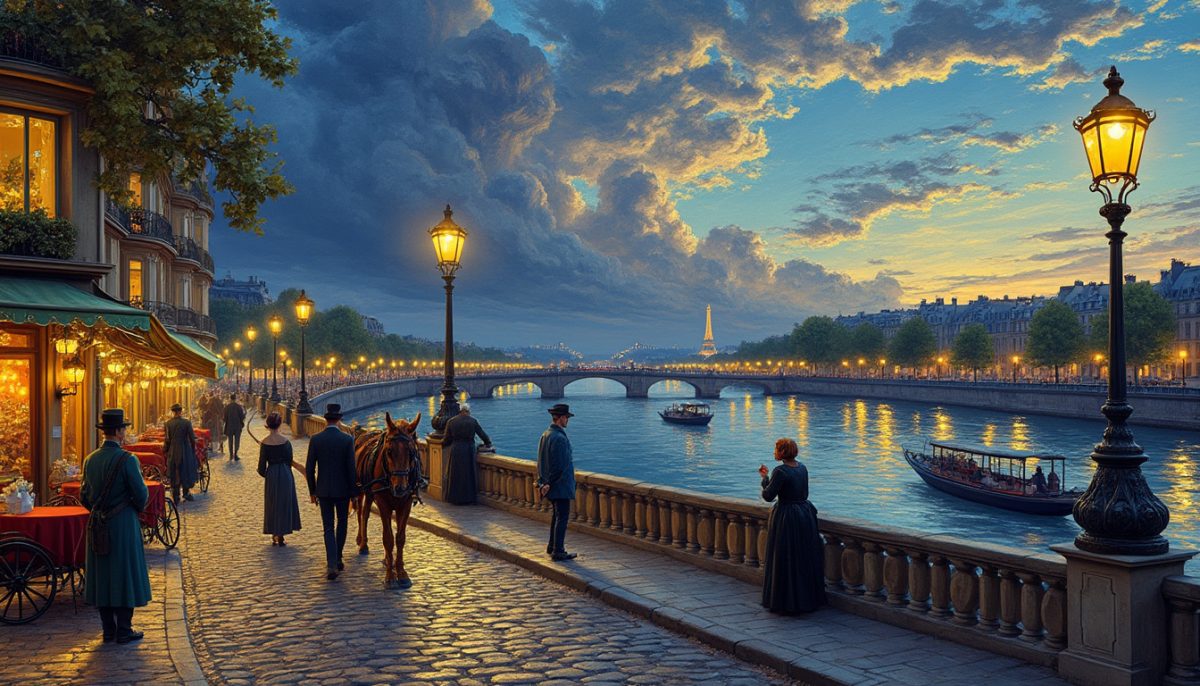
Amidst the vibrant backdrop of 19th-century Paris, Vincent van Gogh embarked on an artistic journey that would redefine his approach to painting. From 1886 to 1888, Paris became not only his home but also the crucible for his innovative spirit. Struggling with the tumult of life, Van Gogh found solace in canvas and color, amidst a community of artists who would shape his evolving style. The Parisian experience offered vibrant landscapes, bustling cafes, and the inspiration derived from fellow Impressionists and Post-Impressionists. Each brushstroke he laid captured the essence of this transformative era in art history—an essence rich in emotion and significance, reflecting the heartbeat of a city that was the epicenter of culture, creativity, and connection.
Today, as we delve deeper into Van Gogh’s time in Paris, we encounter a burgeoning world that both challenged and inspired him. He moved from the dark tones of his early works to vibrant hues that resonate with joy and anguish alike. His paintings from this significant period speak not only to his artistic evolution but also to the experiencing of Paris at the turn of the century. This exploration inspects the environments he painted, the friendships he formed, and the undercurrents of emotion that define his legacy in the heart of Paris.
Van Gogh’s Artistic Transformation in Paris
Van Gogh’s time in Paris marked a pivotal transition in his artistic trajectory. Arriving in the vibrant city at the age of 33, he was thrust into an avant-garde world filled with dynamic artists, where mundane subjects transformed into profound statements. His encounter with the Impressionists revealed a universe where color, light, and emotion converged. This influence prompted him to abandon the somber palette reminiscent of his early Flemish roots.
During his two years in the city, Van Gogh produced an impressive volume of work, characterized by a vibrant exploration of color and expressive brushwork. He soaked in the atmosphere of cafés, streets, and parks, painting whatever thrilled him most. Iconic pieces such as “The Café Terrace on the Place du Forum, Arles, at Night” and “Self-Portrait with Grey Felt Hat” emerged from this phase, radiating his newfound vitality. His paintings began to incorporate bright hues and dynamic compositions, demonstrating an enthusiastic embrace of light.
The workshops and discussions with fellow artists such as Henri Toulouse-Lautrec and Paul Gauguin further enriched his artistic outlook. The energy of Montmartre, where Van Gogh resided with his brother Theo, was palpable and translated into his landscapes and intimate portraits. He philosophized about the meaning of art, often reflecting on the profound connection between emotion and the environment, as he astutely noted, “I dream of painting, and then I paint my dream.” These interactions catalyzed his evolution into the passionate Post-Impressionist that the world would come to admire.
The Influence of Impressionism on Van Gogh
The Impressionist movement was revolutionary, dismantling the conventions of classical painting and introducing a fresh perspective on color application and the representation of light. Van Gogh, initially critical, gradually developed a profound appreciation for its principles. His shift was not just stylistic; it represented a philosophical change regarding how to perceive the world.
For example, in “Fishing in Spring, the Pont de Clichy,” painted in 1887, the interplay of color and light showcases Van Gogh’s understanding of atmospheric effects, reminiscent of Monet’s techniques. He utilized thick, dramatic brushstrokes to convey vigorous emotion, bringing landscapes to life with exuberance. This experimentation revealed not only a mastery of color but also deepened the emotional resonance of his subject matter.
Moreover, the cultural scene in Paris fostered a spirit of collaboration; Van Gogh was encouraged by contemporaries who pushed boundaries. He witnessed firsthand how colors and experimental techniques could capture fleeting moments, whether in a bustling café or a tranquil landscape. The camaraderie among artists became a source of inspiration, challenging Van Gogh to further refine his own style.
Life in Montmartre: Canvas of Parisian Culture
Living in Montmartre, a bohemian and artistic enclave, Van Gogh was saturated in an environment teeming with creativity and innovation. This vibrant neighborhood, dotted with windmills and cobblestone streets, significantly influenced his thematic choices. Montmartre was a canvas itself—a place where artists gathered to share ideas and paint together.
The infamous “Moulin de la Galette,” a location often depicted in Van Gogh’s works, served as more than just a backdrop. This site was where locals and artists mingled, exchanging laughter and clinking glasses—a slice of life in the heart of Paris. The allure of this lively atmosphere is captured in his paintings, showcasing not merely visual aesthetics but an entire culture. His works from this period, such as “Le Moulin à Poivre” and various scenes from daily village life, reflect his fascination with this vibrant intersection of social interaction and artistic inspiration.
Even as the area transitioned from a rural village to an urban hub, Van Gogh immortalized its spirit through color and form. For instance, “La Guinguette,” a painting rendered during a festive evening, captures the joy and vibrancy associated with life in Montmartre, forever entrenching this moment in the visual memories of viewers. This period indeed corroborated Montmartre’s reputation as the birthplace of modern art.
The Shadows of Time: Joy and Despair
Despite the vibrant inspiration surrounding him, Van Gogh’s internal struggles cast a long shadow over his artistic life. The pressures he felt from both his ambition and his tumultuous relationships with other artists often led to emotional turmoil. The friends who were supposed to support him—like Gauguin—mixed admiration with competition, creating ongoing tension that contributed to his mental anguish.
Additionally, the social circles he navigated were not without their darker moments. While he thrived amidst the creative energy, Van Gogh often dealt with isolation and self-doubt. His mental health struggles peaked during this bustling time, culminating in a sense of urgency in his art, as he sought to encapsulate both his joy and despair. Works like “The Starry Night over the Rhône” emerged as reflections of his complex emotional landscape, marrying beauty with a sense of melancholia, showcasing his ability to translate internal chaos onto canvas.
For Van Gogh, each painting became a cathartic release. He continuously grappled with his demons, yet found solace in the act of creation. His Parisian years yielded not only masterpieces but also profound insights into the human condition, immortalizing his thoughts and feelings with every stroke.
Visiting Van Gogh’s Legacy Today: Museums and Experiences
In modern Paris, the legacy of Van Gogh endures through the city’s esteemed institutions, notably the Musée d’Orsay. This museum houses a premier collection of his works, allowing visitors to reconnect with the spirit of his Parisian years. Understanding Van Gogh within the context of his contemporaries enhances the experience, as one appreciates the intersection of styles and ideas that shaped the epoch.
For those eager to explore Van Gogh’s artistic journey, dedicated tours and exhibitions provide immersive experiences, enriched by stories of his life and struggles. Pathways trace his footsteps, leading to iconic locations where he found inspiration. These journeys often highlight interactions with other artists and the rich cultural tapestry of late 19th-century Paris.
In addition to visiting museums, exploring locations like Montmartre offers a glimpse into the soul of Van Gogh’s art. The streets he walked, the cafés he frequented, and the windmills he painted are testament to a life enveloped in creativity. This connection to the past allows modern visitors to step into the legacy he left behind, making the experience of engaging with Van Gogh not only one of art appreciation but also of historical reflection.
| Year | Event | Location |
|---|---|---|
| 1886 | Move to Paris | Montmartre |
| 1887 | Increased Impressionist Influence | Asnières |
| 1888 | Departure from Paris | Arles |