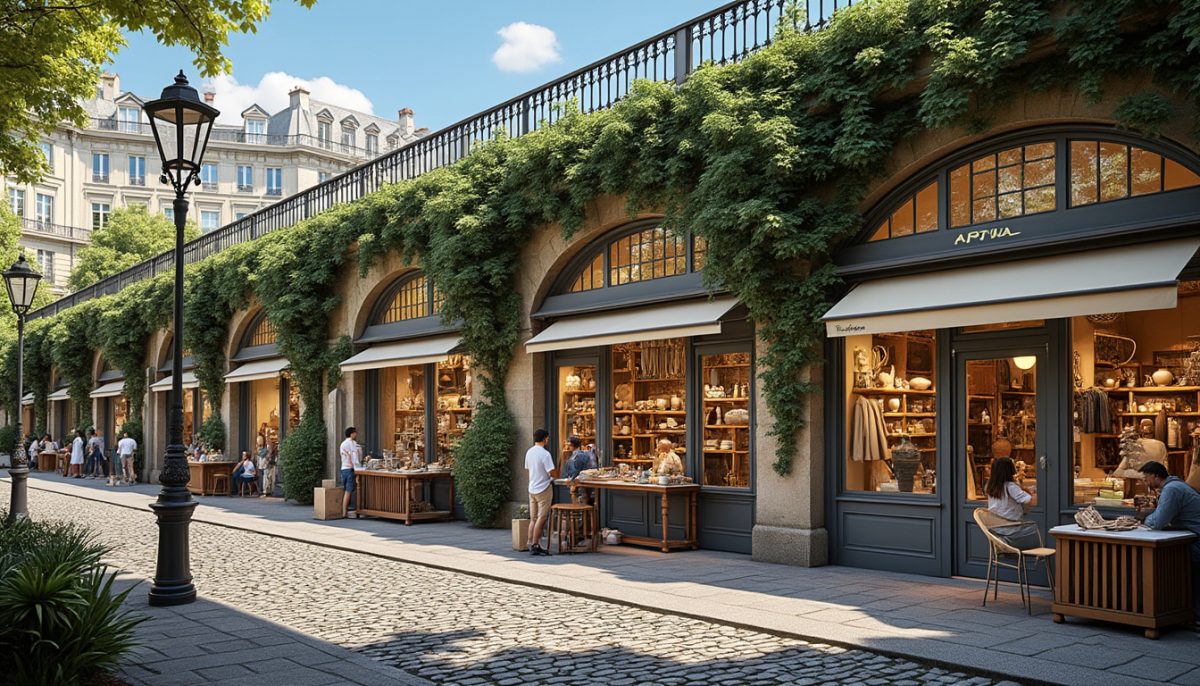
The Viaduc des Arts stands as a beacon of creativity in the heart of Paris’ 12th arrondissement. This transformed railway viaduct, initially completed in 1859, has undergone a remarkable metamorphosis from its original purpose as a train line to a vibrant cultural hub teeming with artisans and craftsmanship. Visitors are drawn not only by its picturesque arches and unique design but also by the rich array of workshops that showcase the talents of local artisans. From glassblowers to bespoke furniture makers, the viaduct is a treasure trove of handmade goods, offering a refreshing alternative to the mainstream shopping experiences found in areas like Saint-Germain-des-Prés and Saint-Honoré. It exemplifies a renaissance in urban space utilization, where creativity meets tradition in a city famed for its artistic legacy.
The Rich History of Viaduc des Arts
The Viaduc des Arts has an intriguing history that reflects the broader evolution of Paris itself. It was constructed as part of the Paris/Bastille-Varenne railway line, an essential route that connected various parts of the city. The original structure consisted of brick arches that supported the train tracks above, conveying the bustling energy of Paris during the 19th century. However, with the advent of underground railways and changing transport needs, the line was decommissioned in the late 20th century, leaving the arches empty and underutilized.
In a significant turn of events, the City of Paris recognized the potential for the viaduct to be transformed into a space that celebrated local craftsmanship. Following its restoration, the project was complemented by the creation of the Promenade Plantée, a tree-lined walkway that runs above the viaduct. This initiative not only revitalized the area but also created a meeting point for local residents and tourists alike, breathing new life into what was once an antiquated structure.
Today, the stretch of the Viaduc des Arts is approximately one kilometer long and houses around forty artisan workshops and boutiques, flourishing with creativity and innovation. These ateliers serve as living museums, where visitors can witness the making of unique items and gain insights into the artistic processes involved. This evolution from a railroad to a cultural landmark epitomizes the innovative spirit of Paris—a city that continuously renews itself while honoring its rich history.
Artisans and Their Craft at the Viaduc des Arts
Within the arches of the Viaduc des Arts, a diverse community of artisans has settled, each bringing their unique skills and talents. These workshops range from traditional crafts to contemporary art forms, creating an unparalleled environment where visitors can appreciate the depth of human creativity. For instance, artisans specializing in leatherwork can often be found at Maison Fey, established in 1910. Here, the scent of rich leathers combines with the intricate craft of bookbinding and furniture restoration, offering a sensory delight. Customers can immerse themselves in a world where each piece tells a story, and every detail reflects the care and dedication of the craftsman.
An enchanting visit would not be complete without a stop at Malhia Kent, another remarkable workshop within the viaduct. This atelier is renowned for its exquisite fabrics, woven on-site, providing visitors with a direct connection to the art of textile design. The vibrant colors and textures create a visual feast, and the option to purchase handmade items like scarves and shawls allows patrons to take home a piece of genuine Parisian craftsmanship.
The Viaduc des Arts also features contemporary artisans such as Rinck, a firm that specializes in revitalizing luxury spaces, including private residences and palaces. Founded in 1841, Rinck embodies the essence of French savoir-faire, allowing clients to transform their living spaces with bespoke designs that are both functional and aesthetically pleasing. As patrons walk through the viaduct, they can note how each atelier contributes to a rich tapestry of creative expression that speaks to both heritage and innovation in craftsmanship.
Viaduc des Arts as a Cultural Hub
This remarkable venue does more than showcase artisans; it serves as a vital cultural hub that fosters community and creativity. The spirit of collaboration flourishes here, with various workshops often collaborating on projects and creating events that invite public participation. Local exhibitions allow artists to display their works, not only enhancing visibility but also engaging the community in appreciation of craftsmanship and the arts.
In addition to offering a unique shopping experience, the Viaduc des Arts provides cultural programs that include workshops where visitors can learn from artisans. This opportunity to engage hands-on with materials and techniques enhances the connection between creator and consumer, fostering an appreciation that goes beyond mere transaction. Participants can delve into activities such as pottery, leather crafting, and textile weaving, making it an engaging stop for families and tourists alike.
Moreover, this cultural transformation aligns well with broader trends in urban development where cities are increasingly recognizing the importance of preserving local art and craft. As urban spaces become more commercialized and homogenized, the Viaduc des Arts stands out, serving as a reminder of the richness that comes from cultural diversity. It has become a significant tourist attraction, drawing visitors not only for the artisanal goods but also for the sense of community that it fosters.
Dining and Leisure Options
The dining options are not limited to just cafes; there are opportunities to enjoy artisanal chocolates, handmade pastries, and even wine from local producers. These eateries often showcase the same spirit of creativity found in the artisans, allowing visitors to explore the depths of French culture through food and drink. Whether enjoying a quiet brunch or a lively dinner, the culinary offerings provide an enriching layer to the overall experience at the Viaduc des Arts. After immersing oneself in the crafts and food of the Viaduc des Arts, the surrounding area holds additional treasures to discover. A stroll along the Promenade Plantée is an excellent way to appreciate the beauty of urban green spaces while enjoying views of the viaduct above. This elevated park offers a unique perspective of the city, intertwining nature with history and modernity. Moreover, the 12th arrondissement itself is rich in cultural landmarks. Just a stone’s throw away lies the Marché d’Aligre, a bustling market where locals shop for fresh produce and artisan foods. The camaraderie of this lively market adds to the vibrant spirit of the neighborhood. For those wishing to dive deeper into history, a visit to the nearby Place de la Bastille will further illuminate the district’s heritage, with its stunning monuments and significant historical relevance. In summary, whether you’re a resident or a tourist, the Viaduc des Arts offers experiences that blend artistry, craftsmanship, and community in delightful ways. As Paris continues to evolve, locations like this become essential not only for preserving traditional crafts but also for fostering a sense of belonging and appreciation for art in our daily lives.Exploring the Surrounding Area
Artisan Workshop
Specialty
Established
Maison Fey
Leather goods and furnishings
1910
Malhia Kent
Handmade fabrics
Year unknown
Rinck
Luxury interior design
1841
Rairies Montrieux
Terracotta tiles
Year unknown