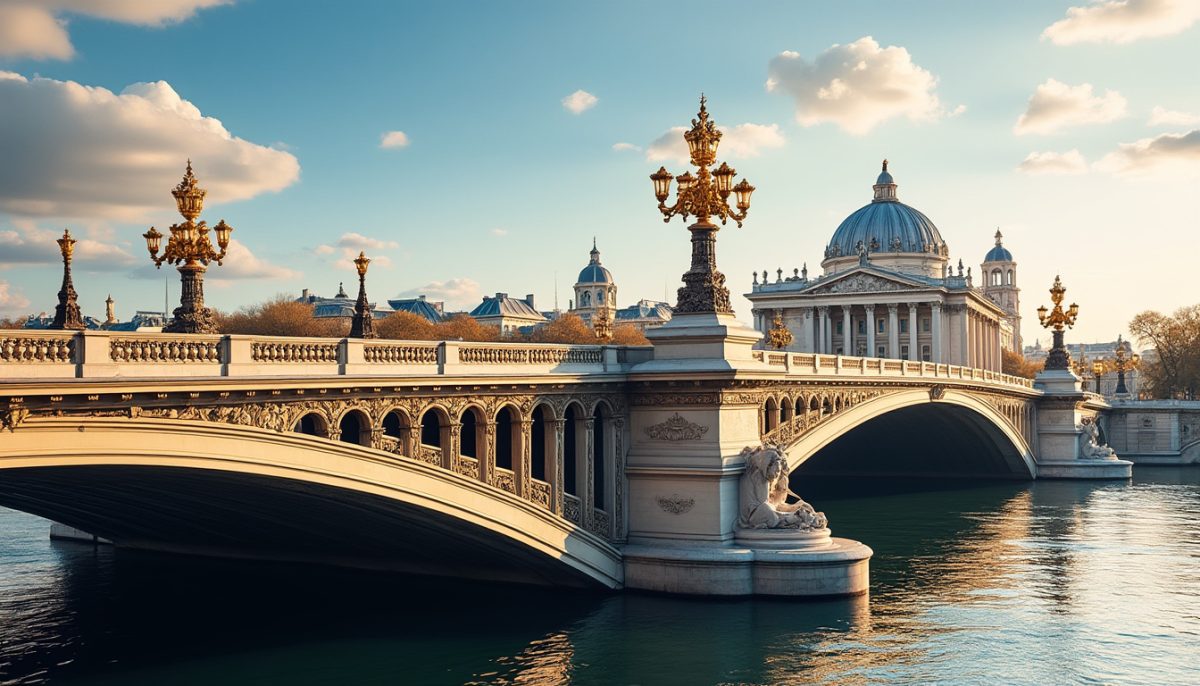
As the sun sets over the Seine River, the glint of gold draws your gaze. There it stands, the Alexandre III Bridge, a splendid example of ornate design and an iconic landmark of Paris. Built as a testament to the friendship between France and Russia, this bridge connects the ethereal beauty of the Champs-Élysées to the solemn grandeur of Les Invalides. Every aspect of the bridge’s architecture has been meticulously crafted, turning a simple crossing into a sensory experience. With its sculpted figures, elaborate lampposts, and gilded details, the Alexandre III Bridge is not just a means to cross the Seine; it is a celebration of history, culture, and the timeless allure of Paris. Each day, tourists and locals alike flock to this marvel, eager to capture its beauty and soak in the stories it has witnessed over its lifetime. Indeed, this landmark reveals a different aspect of Paris with every visit.
A Historical Overview of the Alexandre III Bridge
The history of the Alexandre III Bridge is as rich as the city surrounding it. Commissioned in the late 19th century, its construction marked the consolidation of the Franco-Russian Alliance. Officially opened during the 1900 Exposition Universelle, the bridge became a symbol of collaboration and friendship between the two nations. Tsar Alexander III authorized its creation, intending for it to serve not just as an engineering marvel, but also as a grand gesture of goodwill. On a rainy day in 1896, all eyes were on Tsar Nicholas II as he laid the foundation stone, setting in motion a project that would take four years to complete.
The opening ceremony attracted thousands, sparking excitement across the nation. Paris had always prided itself on its aesthetic decadence, and the Alexandre III Bridge was set to become its jewel. From the outset, this bridge was envisioned to rise above the ordinary; its original design, drafted by the distinguished architects Joseph Cassien-Bernard and Gaston Cousin, was detailed and luxurious, embodying the Belle Époque ethos of beauty and elegance.
The construction utilized groundbreaking techniques, with its arch being one of the largest ever built at the time. This no ordinary bridge; it was crafted to avoid obstructing the view of Les Invalides, making it a pioneering work of architectural wisdom. The arches span an impressive 160 meters over the Seine, a testament to both its aesthetic appeal and engineering prowess.
The Architectural Brilliance Behind Alexandre III Bridge
More than a simple connector, the Alexandre III Bridge encapsulates the essence of French culture and artistic expression. From an architectural standpoint, it is an exquisite blend of Art Nouveau and Beaux-Arts styles. Massive stone pillars frame each end, each topped with gilded statues of winged horses, ready to take flight. These sculptures, created by some of the finest artists of the era, symbolize the unity of the Seine and Neva rivers, further reinforcing the bridge’s historical context.
Each inch of the bridge bursts with artistry, making it feel like an open-air museum. Notably, the sculptures representing various aspects of France’s history adorn its sides. The intricate iron railings are embellished with figures of cherubs and nymphs, adding to the overall spectacular visual feast.
The lampposts, designed to resemble elegant street lighting from yon period, play a dual role in functionality and aesthetics. Illuminating the way for travelers, they also highlight the bridge’s artworks, making the structure irresistible to both locals and photographers. Couples worldwide have made the bridge their backdrop for romantic proposals, as the golden glow cast at sunset elevates its enchanting beauty.
Ultimately, this bridge represents more than mere engineering; it embodies a time when Paris was determined to showcase its artistic flair and cultural offerings to the world.
Experiencing Life Around the Alexandre III Bridge
The ambiance surrounding the Alexandre III Bridge brings life to both cobblestone pathways and the tranquil waters of the Seine River. By day, the atmosphere is electric, as both locals and tourists traverse its span, allured by the bridge’s stunning visual aspects and its artistic details. People watch, picnics, and performances all occur under its majestic arches, making it a living part of the city rather than just a historical artifact.
As the golden hues of dusk give way to the starry night, the bridge transforms into a breathtaking spectacle, illuminated to showcase its ornate details. Photographers converge on this locale, trying to encapsulate the magic that unfolds each evening. It’s not simply about taking photographs; it’s about capturing a moment when the bridge shimmers in the moonlight, becoming a magical set piece in the heart of Paris.
Additionally, the bridge hosts various events and street performances, cementing its role as a cultural hub. Throughout Paris, it has become a backdrop for many notable celebrations, such as Bastille Day fireworks and artistic installations. As the city gears up for the 2024 Olympics, the bridge will undoubtedly play a pivotal role in showcasing Paris’s unique charm to the world.
For anyone looking to delve deeper into its charm, a cruise along the Seine offers a quintessential view of the bridge and its artistic allure. It’s not unusual to witness couples enjoying romantic dinners while drifting past this architectural gem.
Alexandre III Bridge in Popular Culture
The stunning beauty of the Alexandre III Bridge has not gone unnoticed in film and literature. It stands proud as a frequent character in various cinematic narratives, reinforcing its status as a tourist attraction and cultural symbol. From classic films to modern romance dramas, this architectural marvel has provided a backdrop for countless stories, evoking the romance and allure of Paris.
Among popular films featuring the bridge include “An American in Paris” and “Midnight in Paris,” both of which employ its dramatic silhouette to enhance their narratives. Other titles, such as “Inception” and “The Bourne Identity,” have immortalized its grandeur, viewing it through the lens of high-stakes action and introspective storytelling.
Moreover, the Alexandre III Bridge has also appeared in various works of literature, description, and reflections on Parisian life. Writers have long been captivated by its beauty, often using it as a metaphor for love, longing, and adventure.
To understand its cultural significance further, you may wish to check out notable references in films highlighting its essence: explore Paris and its iconic films; you’ll be drawn into a world where art and cinema intersect.
The Unique Connection with Saint Petersburg
Interestingly, the Alexandre III Bridge shares a sibling-like bond with the Trinity Bridge in Saint Petersburg, Russia. Both structures were built during the same geopolitical climate, serving as symbols of Franco-Russian allegiance. The Trinity Bridge, designed by French engineer Paul-Joseph Bodin, showcases a similar aesthetic, combining steel and ornate design, hinting at a shared architectural vision.
Each bridge features intricate lampposts and grand arches, creating a visual representation of the diplomatic rapport that once existed. Although built independently, the two bridges act as reminders of a shared history, architectural brilliance, and the passage of time—a time when the world of politics was reflected through remarkable constructs.
While the Alexandre III Bridge celebrates its storied past in Paris, its Russian counterpart continues to thrive in a city brimming with cultural prestige. Visitors to either bridge can appreciate not just the architecture but the mood of celebration and connection brought forth by these structures.
Both bridges stand as testaments to the ambitions of nations, where engineering and artistry have combined to create entities that nearly breathe with the culture they inhabit.
| Bridge | Location | Opened | Architectural Style | Significance |
|---|---|---|---|---|
| Alexandre III Bridge | Paris, France | 1900 | Beaux-Arts & Art Nouveau | Symbol of Franco-Russian Alliance |
| Trinity Bridge | Saint Petersburg, Russia | 1903 | Steel Arch | Celebration of Russian-French alliance |