Within the vibrant heart of Paris, the Parc des Buttes-Chaumont stands as a remarkable testament to the city’s ability to transform its grimy past into a lush urban oasis. Nestled in the 19th arrondissement, this public garden covers approximately twenty-five hectares of scenic landscapes and historical intrigue. Once a notorious site known as Gallows Hill, where the Gibbet of Montfaucon displayed the bodies of executed criminals, the park has undergone a remarkable landscape transformation, emerging from its haunting history to become a cherished retreat for Parisians and visitors alike. The Buttes-Chaumont today is more than just a park; it serves as a cherished sanctuary, allowing city dwellers to reconnect with nature amidst the bustling urban environment.
The renovation of this historic park during the 19th century marked a pivotal moment in Parisian urban planning. Under the visionary leadership of Baron Haussmann, Napoleon III’s chief administrator, green spaces were prioritized for their ability to enhance city living. The result was the inception of the Buttes-Chaumont, designed by Jean-Charles Alphand. His intent was to create a park that not only provided aesthetic beauty but also served the recreational needs of the city’s growing population. With sweeping lawns, a serene lake, and a variety of pathways, the park invites exploration and leisure.
Historical Significance of Buttes-Chaumont
The history of Parc des Buttes-Chaumont is rich with stories, encapsulating the evolution of Paris from a medieval city to a modern metropolis. Originally, the site was infamous due to the Gallow Hill, where executions occurred and bodies lingered as a grim reminder of justice during the medieval era. It stood in stark contrast to the vibrant green space that has been cultivated and cherished in contemporary society.
As the city began its transition in the 19th century, the area previously occupied by gallows and decay transformed dramatically. The revival began when the French government decided that instead of letting the site remain a cursed element of history, it would become a prime example of urban rejuvenation. Between 1864 and 1867, landscape architects worked tirelessly on the site, employing laborers to fill in the pits left by limestone mining and dynamite to shape the curvatures of the landscape.
A New Era of Urban Nature
The park officially opened in 1867, coinciding with the Universal Exposition celebrations. With its artificial lake, scenic vistas, and pathways traversing over bridges, the park quickly became a sanctuary for Parisians seeking solitude from the frenetic pace of the city. Its design served as a prototype for future green spaces in urban areas, demonstrating the importance of integrating nature into the fabric of city life.
Importantly, the Buttes-Chaumont challenged the conventional idea of what a park could be. Rather than simply serving as green lawns dotted with trees, it offered dramatic elevations, reflective waters, and lush vegetation that wrapped visitors in its embrace. Alphand’s innovative vision helped dictate the landscaping trends that would define Parisian parks for generations.
Architectural Marvels within Buttes-Chaumont
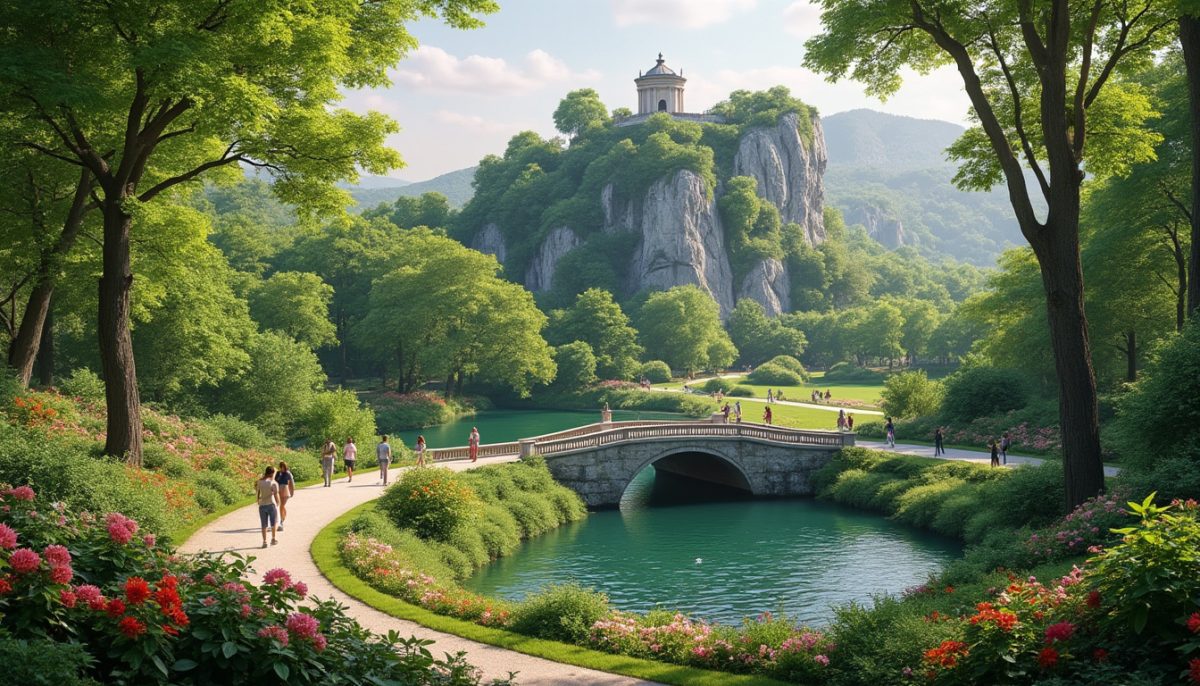
At the heart of the Parc des Buttes-Chaumont lies the Temple de la Sibylle, an architectural gem modeled after the Roman Temple of Vesta. This structure, perched atop a hill, offers breathtaking views of the surrounding landscape, including impressions of Montmartre and the iconic Sacré-Cœur. Created as a belvedere, it encapsulates the romantic notion of viewing city horizons and has become a favorite spot for photographers and visitors eager to take in the panorama.
Equally captivating is the suspension bridge that connects visitors to the temple perched upon the island within the lake. Constructed by Gustave Eiffel, the famed engineer behind the Eiffel Tower, the bridge exemplifies the era’s engineering prowess while providing a functional piece of art. Spanning 200 feet and rising 72 feet above the lake, it invites adventurers to cross and explore the hidden corners of the park.
Nature’s Fantasies: The Grotto and Waterfall
A short walk brings visitors to a fantasy grotto, a stunning feature crafted from the very stone that once marred the landscape. The cavernous space houses an impressive 65-foot waterfall that cascades down rocky walls, creating a misty atmosphere that offers respite during warm Parisian summers. Visitors often find delight in watching the play of light through the cave’s various openings, further adding to the allure of this natural wonder.
Such elements remind us that the park was designed not merely as a place for open air but as an intentional interplay of engineered beauty and nature. It serves as an invitation to engage with the elements and to find wonder in the coexistence of wildlife, water, and architecture.
| Feature | Description |
|---|---|
| Lake | An artificial lake teeming with wildlife, ideal for birdwatching and reflection. |
| Temple de la Sibylle | A picturesque structure offering panoramic views of the city. |
| Suspension Bridge | Historic bridge designed by Gustave Eiffel, linking the temple to the park. |
| Grotto | A cavern with a magnificent waterfall, providing a cooling mist in summer. |
A Park for All: Community and Recreation
The essence of Parc des Buttes-Chaumont lies in its multifaceted use as a public garden serving a diverse community. Unlike other central Paris parks that can feel exclusive or limited to tourists, Buttes-Chaumont thrives with locals who come to enjoy its vast lawns, family-friendly facilities, and recreational opportunities. The park features various playgrounds and open spaces that welcome children to run and play, as well as quiet areas for picnics and relaxation.
Moreover, the park is home to numerous events and activities throughout the year, further embedding it into the cultural fabric of the 19th arrondissement. Live music performances, yoga classes, and seasonal festivals transform the park into an engaging hub for family fun and community spirit. Café spots interspersed within the grounds offer refreshments and enhance social gatherings, transforming simple outings into cherished experiences.
The Today and Tomorrow of Urban Green Spaces
As Paris continues to grow and adapt, so does the role that parks like Buttes-Chaumont play in maintaining the balance between urban development and nature. Ongoing initiatives aim to enhance biodiversity and ensure that such green oases remain accessible to future generations. The city’s commitment to improving and adapting outdoor spaces to meet contemporary needs highlights the significance of preserving historical parks while integrating innovative ecological strategies.
Parc des Buttes-Chaumont stands as a model for other urban parks globally, showcasing how a site with a grim history can be transformed into a cherished green haven. The harmony of recreational spaces, historical significance, and community involvement establishes the park as a vital component of urban nature within the thriving city of Paris.
Visiting Parc des Buttes-Chaumont
For those planning to experience the beauty of the Buttes-Chaumont, visitors can access the park through several entry points, each leading into a unique scenic journey. The main entrance, located at Place Armand-Carrel, provides easy access and is connected to public transit options for convenience. Open year-round, the park remains a welcoming retreat for anyone seeking a moment of tranquility amidst the hustle and bustle of Parisian life.
During summer, visitors can enjoy extended hours, allowing for evening strolls and scenic sunsets overlooking the lake. With free Wi-Fi access available in several areas, the park also caters to those wishing to combine relaxation with work or social interaction.