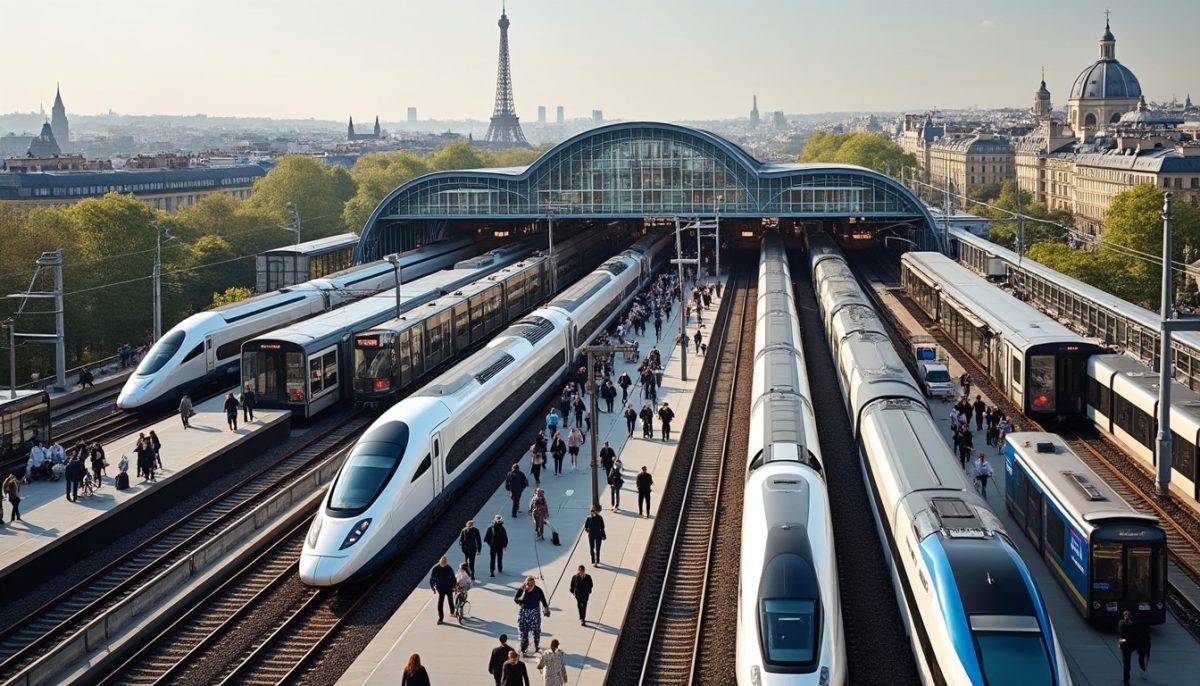
Paris, a city steeped in history, romance, and culture, also pulsates with an unyielding rhythm of mobility and connectivity. At its very heart lies a vast network of train stations, each serving as a gateway to countless destinations, both within France and across Europe. From the bustling Gare du Nord, where Eurostar trains whisk travelers off to London, to the elegant architecture of Gare de Lyon that transports them into the scenic regions of southern France, these stations are more than just transit points. They embody the lifeblood of urban transit, connecting millions of passengers through a meticulously designed rail network. This not only facilitates daily commuting but forms an integral part of Paris’s dynamic infrastructure that shapes the city’s identity.
The efficiency of Paris’s train stations underscores a remarkable duality. They showcase the city’s slower-paced lifestyle, with its charming cafes and leisurely walks, while simultaneously acting as bustling hubs of movement. This juxtaposition draws both locals and visitors alike who rely on these vital transport links for their daily journeys. The immense significance of these stations within the context of sustainable mobility cannot be overlooked, especially as the city gears up for innovations in transport technology in the coming years.
The Iconic Gare du Nord: A Nexus of Commuter Traffic
With its majestic facade and sprawling main hall, Gare du Nord stands proud as the busiest train station in Paris. Not merely a railway terminus, it serves as a bustling metropolis within itself. Known primarily as the launch point for Eurostar services connecting Paris to London, it is also a hub for numerous high-speed trains heading toward northern France, Belgium, and the Netherlands. The vastness of visitor traffic is mind-boggling, with millions passing through its gates each year.
Visitors often find themselves navigating through its labyrinthine corridors not just as travelers, but as explorers. Although most use Gare du Nord primarily as a transit point, its strategic location in the vibrant 10th Arrondissement offers quick access to central districts such as Marais and Saint-Germain. This seamless connectivity is further accentuated by efficient Metro and RER links, reflecting an excellent example of integrated public transport services.
As Paris looks toward the future, innovations in smart transportation technologies will further enhance the operations at Gare du Nord, thereby improving mobility for millions. This modernization aligns with the broader strategy for urban mobility in Paris, facilitating smoother transitions between different modes of transport, from trains to buses, and even bicycles.
Gare de Lyon: The Gateway to Southern France
Situated on the Right Bank, Gare de Lyon is synonymous with the journey southward. Famous for its grandeur, particularly its iconic clock tower, it serves as a departure point for trains heading toward enchanting destinations such as Lyon, Provence, and the exquisite French Riviera. In comparison to its counterpart Gare du Nord, this station tends to offer a more organized environment, making it easier for travelers to navigate its corridors.
With every corner steeped in history, Gare de Lyon provides not just a means of transit but also a glimpse into the rich tapestry of French culture. Visitors might choose to dine at the historic restaurant Le Train Bleu, which is renowned for its opulent interior that transforms each meal into a memorable experience. Such architectural beauty embedded within practical transport hubs resonates with those journeying through the city, creating lasting impressions.
Continual improvements in the station’s facilities reflect Paris’s commitment to enhancing the commuting experience. Upgrades to accessibility features, security measures, and digital ticketing services aim to create a more efficient environment for both local travelers and international tourists. The emphasis on making public transport as user-friendly as possible plays a crucial role in the capital’s strategy to boost connectivity.
The Seamless Integration of the Parisian Rail Network
A cornerstone of mobility in Paris, the rail network operates a finely-tuned synchronization of operations that caters to millions every day. From the bustling platforms of Gare de l’Est, which connects eastward to cities like Reims and Metz, to the tranquil setting of Gare d’Austerlitz, serving southwestern routes like Orléans and Toulouse, each station signifies a unique aspect of France’s vast travel system.
While Gare Saint-Lazare caters primarily to travelers heading toward Normandy, and Gare Montparnasse connects visitors to western France, each of these stations forms an integral part of a cohesive public transport ecosystem. The beauty of the Parisian rail network lies in its ability to facilitate easy transfers between diverse modes of transport – be it the Metro, buses, or regional trains.
This connectivity is further empowered by the evolution of ticketing systems and smart travel technologies, ensuring that passengers can plan their journeys with utmost convenience. For example, advances in mobile applications now allow commuters to view real-time updates on train schedules, connecting them efficiently to their final destinations.
Future Innovations in Urban Transport
The evolution of Paris’s public transport landscape is far from static. In anticipation of the upcoming Grand Paris Express, a transformative project set to revolutionize the commuting experience, the station infrastructure is being revamped extensively. This ambitious initiative will add over 200 kilometers of new track along with the establishment of numerous additional stations. As part of the overall plan for efficient urban transit, it envisions a robust connection between Paris and its surrounding suburbs.
2026 will witness a tapestry of intelligent mobility initiatives rolled out in Paris, including the introduction of autonomous vehicles and enhanced accessibility features for public transit systems. This proactive approach is set to reshape the way residents and visitors navigate the city, embedding sustainability into every facet of transport.
The Role of Train Stations as Social Hubs
Beyond their primary function as transit points, Paris’s train stations often emerge as vibrant social spaces. They pulse with life, attracting not only travelers but also those looking for daily experiences that embody the spirit of Paris. Cafés, shops, and local art installations find their places within these hubs, making them natural meeting points.
Such interactions enrich the urban fabric, transforming stations from mere infrastructure to vital community centers. Gare Saint-Lazare, for instance, integrates a commercial district bustling with shops and restaurants, thereby enhancing the experience of waiting for a train. This multifaceted space allows for social engagement, exploration, and even cultural experiences right at the station.
As Paris strides confidently toward an innovative mobility future, the city’s train stations will remain pivotal. Whether as entry points for international travel or as local hubs of culture and community life, they are set to shape the essence of commuting in Paris for generations to come. The vision of an interconnected, fluid urban transport system stands as a testament to Paris’s ambition: to enhance the lives of its inhabitants while preserving the city’s unique charm.
| Train Station | Main Destinations | Location |
|---|---|---|
| Gare du Nord | London, Northern France | 10th Arrondissement |
| Gare de Lyon | Lyon, Provence, French Riviera | 12th Arrondissement |
| Gare d’Austerlitz | Orléans, Limoges, Toulouse | 13th Arrondissement |
| Gare Saint-Lazare | Normandy (Rouen, Deauville) | 8th Arrondissement |
| Gare Montparnasse | Loire Valley, Bordeaux, Brittany | 14th Arrondissement |
| Gare de l’Est | Reims, Metz, Strasbourg | 10th Arrondissement |