The Pont des Arts stands as a testament to the enduring charm and history of Paris. This elegant footbridge, gracefully spanning the Seine River, links the renowned Institut de France with the majestic Louvre. Featuring a unique iron lattice design, the bridge has captured the hearts of countless visitors, serving as both a functional crossing and a romantic destination over the years. Since its inception in 1804, it has endured the trials of time, from war damage to the whims of fashion, yet it continues to resonate with those who wander into its embrace. A spot filled with stories, laughter, and breathtaking views, the Pont des Arts embodies the spirit of Paris in myriad ways.
The Historical Significance of the Pont des Arts in Paris
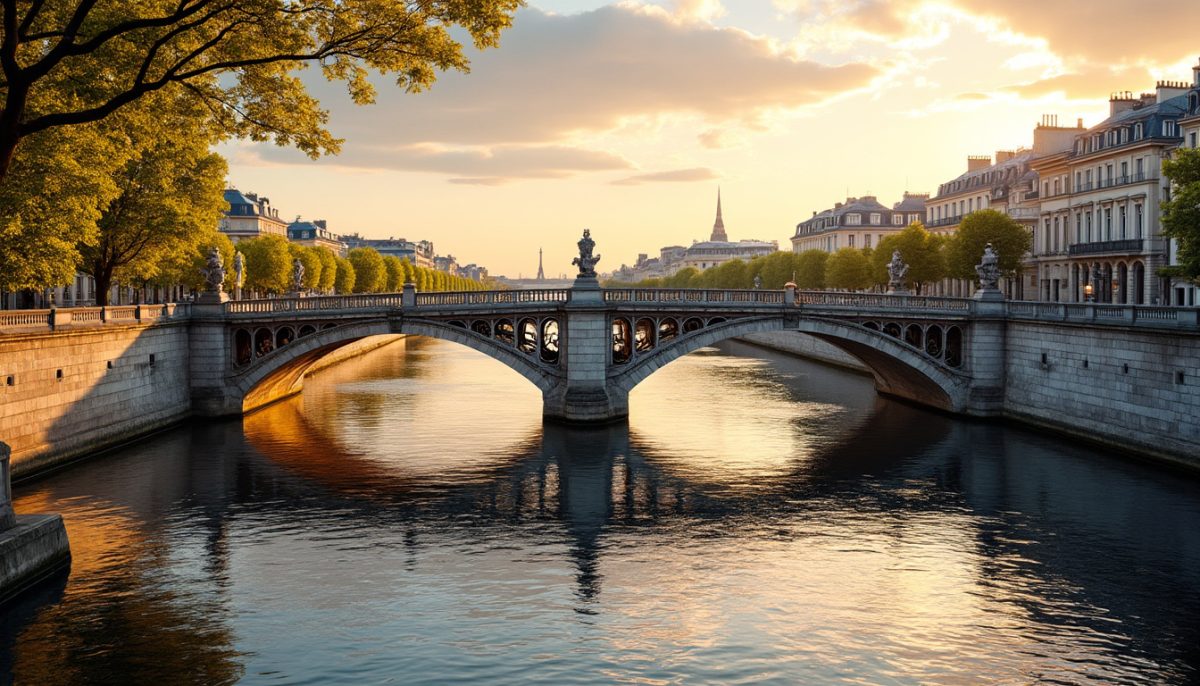
Commissioned by Napoleon Bonaparte, the Pont des Arts was the first metal bridge constructed in Paris, a bold move for its time. Its initial design showcased nine arches, reminiscent of a metallic centipede that gracefully arched across the Seine River. Intended exclusively for pedestrians, the bridge was revolutionary during an era dominated by horse-drawn carriages. From its very inception, it flourished as a vibrant thoroughfare for Parisians, providing a leisurely passage for those wishing to stroll between two monumental institutions.
The bridge did not merely serve a practical function; it quickly became a central hub for cultural and social gatherings. Artists would set up easels, and musicians often serenaded passing pedestrians. The presence of cafes nearby further solidified its status as a popular rendezvous spot. This melding of artistry and architecture made the Pont des Arts not only a crossing but also a canvas for creative expression, symbolizing a bridge between art and life in Paris.
Through the years, the bridge witnessed various transformations. The damages sustained during the World Wars were significant, leading to its eventual reconstruction in 1984. The modern version retains its original aesthetic but features improved structural stability; it now boasts seven arches rather than the original nine, signifying both a nod to tradition and a step toward modernization.
Architectural Features and Design
One of the striking attributes of the Pont des Arts is its architectural design. With its distinctive iron latticework, it showcases a minimalist elegance that complements the surrounding structures. The bridge, spanning 155 meters across the Seine, is often celebrated as a classic example of early 19th-century engineering. The lightness of the steel used in its construction allows for a luminous quality that seems to float above the river.
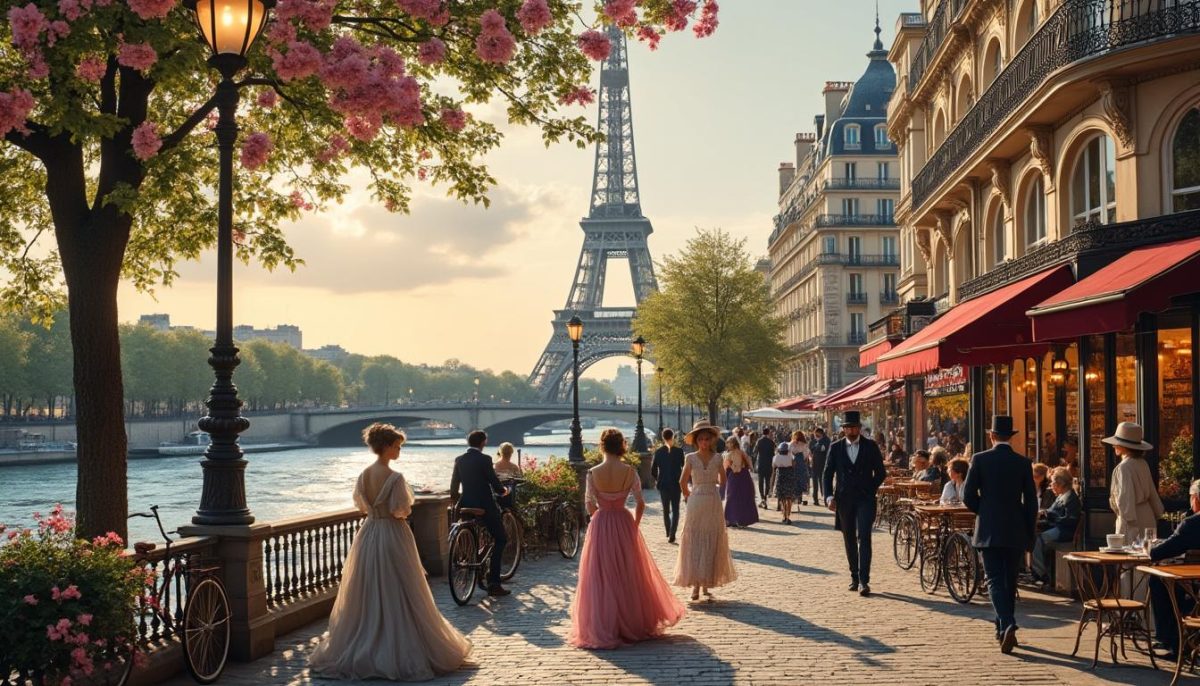
The pedestrian-only status of the bridge enhances its allure. Unlike many other Parisian bridges, where traffic can create chaos, the Pont des Arts provides a peaceful environment, ideal for leisurely strolls. Visitors can stop to admire the panoramic views of iconic landmarks such as the Eiffel Tower and the Notre-Dame Cathedral, which are enhanced by the golden glow of sunset.
Parks nearby have also embraced the bridge as a prime location for picnics and gatherings. The bridge’s design, complete with benches, flower boxes, and wide-open walking spaces, encourages visitors to take their time and relish their surroundings. This natural interaction between the bridge’s infrastructure and ongoing social activity embodies the essence of Parisian culture.
The Cultural Heritage of the Pont des Arts
The bridge has become an integral part of Paris’s cultural fabric, attracting visitors from around the world. Throughout its history, it has stood witness to a myriad of artistic expressions, evolving from a mere pedestrian crossing to a celebrated cultural landmark. Artists like Renoir and modern-day photographers often seek inspiration in its beauty, capturing moments that encapsulate the spirit of Paris.
In the 21st century, the Pont des Arts faced challenges that highlighted the impact of modern traditions on historical sites. The “love locks” phenomenon drew attention in the early 2000s, where couples began attaching padlocks inscribed with their initials and tossing the keys into the river—a gesture meant to symbolize eternal love. While cherished as an expression of romance, this practice ultimately jeopardized the structural integrity of the bridge, leading to its removal in 2015.
This event sparked discussions about the preservation of cultural heritage in an ever-evolving society. The city of Paris reinforced the message that while love is cherished, it should not come at the expense of cherished landmarks. Today, the bridge invites visitors to enjoy its beauty, encouraging them to embrace the moment without weighing it down with physical reminders.
Popular Activities Around the Pont des Arts
The area around the Pont des Arts is teeming with activities that enhance the visitor experience. A popular choice among tourists and locals alike is the Seine dinner cruise. This dining experience offers an exquisite way to appreciate the sights of Paris. Guests sample traditional French cuisine while gliding along the river, pausing to take in the views of iconic landmarks, such as the Eiffel Tower and Notre-Dame Cathedral, beautifully illuminated against the night sky.
Beyond dining, the bridge serves as an ideal launch point for exploration. Visitors can meander through the adjacent Louvre, soaking up its vast collection of art and history, or venture to the nearby Institut de France to marvel at its architectural grandeur. Nearby, the Latin Quarter brims with vibrant bistros, while Montmartre offers its own artistic haven, inviting visitors to engage in Paris’s bustling cultural scene.
With the backdrop of stunning architecture and vibrant community life, the Pont des Arts remains an essential stop on any Parisian itinerary. Whether for a romantic afternoon stroll, an impromptu sketching session, or simply to enjoy the beauty of the Seine River, it embodies the joyful spirit of Paris.
Why the Pont des Arts Remains a Parisian Icon
Despite its challenges, the Pont des Arts has consistently captured the hearts of visitors, becoming a beloved facet of Parisian life. Its history, charm, and accessibility ensure it stands at the forefront of cultural exploration in the city. Its linking of two distinguished institutions—the Louvre and the Institut de France—adds an additional layer of significance to its already storied existence.
If Paris had a Tinder profile, the Pont des Arts would surely be its main picture: timeless, intriguing, and a must-see. Walking across this elegant bridge, one cannot help but feel the whispers of the past and the pulse of contemporary Paris intertwining. As flâneurs roam the span, they often stop mid-bridge to capture the perfect photograph, ensuring that the beauty of the moment is preserved indefinitely.
This blend of the old and new showcases why the bridge is cherished not just as a functional platform but as a canvas for collective memories. Local artists continue to find joy in sketching its likeness, while musicians seize the opportunity to express their creativity here, invoking the spirit of Paris every day.
The Pont des Arts remains a vital piece of Paris’s narrative, reminding all of the rich artistic, cultural, and emotional landscapes that define this enchanting city.
A Final Reflection on the Bridge’s Legacy
The legacy of the Pont des Arts continues to grow, embodying a compelling narrative of endurance, creativity, and connection. A pedestrian bridge that initially seemed insignificant has evolved into a purposeful landmark, resonating emotionally with those who cross it. As visitors pause to enjoy the seamless transition between the Louvre and the Institut de France, they partake in a shared appreciation for art, culture, and history.
Looking to 2026 and beyond, the Pont des Arts stands poised to continue welcoming all who seek its beauty and meaning. Its resilient spirit offers a gentle reminder of the power of connection while beckoning individuals to experience the authentic Parisian camaraderie that unfolds upon its graceful structure.