Paris is a city rich in history, where ancient ruins coexist with modern architecture. Once known as Lutetia, this vibrant capital bears the remnants of its Roman past, inviting visitors on a journey through time. Beneath the bustling streets lie countless stories waiting to be uncovered, telling tales of an empire that shaped the foundations of this magnificent city. From grand amphitheaters to intricate bathhouses, the visible Roman architecture still echoes the glory of the Empire. Today, as we traverse the streets of Paris, we can discover the astonishing Roman relics that stand as testament to a civilization that thrived nearly two millennia ago.
Exploring the Roman Baths and Their Legacy
The Roman baths in Lutetia were not only centers of hygiene but also social meeting points for the citizens. Today, remnants of these luxurious baths can be found at the Musée National du Moyen Âge. This museum preserves the history of the baths and showcases their architectural significance. As you walk through the museum, you can admire the restored sections of the baths, including the frigidarium, which was used for cold baths. Standing in this almost 50-foot-high vaulted room, one cannot help but feel a connection to the ancient routines of Romans who frequented these baths.
Initially constructed in the first century CE, the baths were rediscovered in the 12th or 13th centuries when the abbey and college of Cluny were built. The intricate designs of the baths reflect the Roman emphasis on luxury and comfort. Display cases within the museum exhibit various ancient artifacts that tell the tale of daily life in Lutetia, enriching our understanding of this ancient metropolis. The baths exemplify the Roman architectural ethos of grandeur and utility, symbolizing not just hygiene, but a communal lifestyle where citizens mingled and formed connections.
Tracing the Routes: Rue Saint-Jacques
The Rue Saint-Jacques is a remarkable vestige of Roman engineering, serving as the cardo maximus, the main north-south road of Lutetia. This ancient thoroughfare has seen centuries of transformation but maintains its historical significance. Laid out along the highest point in the city, the street today slopes towards the Seine, showing the ancient planners’ genius in taking advantage of the natural landscape.
Standing at the intersection of Rue Saint-Jacques and Rue Soufflot provides a remarkable viewpoint of the area, where you can visually trace the ancient Roman path straight to the river. This street effectively connects not only the geographical points but also spans through millennia of Paris history. The lively cafes and shops that populate Rue Saint-Jacques today only hint at the vibrant life that must have existed in Roman times, where traders and citizens would roam the streets amidst the echoes of history.
The Vibrant Heartbeat of Lutetia: Arènes de Lutèce
Perhaps one of the most notable remnants of Roman Paris is the Arènes de Lutèce, an amphitheater nestled in the 5th Arrondissement. Built into a hillside, this arena was an epicenter of entertainment, seating approximately 15,000 spectators for gladiatorial games, theatrical performances, and public spectacles. Post-Roman times saw the arena repurposed, filled in by construction and lost to history until its rediscovery in 1860.
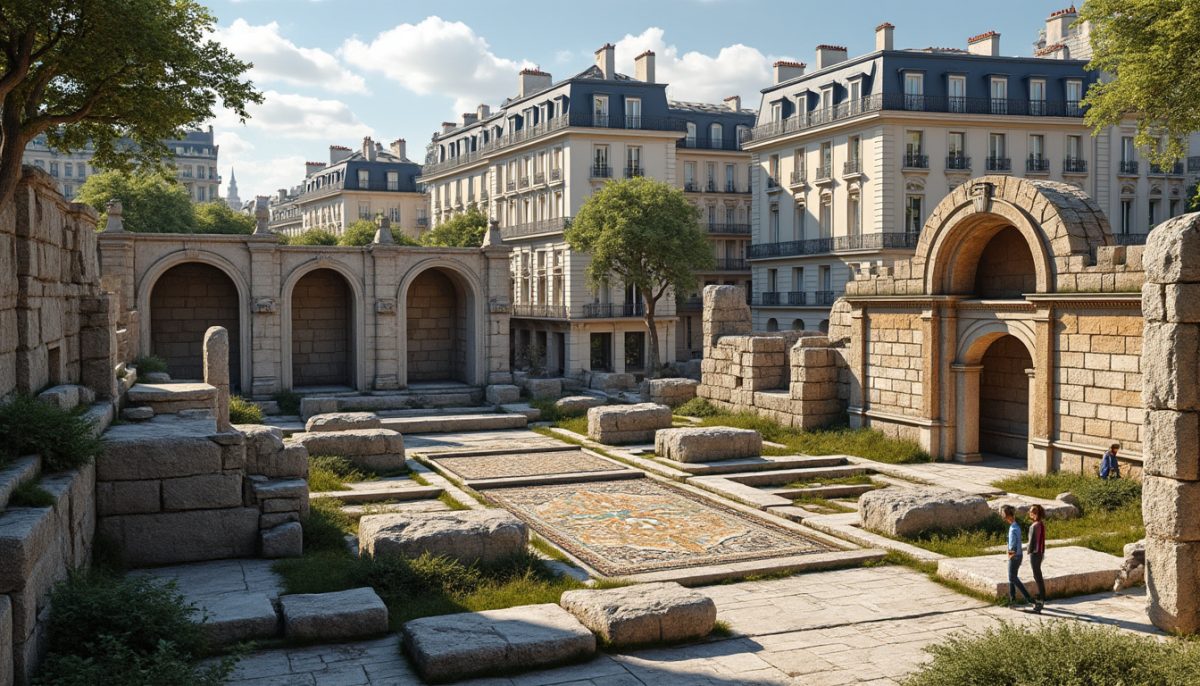
Today, while much of the amphitheater lies buried, the exposed sections provide a glimpse into the past. Visitors can imagine the roars of ancient crowds echoing around them. The ambiance of the park surrounding Arènes de Lutèce offers a contrast to its historical significance, inviting you to sit on the benches and reflect on what life must have been like here during the Roman Empire’s height. This space illustrates the blend of modern life with fragmented echoes of ancient ruins, reminding us of the vibrant cultural heritage that lies beneath contemporary Paris.
Unearthing Layers of History: The Archaeological Crypt
Just steps away from the iconic Notre-Dame Cathedral lies another fascinating remnant of Roman civilization—the archaeological crypt. Discovered during the excavations of the area in the 1960s, this site boasts structures that date back to the first century. It highlights the depth of Paris’s urban layers, revealing how the city has grown and evolved over millennia.
Inside this crypt, visitors can explore the foundations of ancient buildings and uncover pieces of the city’s long-standing architectural legacy. Walking through these corridors, one can visualize the bustling activity of Lutetia. The crypt not only serves as a protector of these historical sites but invites visitors to engage with the stark realities of time and change. The subterranean space showcases a tapestry of stones and relics, reflecting the vibrancy of life in ancient Paris and offering visitors a real sense of connection to the Roman Empire’s enduring influence.
The Remnants of Fortifications: The Roman Wall and Beyond
As Lutetia transitioned from Roman power to an early medieval city, defensive structures became necessary. The construction of the Roman wall around 285 CE marked a significant aspect of the city’s evolution following a barbarian invasion. This wall, about 7 feet high, signified the residents’ need for security and reshaped the urban landscape. Parts of this wall remain visible today along Rue de la Colombe, serving as a tangible link to the past.
Standing near this ancient wall, visitors can appreciate the strategic choices made by Roman planners to defend their settlement. The proximity to the Seine provided both a lifeline and a barrier, reflecting the multifaceted relationship between geography and architecture. Moreover, as the city expanded and adapted over the centuries, many elements of Roman planning and architecture were integrated into the medieval fabric of Paris.
| Historical Site | Description | Visiting Tips |
|---|---|---|
| Roman Baths | Remnants of the ancient baths located in Musée National du Moyen Âge. | Best to visit early to avoid crowds. |
| Rue Saint-Jacques | Ancient Roman road that connects vital parts of the city. | Explore surrounding cafes for a taste of local life. |
| Arènes de Lutèce | The remnants of the Roman amphitheater now serve as a park. | Perfect for a picnic while appreciating history. |
| Archaeological Crypt | A subterranean archaeological site beneath Notre-Dame. | Guided tours offer deeper insights into its significance. |
| Roman Wall | Defensive structure that showcases the city’s ancient boundaries. | Look for plaques detailing its history. |
Paris’s journey through time is beautifully encapsulated in these remarkable Roman relics, seamlessly weaving together the tapestry of culteral heritage. Each site provides an intimate connection to the past, reminding us of the grandeur that once defined the city. Though the might of the Roman Empire has waned, the stories inscribed within these historical remains continue to inspire both locals and travelers, encouraging all to delve deeper into the layers of history that shape modern Paris.