In the heart of Paris, the Simone de Beauvoir Bridge emerges as a striking symbol of modernity and urban elegance. This pedestrian bridge, which spans the Seine River, seamlessly connects the tranquil setting of Parc de Bercy with the architectural marvel of the Bibliothèque François-Mitterrand. Opened in 2006, it invites walkers and cyclists to experience a vibrant part of the city that thrives on cultural diversity and innovative design. More than just a passageway, the bridge embodies a philosophy of movement, connection, and the celebration of contemporary urban life.
Understanding the Architecture of the Simone de Beauvoir Bridge
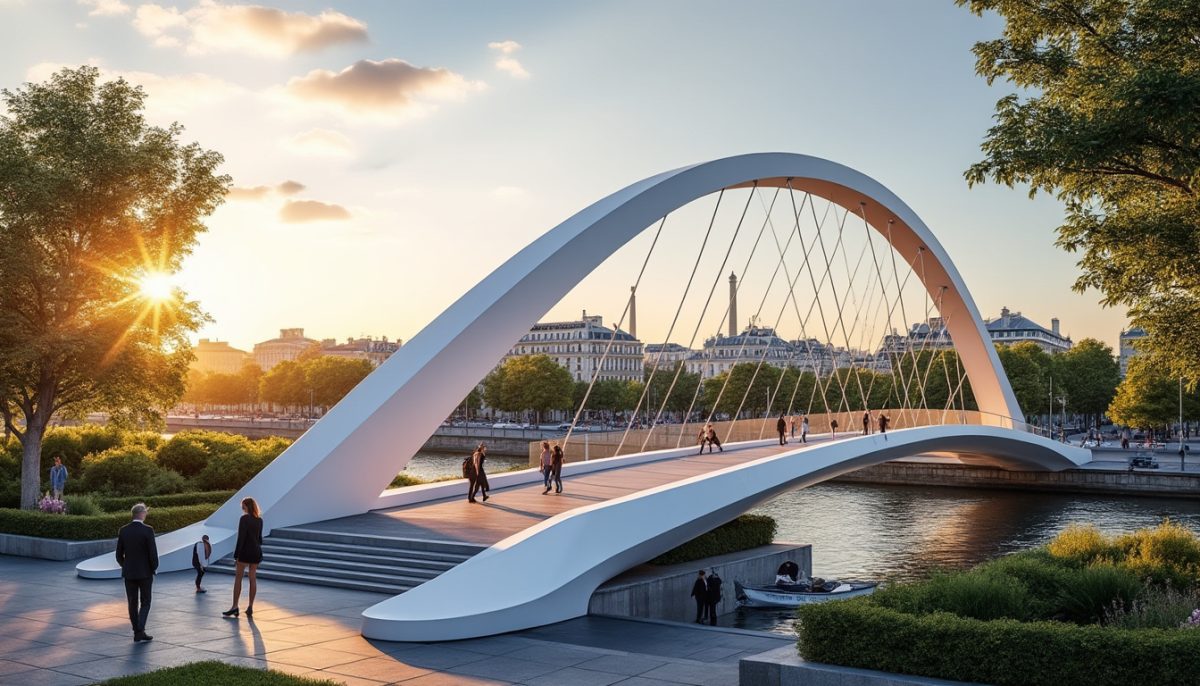
The Simone de Beauvoir Bridge is a remarkable example of contemporary architectural design. With a length of 304 meters and a free span of nearly 190 meters, it ranks among Europe’s most ambitious pedestrian crossings. What sets this bridge apart from its counterparts in Paris is its distinct dual-arch design. The elegant curves not only serve structural purposes but also create an aesthetically pleasing shape reminiscent of a flowing ribbon of steel across the Seine.
The bridge is engineered without piers obstructing the river below, offering uninterrupted views for pedestrians and those cruising along the water. This deliberate choice enhances the experience of those crossing it, allowing them to fully appreciate the breathtaking panoramas of Paris’s skyline. As they walk, visitors encounter various landmarks, including the iconic Notre-Dame and the towering Eiffel Tower, transforming each stroll into an engaging journey through the city’s rich history.
Incorporated into the design are elements such as oak decking that soften its industrial profile, thus further enhancing its connection to nature. Transparent balustrades amplify the feeling of openness while allowing daylight to filter through the structure, leading to a bridge that is as much about aesthetic experience as it is about functionality. At night, luminous handrails illuminate the pathway and create a visually striking tableau against the Seine, fostering a sense of urban magic that draws both locals and tourists alike.
This innovative engineering approach ensures that the bridge remains a vital part of the cityscape, a platform for cultural expression and urban mobility. Its design sparks curiosity and encourages people to linger, making the bridge a true cultural landmark in contemporary Paris.
The Cultural Significance of the Bridge
Beyond its physical presence, the Simone de Beauvoir Bridge serves as a vital cultural conduit within Paris. It not only connects two distinct neighborhoods—the tranquil greenery of Parc de Bercy in the 12th arrondissement and the bustling intellectual hub surrounding the Bibliothèque François-Mitterrand in the 13th—but also embodies the spirit of Paris as a city of contrasts. Each end presents a unique atmosphere: one, a serene retreat with gardens and pathways for relaxation; the other, a vibrant setting filled with academic discourse and urban energy.
This duality reflects the essence of modern Paris, where diverse communities interact in a shared environment, and the bridge itself acts as a metaphor for unity. Whether it’s early morning joggers, students gathering to discuss literature, or couples capturing picturesque moments, the bridge nurtures social connections, making it hard to overlook its human aspect.
Moreover, its role extends beyond mere functionality. The central platform, shaped like an eye, hosts public performances, art displays, and community events throughout the year, reinforcing its status not just as a transportation link but as a stage for cultural gatherings. This frequent usage creates a dynamic atmosphere where art and urban life converge, emphasizing Paris’s ongoing evolution.
Each encounter on the bridge contributes to a living tapestry of stories—stories of individuals traversing the expanse, of artists showcasing their works, and of families creating memories against a backdrop of stunning cityscapes. In many ways, the Simone de Beauvoir Bridge exemplifies how a piece of infrastructure can encapsulate the cultural vibrancy of a city and enrich its narrative.
Bridging Historical and Modern Aspects of Paris
The establishment of the Simone de Beauvoir Bridge marks an essential moment in the ongoing dialogue between history and modernity in Paris. While the city is renowned for its historical architecture, such as the resplendent Pont Alexandre III and the timeless Pont Neuf, the design philosophy embodied in the Simone de Beauvoir Bridge showcases how contemporary architecture can harmoniously weave into the city’s fabric.
This bridge stands as a response to the urban needs of today, prioritizing accessibility for pedestrians and cyclists in a rapidly changing world. By fostering non-motorized transport, it aligns with global trends advocating for sustainability and environmental consciousness, illustrating Paris’s commitment to forward-thinking urban planning.
Nearby, historic sites such as the Bibliothèque François-Mitterrand add depth to the experience. This modern library, with its towers resembling open books, juxtaposes the bridge perfectly, signifying knowledge and enlightenment amidst evolving landscapes. The combination of history and modernity embraces diversity, reinforcing the idea that while Paris celebrates its past, it remains resolutely forward-looking.
As visitors walk across the bridge, they inevitably encounter remnants of the past—the architecture of the library provides a narrative, linking past literary figures with present-day thoughts. Such connections enrich the experience and encourage reflection on the significance of public spaces.
In effect, bridging these historical elements with modern architecture allows for a more layered appreciation of Paris, making each journey across the Simone de Beauvoir Bridge a pilgrimage through time.
Simone de Beauvoir: A Legacy Reimagined
Naming the bridge after Simone de Beauvoir is a gesture steeped in cultural significance, honoring one of France’s most influential philosophers and writers. De Beauvoir’s contributions to feminist literature and existential thought remain relevant today, and the bridge serves as an annual reminder of her legacy, an active space rather than a static monument.
The choice to celebrate an intellectual figure through an everyday crossing highlights how her ideas of equality, freedom, and connection resonate in modern society. The Simone de Beauvoir Bridge symbolizes the recognition of women’s contributions to culture, and it evokes her enduring spirit amidst the continual evolution of the discourse surrounding feminism and social equality.
This modern tribute to de Beauvoir encourages pedestrians and cyclists alike to walk across, to engage with her philosophy, and to see their own reflection in her thoughts—a profoundly democratic act that continues her legacy in contemporary contexts. Each crossing becomes an invitation to reflect on society’s progress while striving for equality and inclusion, much like de Beauvoir’s own work.
Thus, the bridge stands as an essential element of Paris’s sightlines—an intersection of thought, philosophy, and everyday life, alive with purpose.
Bridges of the Future: The New Wave of Footbridges in Paris
The Simone de Beauvoir Bridge is part of a new wave of footbridges that redefines the meaning of urban connectivity and design in Paris. Alongside others such as the Passerelle Léopold-Sédar-Senghor and the Passerelle Debilly, these structures prioritize accessibility, functionality, and aesthetics—an essential evolution in the city’s architectural landscape.
Unlike their older counterparts, which are often laden with historic decorations and statues, these contemporary footbridges emphasize fluid forms and user experiences. Their designs reflect a shift toward making Paris more pedestrian-friendly, creating spaces that encourage walking, cycling, and communal activities. These modern bridges are not only pathways but also serve as open-air galleries where art and society intermingle, contributing positively to urban life.
As Paris continues to evolve, the architecture of the present and future reflects its ambition—a vision that includes vibrant public spaces that foster interactions. The emphasis on urban elegance seen in the Simone de Beauvoir Bridge celebrates today’s Paris as a living canvas, making it a fascinating study in contrasts and connections.
Ultimately, bridges are a reflection of the cities they inhabit. With the Simone de Beauvoir Bridge leading the charge into a new era, Paris reveals its commitment to blending historical richness with modern aspirations—a journey that delights both locals and visitors as they wander through its transformative landscape.
| Feature | Details | Significance |
|---|---|---|
| Length | 304 meters | One of the longest pedestrian bridges in Europe |
| Free Span | 190 meters | Offers unobstructed views over the Seine |
| Design | Dual-arch design with oak decking | Balances aesthetics with functionality |
| Public Use | Pedestrian and cyclist access | Encourages sustainable transport and social interaction |
For more insights on architectural masterpieces within the city, you can explore fantastic resources such as Paris Hotels Tours.